

Beijing’s Iran Play: Calculated Restraint Reinvents Global Power Dynamics
POLICY WIRE — Washington D.C., USA — The global chessboard shifts, not with a roar, but with a shrug—a gesture, it turns out, far more potent than any display of naval might. Remember when US...

POLICY WIRE — Washington D.C., USA — The global chessboard shifts, not with a roar, but with a shrug—a gesture, it turns out, far more potent than any display of naval might. Remember when US President Donald Trump, not so long ago, publicly thanked China? And, for what? For, essentially, doing nothing—or, rather, for strategically *not* doing something provocative. It seems China staying neutral with regard to the US-Israeli war against Iran was worth a public shout-out from the Oval Office.
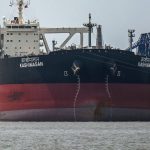
You wouldn’t have thought it possible just twelve months prior. Yet there it was, at the G7 summit in swanky Evian-les-Bains, France, on June 17. The then-President, in a moment that truly defies easy categorization, lauded Beijing. He praised Moscow too, but the China mention — that hit different. They’d both helped avert, in his words, a full-blown catastrophe. And, just to hammer home the point, he highlighted China’s specific capacity for brinkmanship: an observation that China could have sent in an oil ship with six destroyers alongside of it, on each side, but chose restraint. This particular phrase cut right to the core of Beijing’s strategic thinking, didn’t it? [QUOTE_PLACEHOLDER]
It’s a peculiar kind of power, this exercise of influence through deliberate non-action. China, after all, maintains considerable energy interests in Iran—Iran accounted for roughly 9% of China’s total crude oil imports in 2023, according to data from S&P Global. And yet, there wasn’t a single Chinese warship sailing ostentatiously through the Strait of Hormuz, horns blaring. It’s an almost unnervingly quiet strategy, a masterclass in soft power dressed as detachment. But, what’s really cooking beneath that calm surface?
Beijing’s approach here isn’t a mere act of benevolence or diplomatic oversight. It’s a finely tuned calculus. While Washington — and Tehran traded barbs and, occasionally, drones, China played the long game. They’re cultivating relationships. They’re observing. They’re waiting for the dust to settle, ensuring that whatever the fallout, they’re still standing—ready to engage with all parties. This kind of nuanced positioning offers advantages their more confrontational counterparts just don’t have.
Because, really, global trade routes depend on stability. The Belt — and Road Initiative, a pet project of Beijing’s that stretches across continents, depends on it even more. Think of Beijing’s moves in places like Taiwan; their economic leverage often speaks louder than their military posturing. China’s economic ties to Muslim-majority nations, stretching from Pakistan—a cornerstone of the China-Pakistan Economic Corridor (CPEC)—all the way through the Gulf, are immense. Any major conflagration in the Persian Gulf region would send economic tremors throughout Central and South Asia, directly threatening Beijing’s substantial investments and strategic energy access. It wouldn’t just be an inconvenience; it would be a major setback for their regional ambitions, disrupting supply chains and putting their massive infrastructure projects, many of which transit unstable areas, at serious risk.
This restraint isn’t about shying away from power, but rather a redefinition of what power even looks like in the 21st century. It isn’t just about aircraft carriers or advanced missiles; it’s about economic heft, diplomatic patience, and the ability to dictate terms without firing a shot. It’s subtle, it’s cunning, — and frankly, it often gets overlooked in the scramble for sensational headlines.
What This Means
The quiet thank-you note from Trump for China’s neutrality wasn’t just a fleeting political oddity; it signaled a profound, albeit perhaps unrecognized, shift in global geopolitics. What we’re witnessing is Beijing consciously deciding to leverage economic power and strategic patience over overt military muscle-flexing in flashpoints where direct confrontation isn’t in its immediate interest. This isn’t China playing global police; it’s China playing global accountant, calculating risk-reward ratios with precision. They aren’t sending destroyers because, in their view, it isn’t profitable—literally and figuratively. The political implications are immense.
For nations like Pakistan, navigating the complex waters between an assertive US, a resurgent Iran, and its principal benefactor in China, this subtle strategy offers both comfort and challenge. Comfort, because a neutral, non-interventionist China is less likely to drag regional allies into conflicts not of their making. Challenge, because it solidifies China’s role as a self-interested economic hegemon, one whose primary goal isn’t ideological alignment but uninterrupted access to resources and markets. Islamabad must continually balance its historically complex relationship with the West and the deepening ties with Beijing, knowing that China’s grand strategy revolves around its own expansion, not necessarily anyone else’s security.
Economically, this posture reinforces the notion that while the US might dominate headlines with military prowess, China is steadily, patiently—some might even say insidiously—dominating supply chains, infrastructure development, and ultimately, future global trade. This understated diplomacy also serves to delegitimize the traditional US-led interventionist paradigm, showcasing an alternative model of engagement for emerging economies. It’s a pragmatic, rather than principled, foreign policy that prioritizes internal stability and economic growth, while letting other powers exhaust themselves in protracted disputes. And honestly, it’s a strategy that’s working out pretty well for them, wouldn’t you say?