


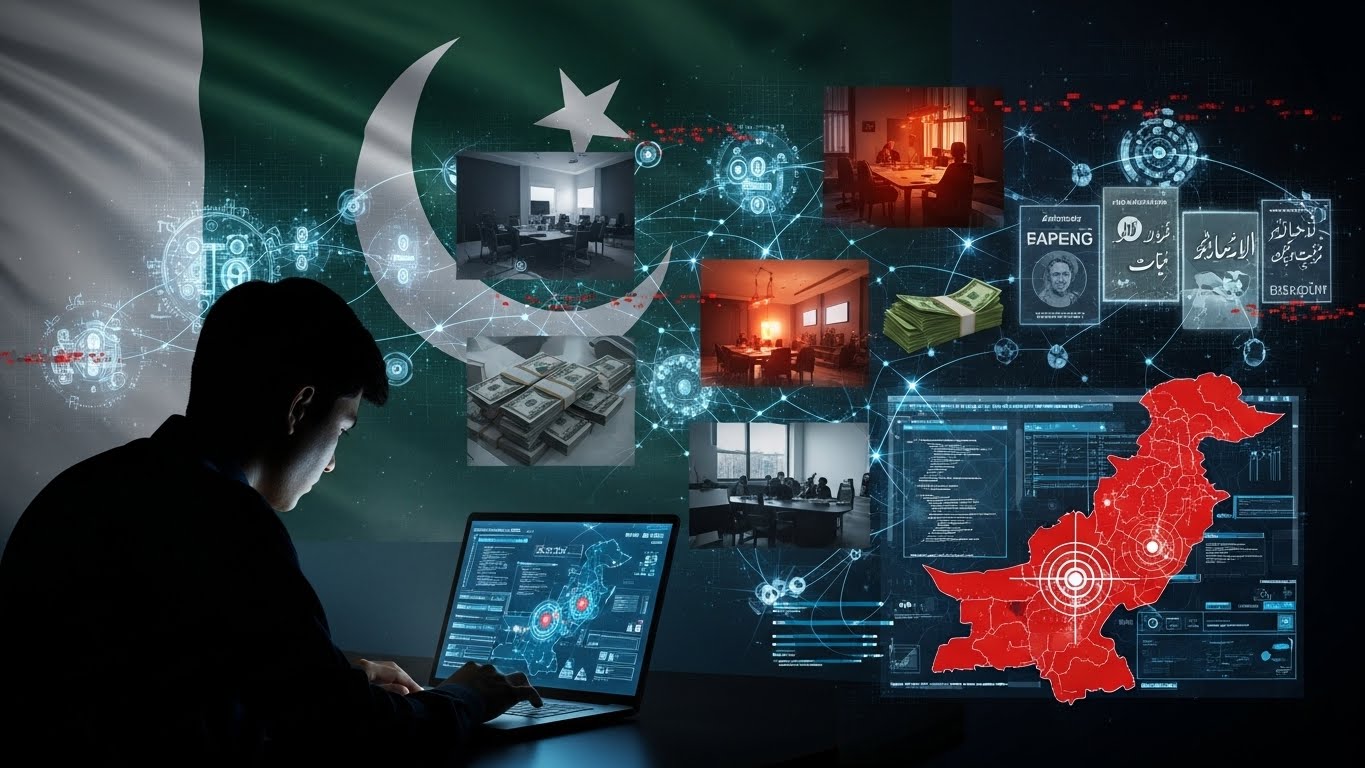
Behind the Screen: The Invisible Networks Targeting Pakistan’s Stability
Pakistan has long been a nation guided by the principles of peace, coexistence, and mutual respect. The Qur’an teaches, “And if they incline to peace, then incline to it also and rely upon Allah”...

Pakistan has long been a nation guided by the principles of peace, coexistence, and mutual respect. The Qur’an teaches, “And if they incline to peace, then incline to it also and rely upon Allah” (8:61). Our national conduct has reflected this divine guidance for decades. Pakistan does not seek confrontation, yet when its sovereignty is threatened, it rises with resolve—as commanded in the verse, “Prepare against them whatever force you can…” (8:60). This balance between peace and preparedness is not merely statecraft; it is a moral responsibility. As the Holy Prophet ﷺ instructed: “Tie your camel first, and then trust in Allah.” Faith demands vigilance.
History affirms that Pakistan has upheld this principle with dignity. In May 2025, the world witnessed again that Pakistan is capable of defending itself not only on traditional battlefields but also in the sophisticated domains of cyber technology and defense engineering. The excellence displayed by our scientists and security institutions proved that Pakistan is neither weak nor unprepared.
But today, the battlefield has shifted. Our adversaries now operate behind screens, fighting silent wars aimed at destabilizing the state from within.
The Hidden War: Illegal VPN Networks and Hybrid Threats
In recent years, illegal and unregistered VPNs have created a parallel digital underworld—a concealed ecosystem exploited by extremist groups, hostile intelligence agencies, and criminal syndicates. Terrorist outfits and their splinter cells use these tools to mask their footprints, manipulate social media, and broadcast propaganda crafted to incite unrest.
Intelligence findings confirm that many accounts presumed to be domestic were, in fact, operated from India and Afghanistan. When Platform X introduced the location-reveal feature, the truth surfaced: a significant portion of anti-Pakistan activity was routed through illegal VPNs supported by RAW and other hostile networks. These covert pipelines enabled extremists and their sympathizers to target Pakistani audiences, coordinate operations, and evade law enforcement.
The Social Fallout: Youth Vulnerability and Moral Erosion
Illegal VPNs have opened the floodgates to content that damages psychological health and undermines society—violent media, adult material, gambling hubs, disinformation factories, and unregulated online communities. These dangers strike at the core of our family structures and cultural safeguards.
The Qur’an warns:
“O you who believe, protect yourselves and your families from a fire whose fuel is people and stones.” (66:6)
In the digital age, protecting families includes shielding them from harmful online environments.
Anonymity provided by illegal VPNs has also fueled cyberbullying, identity theft, hacking attempts, ransomware attacks, and financial fraud. Political manipulation thrives as anonymous actors distort public narratives, deepen divisions, and erode trust in institutions. Unrestricted access to harmful content weakens regulatory systems and exposes society to moral and psychological harm.
The Prophet ﷺ cautioned: “A believer is not stung from the same hole twice.” Pakistan must learn from these digital infiltrations—and prevent their recurrence.
Economic Sabotage: The Silent Drain on Pakistan’s Digital Ecosystem
Illegal VPNs undermine the national economy by enabling tax evasion, digital piracy, and unfair access to international marketplaces. They facilitate bypassing geo-restrictions, harming Pakistani industries and the country’s digital revenue streams.
More dangerously, these VPN blind spots allow malware, phishing networks, and foreign cyber intrusions to bypass digital firewalls and infiltrate sensitive government and corporate systems. This interconnected threat spans national security, economic stability, political resilience, and public safety.
The Path Forward: Regulation, Vigilance, and Technological Preparedness
Pakistan does not need a blanket ban on technology—it needs intelligent, targeted regulation backed by uncompromising enforcement.
Key steps include:
- Mandatory registration of all VPNs operating within Pakistan.
- Authorization only for traceable, legitimate VPNs used by businesses, institutions, and individuals with valid needs.
- A national cyber-monitoring authority equipped with advanced tools to detect and dismantle illegal VPN networks.
- Integrated coordination among intelligence agencies, FIA, PTA, and financial regulators to choke off digital supply chains that sustain extremism.
- Nationwide public awareness campaigns, especially targeted at youth, warning against the dangers of illegal VPN use.
- Investment in indigenous cybersecurity talent, building teams capable of defending Pakistan’s digital borders with the same strength displayed by our armed forces on land.
Conclusion: Defending Pakistan in the Age of Digital Warfare
Pakistan seeks peace but does not hesitate to safeguard its dignity. As the Qur’an declares:
“Indeed, Allah loves those who fight in His cause in ranks, as though they are a solid structure.” (61:4)
In this new era where wars are fought through codes, servers, and shadows rather than conventional fields, cybersecurity has become the frontline of national defense. With unity, vigilance, and firm resolve, Pakistan can secure its digital realm, protect its citizens, and ensure that its sovereignty remains beyond the reach of hostile hands—visible or unseen.
Author