


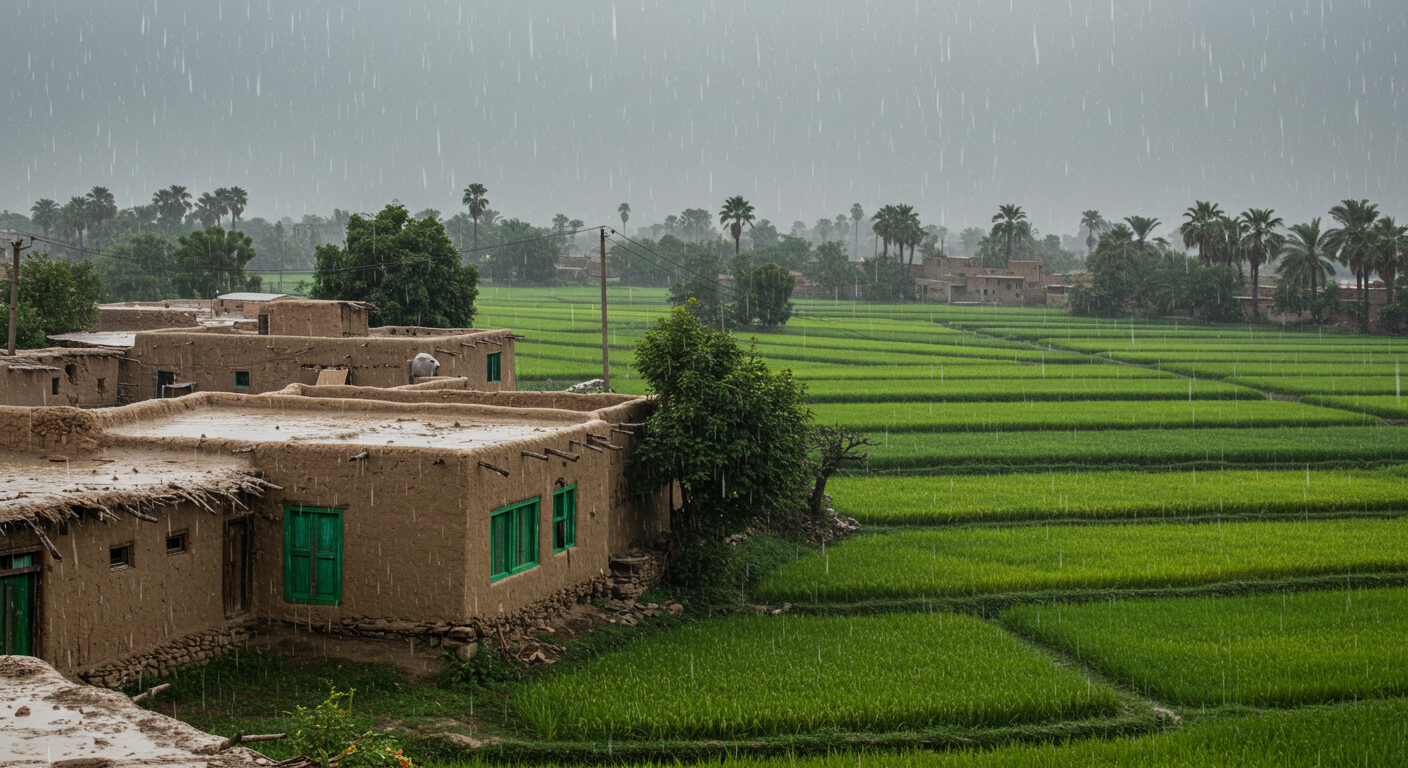
Balochistan on High Alert as Heavy Rains Trigger Flood Threats
Balochistan, Pakistan’s largest but least populated province, is once again bracing for floods that threaten lives, homes, and infrastructure. In recent weeks, heavy monsoon downpours combined with...

Balochistan, Pakistan’s largest but least populated province, is once again bracing for floods that threaten lives, homes, and infrastructure. In recent weeks, heavy monsoon downpours combined with unusual weather patterns have created an alarming situation across the province. The mountainous terrain, scattered settlements, and fragile infrastructure make Balochistan particularly vulnerable whenever cloudbursts occur. What began as localized rainfall has now turned into a looming crisis, prompting provincial authorities to raise alerts, coordinate with federal institutions, and prepare emergency measures to minimize damage.
The provincial government has stepped up preparedness across districts. An emergency committee is monitoring daily developments, with hospitals and health units placed on high alert. Medical teams have been directed to prepare for waterborne diseases and injuries that often follow floods. Rescue equipment and relief supplies are being pre-positioned in flood-prone areas, reflecting lessons learned from the devastating floods of 2022.
However, the threat remains serious. Many districts of Balochistan share borders with Sindh, where floodwaters often accumulate due to natural topography and river flow. Officials warn that areas near Sindh could be hit hard if heavy rains continue. Inter-provincial coordination is therefore being emphasized, as floodwaters ignore provincial boundaries. Calls for cooperation with Sindh and Punjab highlight the need for a national approach rather than isolated provincial responses.
The human cost has already been high. According to the National Disaster Management Authority (NDMA), more than 700 people across Pakistan have lost their lives in recent weeks due to torrential rains and flash floods. Balochistan alone accounts for at least 22 of these fatalities, underscoring the province’s fragile resilience in the face of natural calamities. Sudden cloudbursts in the mountains have washed away homes, livestock, and entire villages, devastating families’ dependent on agriculture and livestock for survival.
Experts link these recurring disasters to climate change. Balochistan’s arid and semi-arid landscape was never designed to handle sustained heavy rainfall, but shifting climate patterns have brought unpredictable and intense downpours. Natural drainage systems are overwhelmed, and many rural communities lack resilient housing, proper drainage, or disaster-resistant infrastructure, factors that increase vulnerability to extreme weather.
Authorities are urging residents to stay away from riverbanks, dry streams, and low-lying areas that could turn into flood channels without warning. Public awareness campaigns through local media and community networks are advising families in at-risk zones to prepare for evacuation. Yet leaving homes, livestock, and possessions behind is never easy for rural families, especially in areas far from relief camps. Building trust in relief mechanisms remains an important priority.
On the national level, the federal government and NDMA are coordinating closely with the provincial disaster management authority to monitor forecasts, deploy rescue teams, and position relief supplies. Helicopters, boats, and medical kits are being mobilized, while international organizations and NGOs are also stepping in with support. Pakistan’s recurring experiences with floods highlight the need for long-term investment in climate resilience, stronger embankments, better drainage, early warning systems, and disaster-resistant housing rather than relying solely on emergency responses.
The implications go beyond immediate humanitarian concerns. Repeated floods disrupt education, healthcare, and economic stability, deepening poverty in marginalized communities. Roads, bridges, and communication networks often suffer heavy damage, isolating towns and affecting national supply chains. That is why disaster preparedness in Balochistan must be seen as a matter of national importance.
What matters now is both relief and reform. Pakistan must treat floods as recurring climate-driven risks requiring structural solutions. Empowering local communities, investing in infrastructure, and fostering inter-provincial and regional cooperation are essential steps to minimize future devastation.
For Balochistan, the coming days are critical. Whether the rains subside or intensify will decide the scale of the disaster, but the province is already on high alert. The resilience of its people, supported by coordinated government response, will determine how this crisis is remembered—and whether future floods can be faced with greater preparedness.
Author