
Baghdad’s Sacred Cows on the Slab: Green Zone’s Golden Cage Rattle
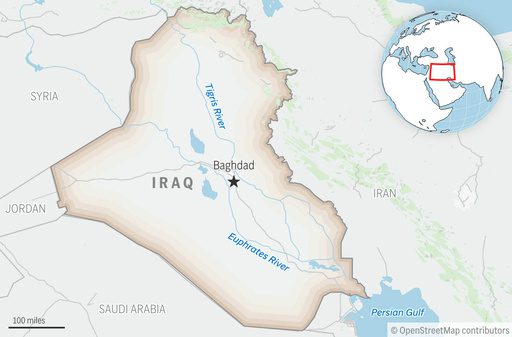
POLICY WIRE — Baghdad, Iraq — Another Sunday. Another crackdown. The hallowed (or perhaps, haunted) halls of Baghdad’s Green Zone, usually impenetrable bastions of power, suddenly didn’t feel so...

POLICY WIRE — Baghdad, Iraq — Another Sunday. Another crackdown. The hallowed (or perhaps, haunted) halls of Baghdad’s Green Zone, usually impenetrable bastions of power, suddenly didn’t feel so secure. It wasn’t insurgent rockets this time, nor was it a diplomatic spat making the marble floors tremble. No, this shake-up came from within, a surprisingly sharp jolt that’s left Iraq’s political elite buzzing – or perhaps, just quietly sweating.
It began as many such sagas do: with an ex-official singing like a canary. Former Deputy Minister of Oil, Adnan al-Jumaili, already cooling his heels in custody since last month, reportedly started talking. And boy, did he talk. His testimony, Baghdad’s state-run Iraqi News Agency confirmed, kicked off an operation so audacious it caught nearly everyone flat-footed. Special forces sealed off the capital’s most heavily fortified precinct—home to Parliament, government ministries, and diplomatic compounds—before dawn on Sunday. The message? Nobody’s above the law. Not this time.
Then came the reckoning. Forty-seven individuals were caught in the net, the state news agency reported, though it’s unclear if all were collared in Sunday’s blitz or if some arrests were pre-existing. What we do know: amongst them were 12 sitting members of Parliament whose immunity, bless its heart, had been swiftly stripped away. A former legislator, an advisor to former Prime Minister Mohammed Shia al-Sudani, and another senior oil ministry official joined the suddenly expanded inmate roster. This isn’t just a handful of backbenchers getting their comeuppance; these are power players, some from al-Sudani’s Shiite political bloc, others from the influential Sunni Azm Alliance. They’ve built their lives, their empires, inside these walls. Now they’re facing… consequences. Imagine that.
The specific accusations? Still murky, of course. Transparency’s never been Iraq’s strongest suit. But in a country where accusations of corruption are as common as chai, and frequently interlock with bitter factional rivalries, this feels less like a sudden attack of morality and more like a carefully orchestrated power play. But who’s playing whom?
“Iraqis have lived with the rot of corruption for far too long,” declared Prime Minister Ali al-Zaidi, the political newcomer who replaced al-Sudani just months ago after a brutal political deadlock. He made the remarks at a hurried press conference following the raids, projecting an air of firm resolve. “We won’t just drain the swamp; we’ll scorch the earth around it. It’s an arduous task, yes, but necessary for our future.” A bold claim, considering his ascent was itself a product of intense horse-trading within the Iranian-aligned Coordination Framework—a system notorious for its opaque dealings. His backers certainly weren’t immune from patronage, either.
Ahmed Hadi, a prominent independent political analyst based in Amman, Jordan, wasn’t buying the hero narrative. “This isn’t about justice, not really,” he told Policy Wire. “It’s about settling scores, plain — and simple. The music stopped, — and some guys just didn’t have a chair. But trust me, another chair will be pulled out from someone else soon enough.”
This purge, however theatrical, does signify something. It suggests a consolidation of power by the newly installed government of Ali al-Zaidi. Al-Sudani’s bloc, while winning the largest share in the November elections, eventually ceded ground. Zaidi, a consensus candidate blessed by Washington (and crucially, by some of the very factions who put al-Sudani in place), needs to demonstrate control. And nothing says ‘I’m in charge’ quite like hauling off your political rivals, even if they’re nominally within the same broad coalition. Because sometimes, political stability demands bold action.
The sheer scale of it, these Green Zone purges, they’ve become almost a seasonal affair in a region where patronage networks often define political survival. Like much of the Muslim world, from Pakistan’s often-shifting political sands to the Arab Maghreb, informal channels and backroom deals aren’t just tolerated; they’re the operating system. And when you’re dealing with states often under external influence, where state resources are essentially spoils for the victorious, you’ve got a recipe for endemic malfeasance. The consequences for ordinary citizens, of course, are dire: dilapidated infrastructure, failing services, and a pervasive sense of hopelessness.
Transparency International’s latest Corruption Perception Index (2025) still placed Iraq among the lowest ranks, barely registering above countries mired in conflict, a consistent, sobering reality for its citizens. They’ve seen this movie before.
What This Means
This wide-ranging anti-corruption sweep isn’t just good optics for Prime Minister Ali al-Zaidi; it’s a shrewd, albeit risky, maneuver to solidify his nascent power. Politically, it significantly weakens specific factions within the Coordination Framework that might have challenged his authority, potentially creating a more unified (or at least, less overtly fractured) ruling coalition. For the Sunnis of the Azm Alliance, it could fracture their unity and force a renegotiation of their political influence in Baghdad. It’s a calculated gamble to establish legitimacy domestically and signal a ‘new broom’ to international partners like the U.S. and Europe, which have long pressured Iraq on governance — and accountability. But every broom, particularly in Iraqi politics, risks kicking up more dust than it settles.
Economically, the immediate impact is a mixed bag. Investors typically shy away from instability, but a credible commitment to tackling corruption could, over the long term, attract much-needed foreign capital. However, the short-term perception of political chaos could deter those already hesitant. This purge doesn’t just clean house; it redistributes control over lucrative state contracts, particularly in the oil sector, impacting patronage networks and potentially redirecting significant wealth. If handled poorly, it could simply replace one set of corrupt actors with another. For ordinary Iraqis, who’ve endured decades of economic hardship, this could either be the long-awaited dawn of genuine reform or just another depressing chapter in a never-ending cycle of political musical chairs.