

As Western Wildfires Blaze, a Perilous Truce with the Inferno in New Mexico
POLICY WIRE — Capitan Mountains, N.M. — It’s a bitter sort of victory, this fight against an enemy as elemental and unforgiving as fire. The numbers from New Mexico’s Seven Cabins inferno tell a...

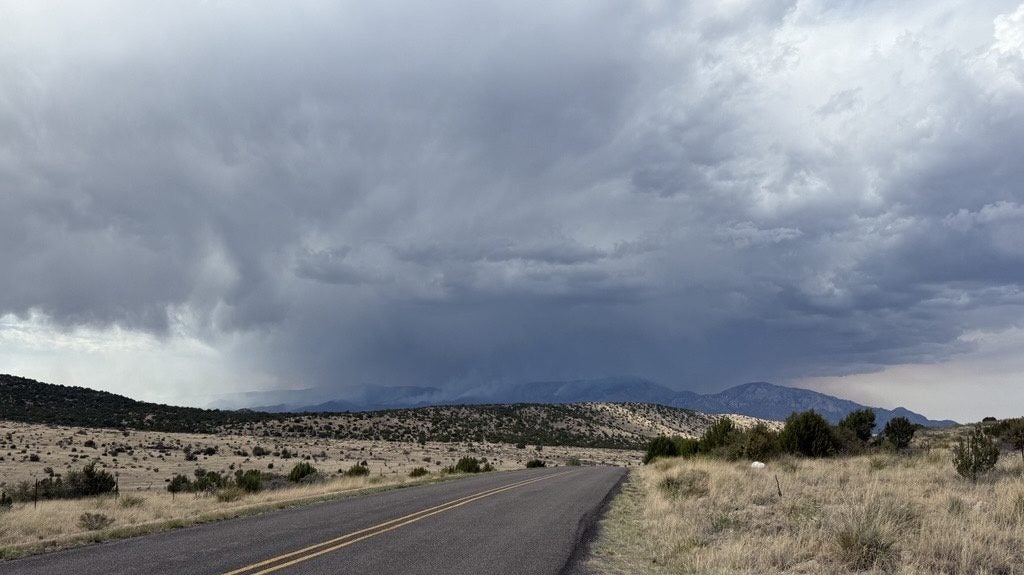
POLICY WIRE — Capitan Mountains, N.M. — It’s a bitter sort of victory, this fight against an enemy as elemental and unforgiving as fire. The numbers from New Mexico’s Seven Cabins inferno tell a story both of dogged human effort and nature’s brutal, expanding sprawl. They’re chipping away at it, they say, getting a better handle. But even as containment lines firm up, the beast continues to feast, swallowing more territory. It’s a maddening paradox for the crews on the ground, a testament to the sheer, relentless scale of what we’re up against in these drying Western states.
You see, officials this past Thursday marked the Seven Cabins Fire, an ongoing environmental tragedy born—they believe—from a medical plane crash, at 64 percent contained. That’s a gain, for sure, up a couple of points from the previous day. A glimmer of hope. But the accompanying bulletin read like a cruel punchline: the burn area actually ballooned to 31,867 acres. Another 97 acres vanished in smoke, even as more than 540 dedicated souls battled the blaze, armed with sweat, machines, and the desperate hope of an evening drizzle.
It’s an effort that takes a peculiar kind of psychological toll. “You chip away at it, inch by bloody inch,” observed David ‘Mac’ McDowell, Incident Commander for the Lincoln National Forest. “Sometimes you even get rained on – and that’s a blessing and a curse, washing away critical access points for a moment. But you don’t stop. You can’t.” His voice, scratchy from smoke — and exhaustion, betrayed the grinding reality of these battles. Rain did fall, a mixed blessing they call ‘wetting rain.’ It tamped down flames in some spots but turned access roads into mud slicks, hampering the very operations it was meant to assist.
The ground crews, tough men and women, they’ve been walking sections along the fire’s southern edge, reporting they could secure it, ‘under appropriate conditions.’ But conditions are rarely appropriate, are they? Not when Friday promised a “significant warming and drying trend” set to linger all weekend, the kind of weather that sucks moisture from the landscape like a hungry sponge, leaving behind a tinderbox. Aerial support—those planes dropping retardant and water, and the choppers providing intel—it’s an impressive choreography of air and ground power, but it’s still just playing catch-up with an unchained force. People don’t usually consider how much public money goes up in smoke during these incidents, do they? It’s millions. For one fire.
This fire, like so many others scarring the American West, isn’t just about the immediate loss. It’s about a much bigger, more complex calculus that speaks to global policy failures — and environmental shifts. Across the Capitan Mountain area, a forest closure is in effect, an expanding red line on the map. Places like Baca campground? Closed. The access roads to scenic overlooks? Gone, at least for now. And locals, they’re convening Friday evening at the Arabela Volunteer Fire Station, seeking answers that officials, for all their earnest efforts, can’t fully provide. You know, the simple ones like, ‘When will it end?’ or ‘What’s left?’
📄 POLICY WIRE WHITEPAPER PUBLISHED: PAKISTAN'S NATIONAL SECURITY POLICY PRIORITIES
👉 READ BY CLICKING HERE“We’re witnessing a stark escalation in the fire season’s ferocity, year after year,” remarked New Mexico Governor Michelle Lujan Grisham, addressing the media during an impromptu visit. “This isn’t just a localized emergency anymore; it’s a direct consequence of a rapidly changing climate, demanding not only a heroic response from our first responders but also robust, proactive policy shifts at every level of government.” She’s not wrong. Because without that, we’re stuck in this grim, reactive cycle. A recent report by the National Interagency Fire Center (NIFC) showed that, by mid-June of 2024, more than 2.6 million acres across the U.S. had already burned, a figure significantly above the 10-year average.
What This Means
The contradictory progress report on the Seven Cabins Fire—more containment, more acres burned—illuminates a stark political and economic reality: our strategies for managing a changing climate’s fallout are constantly being outpaced by its effects. Policy makers here in the U.S. and abroad, they’re facing immense pressure to re-evaluate land use, resource allocation for fire prevention and suppression, and infrastructure resilience. Economically, the impact is layered. Local tourism, a lifeline for many rural communities in the Capitan Mountains, simply vanishes under a haze of smoke. Timber industries face unprecedented losses. But even broader, property values become tenuous. And the sheer cost of suppression—hundreds of thousands of dollars a day for operations like this one—drains state and federal budgets, diverting funds from other public services.
The parallels aren’t hard to draw to other arid regions of the world, say, parts of Pakistan or other South Asian nations, where shifting monsoons and longer dry spells exacerbate deforestation and land degradation, leading to increasingly frequent and devastating forest fires. Those regions often grapple with far fewer resources for fire management and response, amplifying the human and environmental catastrophe. It’s a shared struggle, one that policy circles here need to appreciate in its global context. It’s not just a Western problem, not by a long shot. And ultimately, it isn’t just about firefighting, but about recalibrating our entire relationship with an increasingly unpredictable natural world.