

As Western States Burn, A Harsh Reality Takes Firefighting’s Steepest Toll
POLICY WIRE — BEAVER, Utah — Another summer, another grim tally. While state officials commend "several miraculous stops and saves," the unfolding wildfire crisis in the American West has...

POLICY WIRE — BEAVER, Utah — Another summer, another grim tally. While state officials commend "several miraculous stops and saves," the unfolding wildfire crisis in the American West has quietly claimed three lives, injured two others, and further exposed the raw nerve of climate-driven disaster management. This isn’t just an unfortunate event; it’s becoming the expected. And the U.S. Wildland Fire Service finds itself burying its own even as infernos rage.
On Saturday, the Colorado-Utah border region became a crucible. The fatalities, part of an interagency effort, succumbed while battling the Knowles — and Gore fires. It wasn’t merely the intensity of the flames, but the unyielding conditions that framed this tragedy. An arid land, already parched from Utah’s record-low snowpack and its warmest winter on record, provided the perfect kindling. Fire behavior that officials describe as showing "unprecedented behavior" means every spark holds catastrophic potential. "The U.S. Wildland Fire Service stands united with the USDA Forest Service in grief and in our unwavering support for the loved ones left behind. Their bravery, dedication, and sacrifice will never be forgotten," read a somber Facebook statement from the recently formed agency. [QUOTE_PLACEHOLDER]
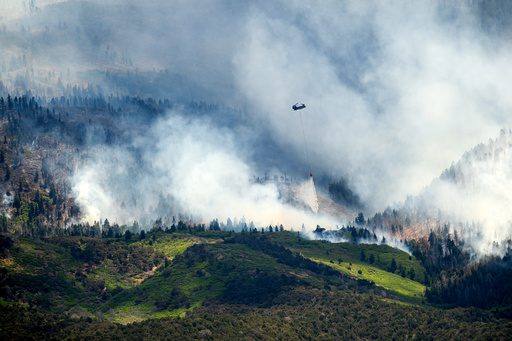
These western blazes aren’t polite, contained incidents. They’re gargantuan entities, consuming acres at an astonishing rate. Consider the Cottonwood Fire, chewing its way through southwestern Utah’s rugged terrain. It didn’t just grow; it "ballooned Saturday to more than 144 square miles (373 square kilometers) after marching through canyons and mountainsides, destroying part of a ski resort and other summer cabins along the way." Trying to tackle such a monster in its natural habitat is an exercise in futility sometimes. Alyssa Mason, a spokesperson assigned to the fire, articulated the logistical nightmare succinctly: "It’s hard to get dozers and other heavy equipment into that. It’s hard to get engines into that." She conceded, "It doesn’t make it impossible to firefight, but it does just kind of slow things down." An understatement, perhaps, for firefighters pushing past exhaustion, knowing every hour brings more land into the inferno’s grasp.
Utah’s Governor Spencer Cox declared a state of emergency, a decision echoed by Colorado Governor Jared Polis who mobilized the National Guard. But declaring an emergency — and bending nature to one’s will are two vastly different things. Red flag warnings, signaling critical fire weather — think dangerously low humidity, blistering temperatures, gusting winds — have blanketed the West, stretching from California to Arizona and New Mexico. Power utility companies, desperate to avoid their own culpability in these catastrophes, initiated preemptive safety shut-offs across vulnerable areas, leaving communities literally in the dark. It’s a drastic, almost punitive measure for a problem they didn’t directly cause but must contain.
The sheer scale of this recurring disaster demands attention. Nationally, nearly 3 million acres (1.2 million hectares) have burned since the start of the year. This stark figure, more than the 10-year average according to the National Interagency Fire Center, isn’t just a number; it’s an annual erosion of natural capital, human safety, and economic stability. It’s a yearly ritual of destruction, requiring hundreds of firefighters from across the country to pour into arid states, a seasonal deployment as predictable as the migrating birds—but far more tragic.
What This Means
The loss of life amongst our first responders represents more than just individual tragedy; it symbolizes a breaking point for public services. States are increasingly stretched, not by unpredictable anomalies, but by a new, punishing normal. The political implications are immediate and stark: how long can local and state governments shoulder this burden before federal intervention becomes a year-round, institutionalized necessity, not just an emergency response? Economically, the cost of property damage, suppressed tourism, and agricultural losses mount annually, transforming temporary relief efforts into perennial drains on national wealth. Insurance premiums in affected areas have already become astronomical, pushing people out of regions their families have called home for generations. This isn’t just about trees; it’s about communities, livelihoods, — and the very fabric of Western identity.
But this isn’t a uniquely American predicament. The relentless cycle of climate change means such extremes are a shared global burden. In countries like Pakistan, for instance, we’ve seen similar, devastating patterns: from catastrophic flash floods to unprecedented heatwaves that cripple essential services and devastate agriculture, echoing the resource strain seen in the American West. The challenges of water scarcity, population displacement, and managing land in arid environments are deeply familiar across parts of South Asia and the wider Muslim world. The methods for confronting these mega-disasters — infrastructure hardening, community preparedness, inter-agency coordination — become global lessons. They remind us that the ‘human-made’ component of climate chaos impacts everyone, irrespective of geography, creating an urgent, expensive shared future.