


As Smoke Billows, Albuquerque’s Daily Grind Hits the Skids on a Frayed Artery
POLICY WIRE — Albuquerque, N.M. — It wasn’t the morning commute that planners dream of, nor one the countless daily wage earners and families negotiating Albuquerque’s concrete arteries...

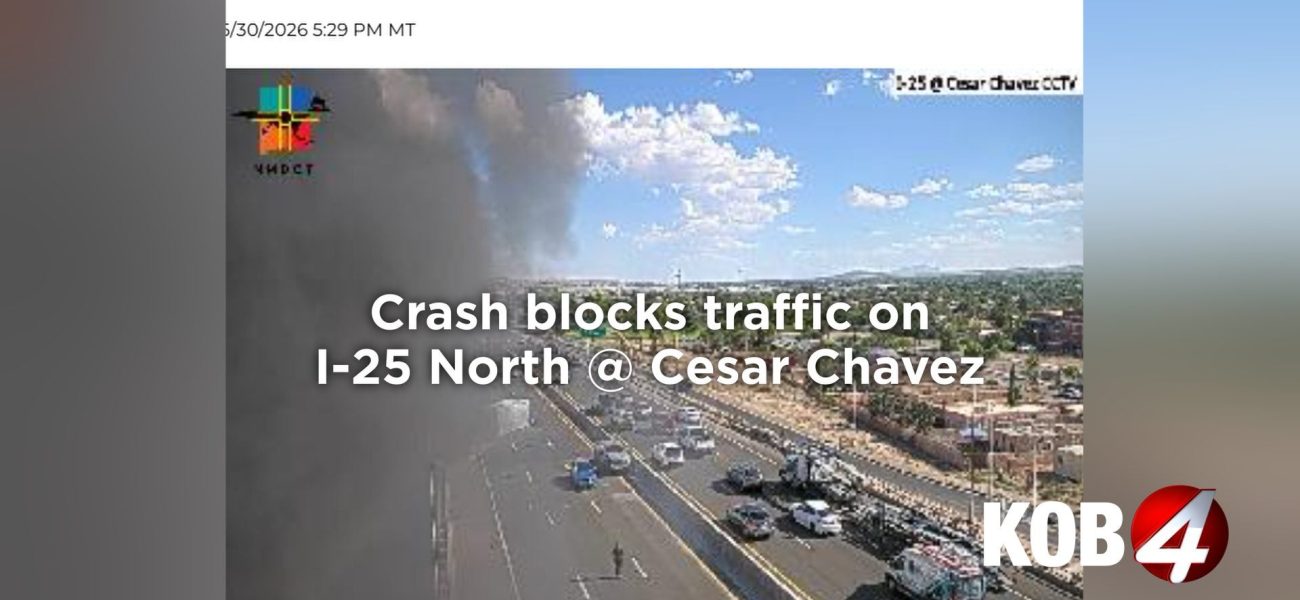
POLICY WIRE — Albuquerque, N.M. — It wasn’t the morning commute that planners dream of, nor one the countless daily wage earners and families negotiating Albuquerque’s concrete arteries ever sign up for. Suddenly, abruptly, the ordinary hum of Monday morning—or Tuesday, who really remembers when the daily scramble for commerce and sanity often blurs?—crumbled into a suffocating standstill. On the city’s northbound Interstate 25, right where it kisses Avenida César Chávez, a dense, choking column of smoke started to climb. Another small crisis, but a harsh lesson in just how tenuous our modern mobility really is.
It’s always something, isn’t it? One minute, you’re calculating the precise angle needed to merge ahead of that pickup, the next you’re staring at tail-lights — just endless, infuriating, dead tail-lights. For folks relying on the I-25 corridor to ferry goods, get to critical appointments, or simply make it to their minimum-wage shift on time, this wasn’t merely an inconvenience. This was time, money, — and quite possibly, a job on the line. First responders — an entire army of them, presumably, though sometimes it feels like just two tired souls trying to manage pandemonium — didn’t mess around. They shut it all down. Northbound traffic stopped dead at Gibson Boulevard. Nothing moved.
That particular stretch of asphalt isn’t just concrete — and yellow lines. It carries a heavy, unspoken weight. It’s named for César Chávez, after all, a man whose life was dedicated to fighting for those who felt stuck, unheard, and exploited. And today, literally stuck, commuters had to wonder how much the systems supporting their lives actually cared for them. The disruption wasn’t just physical; it felt emblematic of the strain that never-ending growth puts on old infrastructure. What’s more, an image from an NMDOT camera showed precisely that: a vehicle, or what remained of it, emitting tendrils of smoke, squarely blocking not one, but two, northbound lanes. A grim tableau, you might say.
Albuquerque’s Mayor Tim Keller, reached for comment, didn’t pull any punches. “We’re pushing our existing infrastructure to its absolute limit,” he told Policy Wire, his voice a familiar mix of pragmatism and frustration. “Every incident like this costs our city in productivity, strains our emergency services, and frankly, reminds everyone just how close to the edge we’re operating. We’ve gotta invest; we simply can’t keep patching over fundamental issues. But convincing taxpayers? That’s another beast altogether.” It’s the kind of blunt assessment that typically vanishes into the ether as soon as the traffic clears, but the sentiment holds true.
And these aren’t just local headaches. The fragility exposed by a freeway bottleneck in New Mexico echoes concerns worldwide. Consider countries in South Asia, where the arteries of commerce are often similarly stretched to breaking point. Lahore, Karachi—bustling metropolises where a breakdown on a major road can bring an entire day’s economy to its knees, disproportionately affecting day laborers and small enterprises, often Muslim-majority communities struggling with urbanization and underfunded infrastructure. They’ve got their own versions of the I-25 snarl, but perhaps without the immediate resources to untangle it quite so efficiently. The struggle for reliable, robust infrastructure isn’t just American; it’s a global battle for dignity and economic access.
But back here in New Mexico, Lieutenant Sarah Ramirez, a spokesperson for the Albuquerque Fire Rescue, spoke with a dry weariness. “Every call-out to a major freeway incident is complex. You’re not just dousing flames; you’re managing an entire public safety cascade. The resource drain is substantial. Our teams train for this, don’t get me wrong, but the sheer volume of such events keeps rising. And it’s not just about fire. It’s Hazmat, it’s extrication, it’s managing bewildered drivers. It’s a logistical nightmare that we often manage to pull off with surprisingly few resources at hand.” She’s seen it all, that’s clear.
📄 POLICY WIRE WHITEPAPER PUBLISHED: PAKISTAN'S NATIONAL SECURITY POLICY PRIORITIES
👉 READ BY CLICKING HEREIn fact, the American Road & Transportation Builders Association’s 2023 report painted a stark picture: over one-third of America’s major roads are in poor or mediocre condition, leading to billions in vehicle repairs and lost time. This New Mexico pile-up? Just a tiny symptom of that national malaise. It feels almost absurd to put numbers to it, but experts estimate these kinds of daily snarls cost the U.S. economy billions annually.
What This Means
The fiery disruption on I-25 isn’t just another traffic report; it’s a stark reminder of our infrastructure’s vulnerabilities and the broad, rippling effects of even localized failures. Politically, incidents like this often galvanize public sentiment around infrastructure spending, pushing politicians to address decaying roads and bridges. But that political will, as Mayor Keller implies, is frequently pitted against the public’s reluctance to shoulder the tax burden required for large-scale, long-term investments. So, they delay, — and we get more choked arteries.
Economically, the impact is immediate — and insidious. Delays mean lost productivity for businesses, from shipping companies to small-scale delivery services. Individuals miss work, appointments, or childcare pick-ups, resulting in personal financial losses — and stress. Such choke points increase fuel consumption as cars idle, and they drive up maintenance costs for vehicles frequently stuck in stop-and-go conditions. for cities attempting to attract investment, frequent transportation disruptions signal systemic issues that can deter businesses considering relocation. It’s a domino effect, starting with a plume of smoke and ending with dents in quarterly earnings and a collective sigh from an entire populace. This wasn’t just a blocked freeway. This was a blocked future, albeit for a few short hours.
Because ultimately, these small, mundane catastrophes reveal a larger truth: the complex, interconnected systems we rely on daily are surprisingly fragile. They don’t just hold our cars; they hold our jobs, our health, our global supply chains, — and maybe even our sanity.