


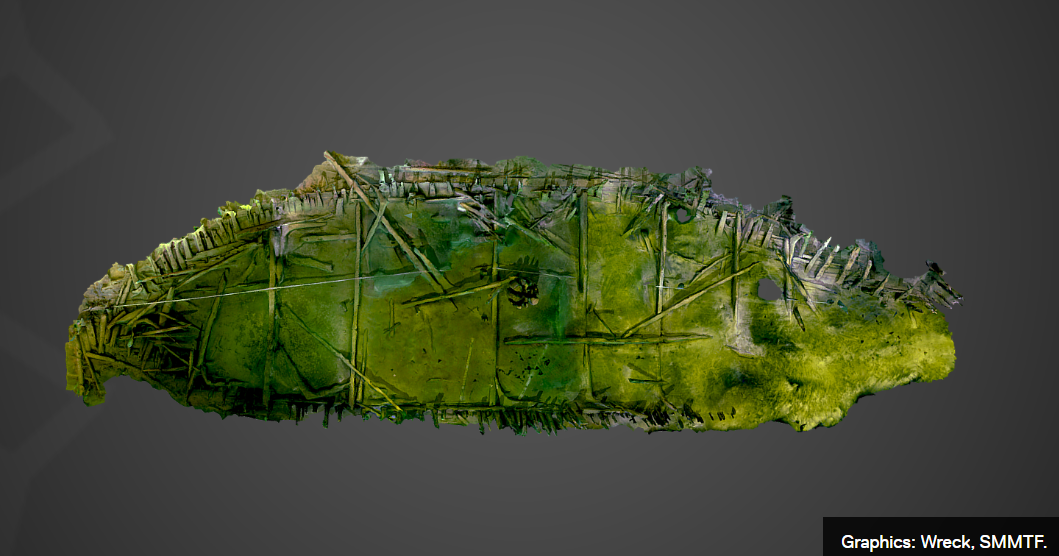
Archaeologists Uncover New Clues from 15th-Century Warship off Swedish Coast
Divers are exploring a rare 15th-century shipwreck near Stockholm, uncovering new clues about ancient naval construction and life aboard the historic vessel.

POLICY WIRE — Stockholm, Sweden — Marine archaeologists are currently conducting deep-sea dives to investigate a rare 15th-century shipwreck located off the coast of Haringe Castle, south of Stockholm. The vessel, identified as Vrak 5, is believed to be the oldest warship ever discovered in Swedish waters.
Project leader Hakan Altrock, an archaeologist with Sweden’s Museum of Wrecks, noted that the ship likely measured between 40 and 45 meters in length. While the wreck was first identified in the late 1800s, researchers successfully dated the timber to the 1480s or possibly the 1460s in February 2025.
The ship represents a significant milestone in maritime history as the first known example of the carvel building technique in Scandinavia. This method, which involves laying hull planks edge-to-edge rather than overlapping, allowed for the construction of larger, more robust vessels capable of carrying heavy cannons.
During the current excavation, the team utilized specialized pumps to clear sediment, revealing parts of the ship’s rigging and bricks that likely belonged to the galley. PhD student Matilda Jarl explained that the crew’s diet consisted primarily of boiled pottage, meat, and fish, typically washed down with beer, while those of higher status were served wine.
The cause of the ship’s sinking remains a mystery, though Altrock mentioned historical theories suggesting a potential fire or a military engagement involving a Danish attack on Haringe Castle in 1501. Researchers hope that ongoing analysis of the site will provide definitive evidence regarding the vessel’s final moments.
This discovery follows a series of recent maritime finds in the region, including a 16th-century wreck identified by the Swedish Navy and a cache of historic champagne and wine discovered on the Baltic seabed in July 2024. The team continues to document the site using 3D scanning technology to preserve the history of this unique find.
Reporting by Policy-Wire (PW)