

Ancient Wings, Modern Power Plays: China’s Dragon Reveals a Deeper Struggle
POLICY WIRE — Beijing, China — Not every profound discovery is found lurking in a classified document or whispered in diplomatic corridors. Sometimes, the starkest truths about geopolitical shifts...

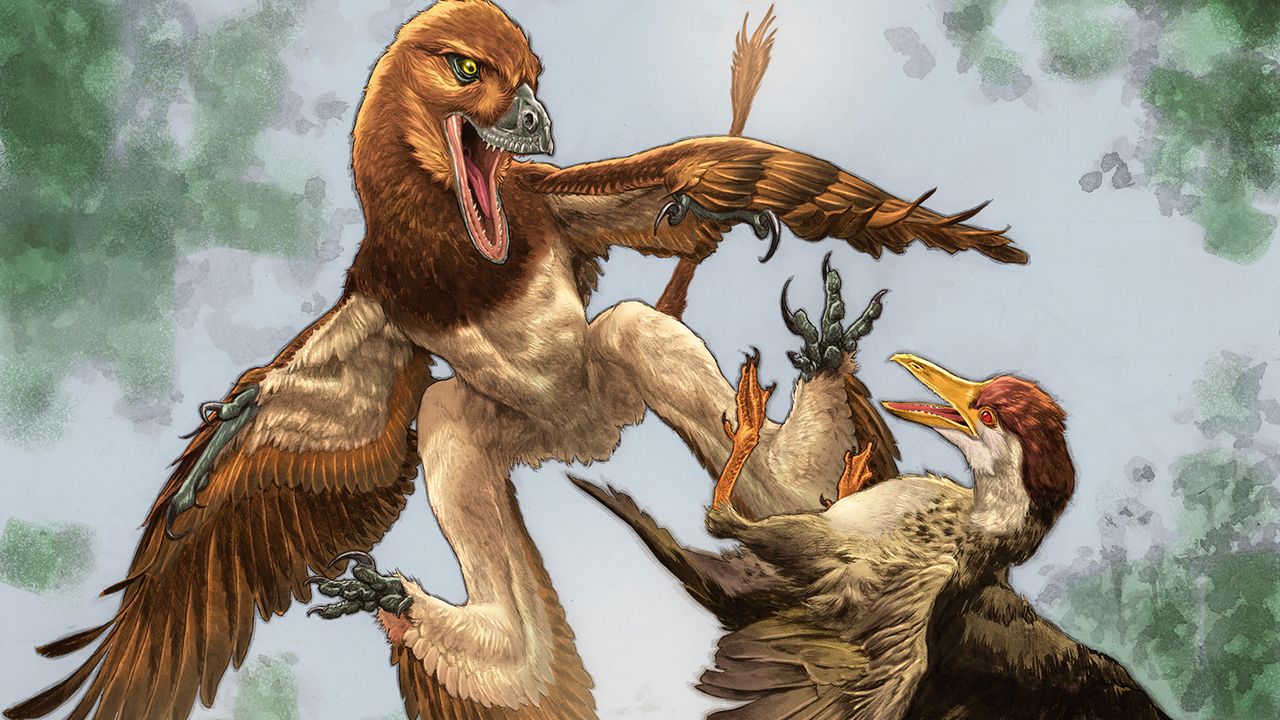
POLICY WIRE — Beijing, China — Not every profound discovery is found lurking in a classified document or whispered in diplomatic corridors. Sometimes, the starkest truths about geopolitical shifts come from the ground beneath our feet, billions of years deep. A recent fossil find in China, painting a vivid picture of a ‘4-winged’ dragon-like creature, does just that. It’s a tale of ancient predators, sure, but also a quiet chronicle of national aspirations.
It wasn’t a sudden trade deal or a new military maneuver that rattled the established order this week. No. Instead, palaeontologists unwrapped what’s being called a new cousin to the Velociraptor—a beast thought to have glided or flown through ancient forests. The official announcement described a creature that would have been a truly formidable apex predator, using its unique physiology to dominate its prehistoric habitat. And here’s the kicker: this isn’t merely about understanding dinosaur evolution; it’s about where those discoveries are made, who makes them, and what that signals to the world.
The creature, believed to be equipped with a distinctive dual set of feathered limbs, gave scientists a whole new puzzle piece for avian evolution. [QUOTE_PLACEHOLDER] researchers indicated, underscoring the novel characteristics of this ancient flyer. Its supposed hunting strategy—ambushing prey from tree-tops—points to an ecological niche previously less understood. Imagine that: a tiny dragon, but real, from a time before humanity dreamt of such beasts. It’s almost mythical, isn’t it? But it’s also incredibly concrete, challenging long-held assumptions about how certain lineages developed the power of flight. Experts in the field say it further complicates our understanding of feathered dinosaurs’ journey to true aerial prowess. We thought we knew the story, didn’t we? Turns out, evolution’s got a few more chapters for us.
Because every scientific revelation, especially one this dramatic, casts a long shadow—a shadow that extends well beyond academic journals. China has positioned itself, quite aggressively, as a leader in scientific research and exploration, especially in palaeontology. Their geological richness means a constant stream of new finds, certainly. But it’s also about the investment, the infrastructure, and the systematic approach to uncovering and cataloguing these wonders.
Consider the contrast. While nations across South Asia grapple with immediate, tangible threats—climate change, economic instability, political unrest—China consistently pours resources into ventures that, on the surface, might seem esoteric. According to a 2022 report by the World Bank, China’s gross domestic expenditure on research and development (GERD) reached an impressive 2.54% of its GDP, dwarfing many regional counterparts where such investments are a fraction of that figure, often below 1%. Pakistan, for instance, hovered around 0.3% in recent years. This isn’t just about a dinosaur; it’s about a nation’s commitment to pure science as a marker of global standing. It speaks volumes without uttering a single word.
But it’s not just about spending, it’s about projection. When the scientific community hails a Chinese discovery as game-changing, it reverberates. [QUOTE_PLACEHOLDER] another researcher noted, highlighting the significance for the entire field of palaeontology. This narrative of intellectual leadership doesn’t simply stop at the laboratory door. It bleeds into how China is perceived on the global stage, lending a quiet authority that differs, yet complements, its economic and military might. They’re not just building infrastructure; they’re building intellectual empires, too.
And while the fossil may not directly impact today’s geopolitics of, say, trade routes through the Indian Ocean or diplomatic sparring over disputed territories, its existence acts as a constant reminder. It showcases a nation not just content with manufacturing goods but striving to redefine fundamental aspects of our world’s natural history. You can bet that sort of ambition gets noticed by its neighbours, for better or worse.
And for countries like Pakistan, steeped in a rich, ancient history of its own—often seen through the lens of archaeology and historical empires—the focus on prehistoric biology from their regional partner might stir different kinds of introspection. What does it mean for national identity when your ancient past is viewed through different scientific frameworks, or when neighboring powers consistently dominate new discoveries? It’s not a zero-sum game, certainly. But it raises questions about regional scientific collaboration, about access to global research platforms, and about whose ancient narratives get amplified on the world stage.
What This Means
This fossil discovery, while ostensibly a palaeontological triumph, functions as an unexpected barometer for shifting global influence. It’s an implicit flex of scientific soft power, demonstrating China’s sustained investment in fundamental research. For the broader Muslim world and South Asia, often confronting more immediate developmental challenges, this kind of ‘pure science’ leadership from Beijing presents both a challenge and an opportunity. It challenges nations to assess their own scientific ambitions and funding priorities against a rising peer whose influence isn’t merely economic. But it’s also an opportunity—a potential blueprint for regional scientific collaboration and technology transfer, if handled diplomatically. This isn’t just about ancient wings; it’s about the future of scientific dominance, and how other nations, particularly those along the Belt and Road, react to China’s ever-growing reach into realms both ancient and cutting-edge. We’re witnessing not just the unearthing of a dinosaur but the steady construction of a global scientific hegemon.