


Amateur Archaeologist Unearths Record-Breaking Roman Coin Hoard in Germany
A metal detectorist discovered 934 ancient Roman silver denarii in Germany. Experts call it the largest Hadrian-era find ever recorded in the region.

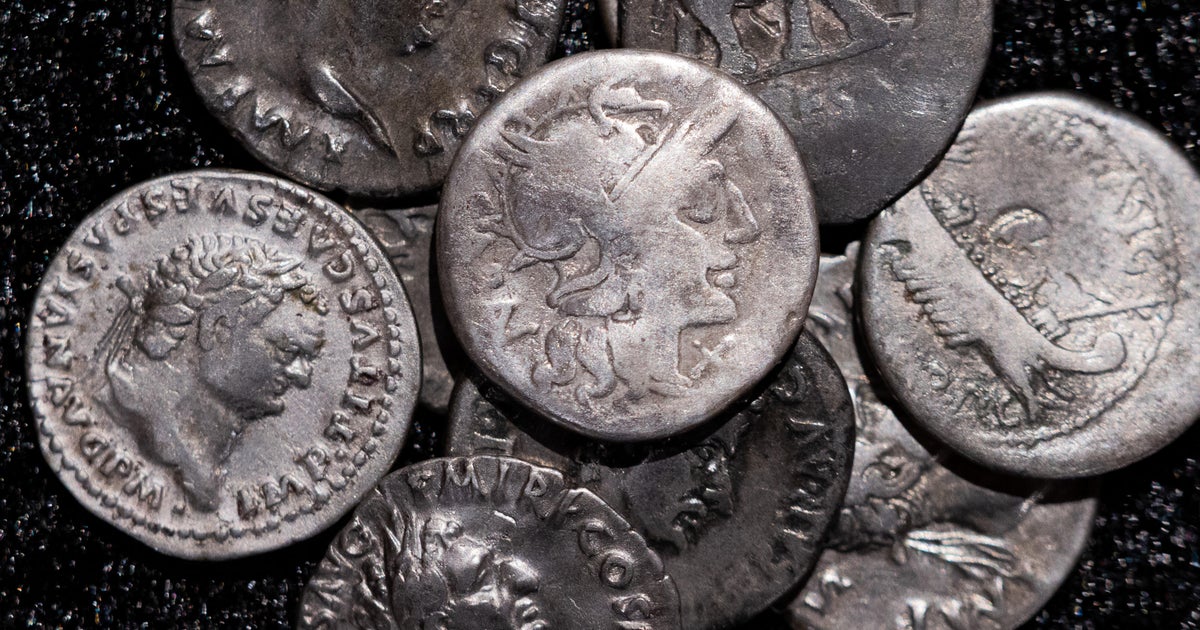
POLICY WIRE — Wesseling, Germany — An amateur archaeologist’s routine search turned into a historic discovery when his metal detector signaled a massive cache of ancient silver coins buried in a field. After finding initial pieces, the man alerted authorities, leading experts to excavate a total of 934 Roman silver denarii.
Local archaeological officials confirmed on Tuesday that this collection represents the largest treasure hoard from the era of Emperor Hadrian ever recovered in Germany. The find, which weighs 3.1 kilograms or 6.8 pounds, was officially unveiled at the LVR-LandesMuseum Bonn.
Oliver Riedl, the individual who made the discovery near Wesseling south of Cologne a year ago, noted that the persistent beeping of his equipment signaled that something significant lay beneath the soil. The museum reported that while the oldest coin dates back to 148 B.C., the majority of the hoard originates from the Flavian dynasty between A.D. 69 and 96.
The LVR Office for the Preservation of Archaeological Monuments in the Rhineland believes the coins were intentionally buried during the second quarter of the second century A.D. State archaeologist Erich Classen suggested the owner likely hid the wealth for safekeeping in an era before modern banking, though the reason it was never retrieved remains a mystery.
Research associate Rahel Otte provided context on the hoard’s immense value, noting that a standard Roman legionary earned 300 denarii annually, with half typically deducted for expenses. Consequently, a soldier would have needed to save their entire disposable income for roughly six years to accumulate such a fortune.
The region surrounding Cologne served as a critical Roman military outpost established by General Marcus Vipsanius Agrippa to guard the Rhine River border. While Roman-era artifacts are occasionally discovered across Europe, including recent finds in Wales, England, and Poland, the scale of the Wesseling hoard remains exceptionally rare.
Reporting by Policy-Wire (PW)