


Alberta’s Oil Patch Dissent: Separatist Petition Ignites Canada’s Enduring Unity Quandary
POLICY WIRE — Calgary, Canada — For a nation often characterized by its polite deference, Canada harbours a surprisingly robust, if quiet, undercurrent of secessionist thought. Its latest iteration...

POLICY WIRE — Calgary, Canada — For a nation often characterized by its polite deference, Canada harbours a surprisingly robust, if quiet, undercurrent of secessionist thought. Its latest iteration surfaces not from Quebec’s historic cultural distinctiveness, but from Alberta—the oil-rich western province, whose economic engine frequently propels the federation yet often feels profoundly misunderstood by its eastern counterparts.
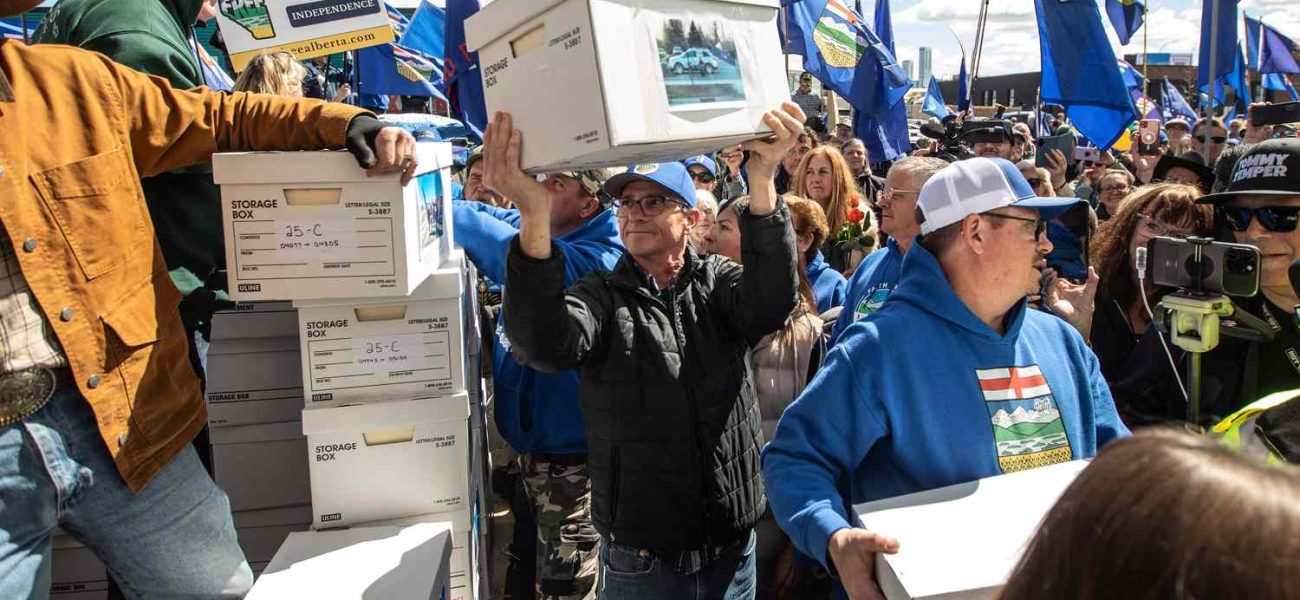
It’s an old story, really: the prosperous prodigal son who feels his wealth is appropriated, his voice muted. So, when a relatively obscure group managed to amass over 300,000 signatures on a petition advocating for an independence referendum, Ottawa likely felt a familiar shiver down its spine. That figure, a considerable mass of discontent, represents not merely a fringe movement, but a palpable expression of deeply entrenched frustration (or perhaps, a desperate plea for attention).
Behind the headlines, this isn’t just about an online form; it’s a symptom of Canada’s perpetual federal-provincial ballet, a delicate dance of power, resources, and identity. The Alberta Separatist Group, whose actual name isn’t widely publicized but whose aims are unambiguous, achieved a threshold that, while not legally binding for a referendum, certainly amplifies the political noise. And what noise it’s. This is less a roar and more a sustained, low-frequency hum of exasperation that’s been vibrating through the province for decades.
At its core, Alberta’s grievances aren’t complex. They pivot on economics: the perception that its vast fossil fuel wealth — oil, gas, and an industrious spirit — disproportionately funds other provinces through equalization payments, while simultaneously being hamstrung by federal environmental policies. It’s a classic resource nationalism argument, echoing sentiments from oil-producing regions globally. Think of the constant tug-of-war over energy revenues, a geopolitical chess game played on many boards.
Still, the federal government often attempts to project an image of unwavering unity. Federal Intergovernmental Affairs Minister Dominic LeBlanc, for example, addressing similar provincial agitations in the past, likely maintains his consistent line. “Canada’s strength isn’t just in its landmass, but in the unwavering bond between its diverse regions,” he might shot back, emphasizing the federal commitment to dialogue. “We’re confident that through collaboration, not confrontation, we can address the concerns of all Canadians, including Albertans, within our enduring federation.”
But Alberta’s Premier, Danielle Smith, a vocal advocate for greater provincial autonomy, doesn’t mince words when it comes to defending her province’s perceived rights. She’s been known to state that, “Albertans aren’t asking for special treatment, merely a fair shake. Our contributions to this federation are immense, and it’s high time Ottawa recognized that with tangible policy adjustments, not platitudes.” Her stance, often navigating the tricky tightrope between provincial boosterism and outright separation, encapsulates the delicate political calculus at play. According to a Fraser Institute report from 2021, Alberta consistently contributes more in federal taxes than it receives in spending and transfers, a net contribution that has fueled much of this resentment.
This dynamic isn’t exclusive to Canada. In Pakistan, for instance, the resource-rich province of Balochistan has long harboured separatist sentiments, rooted in a perception that its natural gas and mineral wealth is exploited by the central government, with little benefit flowing back to the local populace. The complexities are amplified by historical injustices and ethnic divides, making for a far more volatile situation than Alberta’s genteel dissent. Yet, the underlying emotional architecture — a prosperous region feeling economically disenfranchised and politically marginalized by a distant capital — bears a haunting resemblance. And that’s why these movements, regardless of geography, warrant careful observation. (Who doesn’t love a good underdog story, even if it’s potentially cataclysmic for national unity?).
What This Means
The collection of 300,000-plus signatures by this separatist group, regardless of its legal standing, sends an unequivocal message: a substantial segment of the Alberta populace feels profoundly alienated. Politically, this acts as a powerful lever, putting immense pressure on both the provincial UCP government to demonstrate effective advocacy for Alberta’s interests, and on the federal Liberal government to address Western Canadian grievances more concretely. Failure to do so risks further entrenching the narrative of a disconnected Ottawa, inadvertently fueling the very separatist sentiment it aims to quell.
Economically, such movements introduce an unwelcome layer of uncertainty. While an actual referendum or secession remains a distant prospect, the mere discussion can deter investment, particularly in Alberta’s already beleaguered energy sector. It suggests a future fraught with potential instability, impacting long-term planning for businesses operating within or looking to enter the province. it forces a national conversation about Canada’s internal economic architecture, specifically the controversial equalization program, potentially leading to adjustments that could ripple across all provinces. The long-term implications for national cohesion, for the very idea of Canada as a unified, diverse entity, are consequential indeed. It’s a reminder that national unity, like any intricate structure, requires constant maintenance, and sometimes, a little more than just polite conversation.