

AJK’s Untapped Potential: A Tale of Neglect and Opportunity
When people around the world hear the name “Kashmir,” their minds often turn to the disputed and troubled region under Indian control. For decades, India has worked hard to present its side of the...
When people around the world hear the name “Kashmir,” their minds often turn to the disputed and troubled region under Indian control. For decades, India has worked hard to present its side of the territory, Indian-occupied Jammu and Kashmir (IIOJK), as modern, developed, and better off compared to Azad Jammu and Kashmir (AJK), which is linked with Pakistan. On the surface, that narrative sounds convincing but if we look deeper, a very different story comes to light.
AJK, though smaller and less industrialized, carries huge untapped potential. It has not been robbed of its resources the way IIOJK has. It enjoys autonomy, freedom, and the ability to preserve its culture. In contrast, IIOJK has been turned into a colony, where wealth flows out to India, farmers lose their lands, and locals are silenced. This is a story of two very different futures, one where opportunity is waiting to be unlocked, and another where people are trapped in exploitation.
According to official figures, AJK’s mineral resources are worth $537 million. Out of this, $257 million has already been proven, but $280 million remains unmapped and unexplored. This may sound like underdevelopment, but in reality, it is an opportunity. These resources remain untouched, preserved for the future, ready to be used for the benefit of AJK’s own people. In IIOJK, India has already mapped almost all of its resources—granite, gypsum, sapphire, and even lithium. But who benefits? Not the Kashmiri people. These minerals are extracted and transported to mainland India, enriching corporations and markets there. The local population is left with environmental damage, low incomes, and no real share of the profits. The difference is striking: AJK’s wealth is still waiting to serve its own people, while IIOJK’s has been taken away to feed India’s greed.
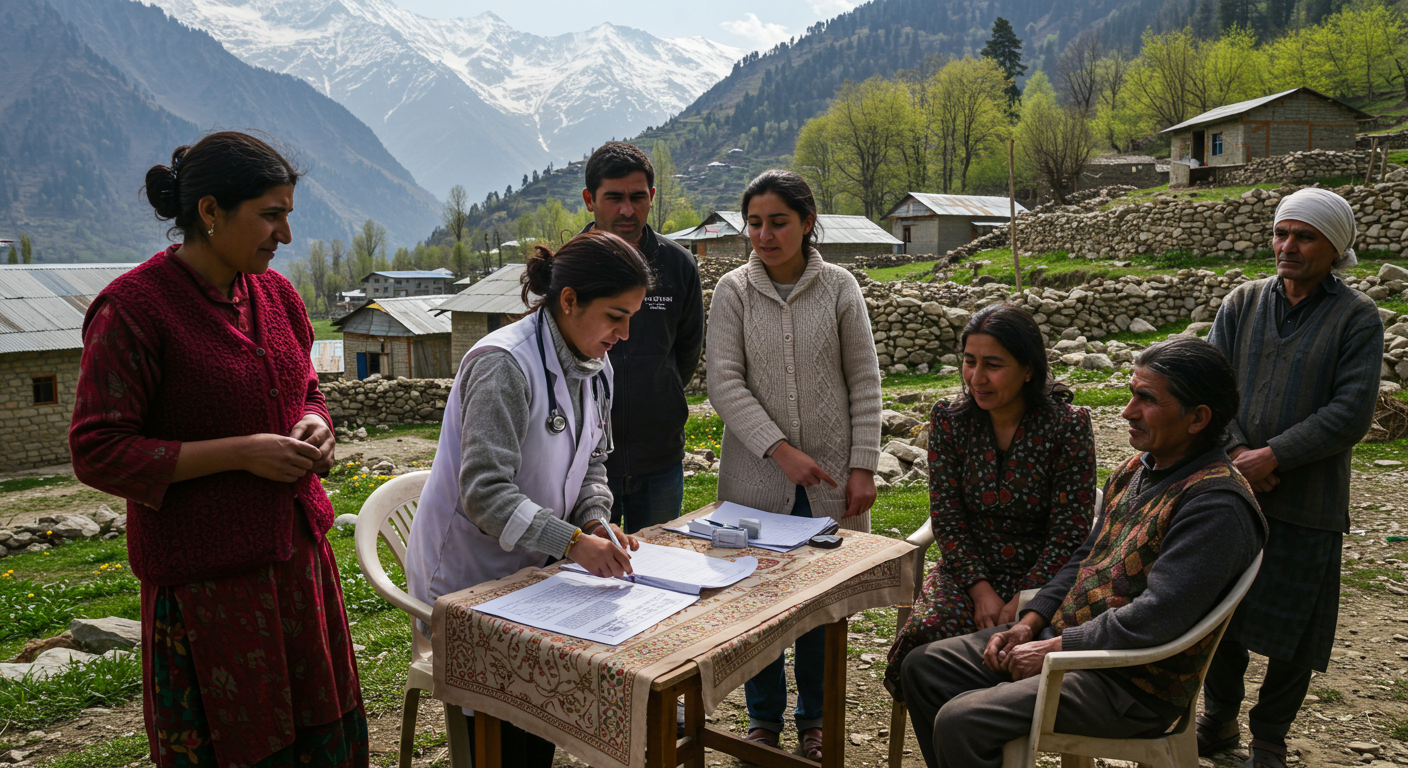
Agriculture tells a similar story. AJK has 13,357 square kilometers of cultivable land, yet only 1,966 square kilometers is actually under cultivation. That means more than 85 percent of fertile land is lying unused. On the surface, this looks like a weakness, but in truth, it is a hidden strength. This land is still available for local farmers to use, if proper investment and infrastructure are provided. With modern farming techniques, irrigation support, and government training programs, this unused land could spark an agricultural revolution in AJK. Livestock farming, poultry, honeybee farming, and handicrafts could also bring income to local families. Add eco-tourism to the mix, and AJK’s economy could take a sharp upward turn. In IIOJK, the picture is very different. Agriculture looks “developed,” but only because Kashmiri farmers have lost control over much of their land. After India revoked Article 370 in 2019, policies were introduced that allowed outsiders to settle and buy land in Kashmir. As a result, local farmers are being pushed aside. Even apple orchards, once a proud symbol of Kashmiri culture, are increasingly controlled by outsiders who pocket the profits. AJK still has its land. IIOJK’s farmers are losing theirs.
Economic dependence shows the same contrast. IIOJK depends almost entirely on India. Food, goods, and basic supplies come from the mainland. Whenever prices rise in Delhi, Kashmiris suffer. When markets fluctuate, Kashmiris have no shield. This heavy dependence makes the local population fragile and powerless. AJK, in contrast, has the chance to stand on its own feet. With its untouched land and minerals, it can build self-reliance. By developing agriculture and eco-industries, the region can reduce its reliance on imports. This would make life cheaper and more dignified for its people.
Governance makes the difference even sharper. AJK has its own locally elected assembly. Its people have the right to protect their culture, language, and traditions. They are free to make decisions about their future, even if development is slow. IIOJK, meanwhile, lost even the little autonomy it once had. India’s revocation of Article 370 in 2019 turned the region into a colony under New Delhi’s direct control. Today, demographic engineering is underway. Outsiders are being settled in Kashmir to change its population balance. Roads, railways, and so-called development projects do not serve Kashmiris—they serve India’s army and corporations.
📄 POLICY WIRE WHITEPAPER PUBLISHED: PAKISTAN'S NATIONAL SECURITY POLICY PRIORITIES
👉 READ BY CLICKING HEREFor AJK to rise, Pakistan has a critical role to play. So far, Islamabad has supported AJK politically and symbolically. But now is the time for action. Direct investment in agriculture, mining, and eco-tourism is needed. Special incentives for young entrepreneurs could spark startups in honeybee farming, handicrafts, and tourism. Mapping mineral resources should be treated as a national priority, not just a local one. At the same time, Pakistan must continue exposing India’s exploitation of IIOJK. The world should see the difference between a region that has freedom to grow with Pakistan’s support, and a region suffocated under Indian occupation.
The story of AJK is not one of backwardness, it is one of delayed opportunity. Its land, minerals, and people hold enormous promise. With proper planning, AJK can become an example of people-centered and sustainable development. IIOJK, on the other hand, is trapped in a cycle of dispossession. Its wealth flows out, its farmers lose land, and its culture is under attack. This is not just a comparison of two regions; it is a comparison of two futures. One belongs to IIOJK, where resources are stolen, and people are silenced. The other belongs to AJK, where freedom, opportunity, and dignity still exist and the future, without doubt, belongs to Azad Jammu and Kashmir, standing proudly with Pakistan, ready to shape its own destiny.
Author