

Abdul Waheed Kakar and Pakistan’s 1993 Crisis
Pakistan’s history remembers leaders who serve the country during defining moments. General Abdul Waheed Kakar, former Chief of Army Staff of Pakistan, was one such figure. His death in Rawalpindi on...

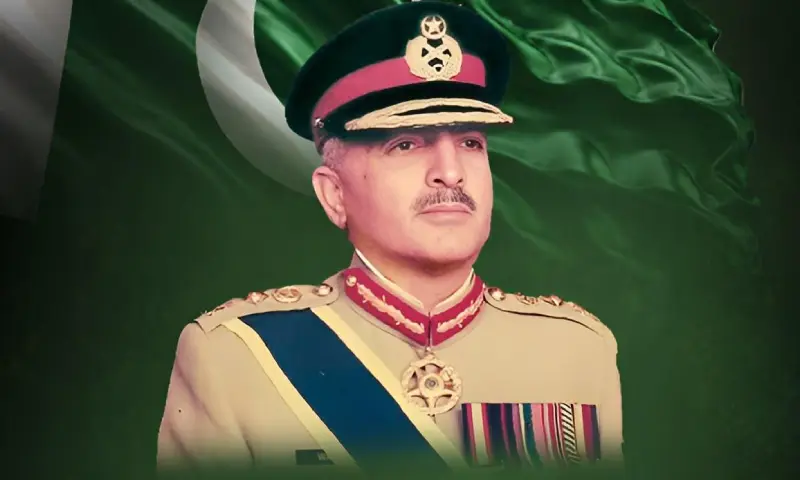
Pakistan’s history remembers leaders who serve the country during defining moments. General Abdul Waheed Kakar, former Chief of Army Staff of Pakistan, was one such figure. His death in Rawalpindi on October 26, 2026, at the age of 89 marks the passing of a military leader whose career spanned two wars, major developments in national defence and one of Pakistan’s most significant political crises. His role in the 1993 political settlement and his decision to retire after completing his three-year term remain important parts of his legacy. His career offers valuable lessons about professional military leadership, national stability and the importance of responsible decision-making.
A Distinguished Military Career
Born in Peshawar on March 23, 1937, General Kakar joined the Pakistan Army and received his commission in the Frontier Force Regiment in October 1959. His early career developed during a period when Pakistan faced serious security challenges and needed a professional military prepared to defend its territorial integrity.
Kakar served during the 1965 and 1971 wars with India. Over the following decades, he held several important command and staff appointments, including command of the 16th Infantry Division and XII Corps in Quetta. These responsibilities gave him extensive experience in military operations, institutional management and national defence.
On January 12, 1993, Kakar assumed command of the Pakistan Army following the sudden death of his predecessor, General Asif Nawaz Janjua. His appointment came at a challenging time, as political tensions and economic pressures demanded careful leadership. His experience and professional responsibilities placed him at the centre of a period that would test Pakistan’s political institutions and national leadership.
The Kakar Formula: Resolving Pakistan’s 1993 Crisis
The defining episode of General Kakar’s tenure was the political confrontation between President Ghulam Ishaq Khan and Prime Minister Nawaz Sharif in 1993.
The dispute created serious uncertainty for Pakistan’s political system. In April 1993, President Ghulam Ishaq Khan dismissed the government of Nawaz Sharif. The Supreme Court subsequently restored the government, but the confrontation between the two leaders continued. The resulting deadlock threatened effective governance and raised concerns about the country’s political stability.
General Kakar played a decisive role in facilitating a settlement. In July 1993, both the president and the prime minister resigned, clearing the way for a caretaker government led by Moeen Qureshi and fresh general elections. The elections brought Benazir Bhutto back to power.
This political settlement became widely known as the “Kakar Formula” and remains a significant episode in Pakistan’s political history.
The importance of the settlement lies in its immediate outcome. It helped break a prolonged political deadlock and opened a path towards fresh elections rather than allowing the confrontation to continue indefinitely. General Kakar’s role demonstrated the importance of timely decisions during a national crisis and the value of finding a way forward when political disagreements threaten institutional stability.
The episode also highlights a broader lesson for Pakistan. National stability requires responsible leadership, effective institutions and a commitment to resolving political disputes without allowing them to undermine governance. The Kakar Formula remains relevant to discussions about crisis management and the relationship between political stability and national security.
Pakistan’s Strategic Defence and the Shaheen Missile Programme
General Kakar’s tenure also coincided with an important period in Pakistan’s pursuit of strategic defence capabilities. During his time as Army Chief, Pakistan continued work on its missile development programme, including the foundations of the Shaheen missile series.
Pakistan’s defence policy has long reflected the need to maintain credible deterrence in a complex regional security environment. The history of conflict with India and the wider regional military balance have made strategic preparedness a central national priority.
The Shaheen programme represented a broader national effort involving scientific institutions, engineers, technical expertise and sustained investment in defence research. Its development cannot be attributed to one individual, but Kakar’s tenure formed part of the period in which Pakistan continued advancing its strategic objectives.
His time in office also coincided with difficult negotiations with the United States over Pakistan’s nuclear programme and the delivery of F-16 fighter aircraft held up under American restrictions. These challenges reflected the complex choices facing Pakistani policymakers as they sought to protect national security interests while managing relations with major international partners.
This period remains an important chapter in Pakistan’s pursuit of strategic autonomy and a credible defence posture. It also illustrates how military preparedness, scientific development and long-term planning contribute to national security.
From General Jehangir Karamat to Field Marshal Asim Munir
General Kakar completed his three-year tenure on January 12, 1996, and retired without seeking an extension. General Jehangir Karamat succeeded him, continuing the institution’s leadership during a different political and security environment.
Karamat’s tenure later became associated with his proposal for a National Security Council and his resignation in 1998 following a disagreement with Prime Minister Nawaz Sharif. These events formed another important chapter in Pakistan’s evolving civil-military relationship.
Today, Pakistan faces a different set of security challenges. Field Marshal Syed Asim Munir, Pakistan’s Chief of Army Staff and Chief of Defence Forces, operates in an environment shaped by counterterrorism requirements, regional tensions and changing defence technologies. Although the circumstances differ from those of the 1990s, professional command, strategic preparedness and institutional continuity remain essential to Pakistan’s national security.
Kakar’s career provides historical context for understanding the responsibilities carried by successive military leaders and the importance of adapting to changing national requirements.
A Legacy of Service and Professionalism
General Abdul Waheed Kakar’s legacy rests on several defining aspects of his career: his service during the 1965 and 1971 wars, his leadership during the 1993 political crisis, his tenure during continued strategic defence development and his decision to retire after completing his term.
His career also highlights the importance of professionalism and institutional responsibility. By completing his tenure without seeking an extension, he left behind a decision that remains a notable part of his public record.
Pakistan’s strength depends on a combination of national defence, political stability, professional institutions and responsible leadership. Military preparedness protects territorial integrity, while effective governance and institutional cooperation support long-term national progress.
As Pakistan remembers General Abdul Waheed Kakar, his service offers an opportunity to reflect on the people and institutions that have shaped the country’s history. His role in the 1993 settlement remains a significant example of leadership during a difficult national moment. His career continues to provide a useful perspective on the relationship between military professionalism, strategic preparedness and Pakistan’s enduring pursuit of stability and security.
Author