

Israel’s 1000-Day War: Society, Geopolitics & Crisis
As Israel marks 1000 days since Oct 7, the enduring conflict fuels societal reckoning, political volatility, and widespread geopolitical instability. Discover its profound impact.

POLICY WIRE — Tel Aviv, Israel — It wasn’t the fireworks that marked the day, or a national holiday. Instead, a solemn pall hung heavy, almost tangibly, over Israeli streets as the calendar turned to 1,000 days since October 7. A thousand mornings have dawned, each one pushing the immediate shock further into the rearview, but the echoes of that violent inception—and the war it spawned—have stubbornly refused to fade. But beyond the immediate commemorations, a deeper societal reckoning is at play here, reshaping the very fabric of national discourse, if not its global perception.
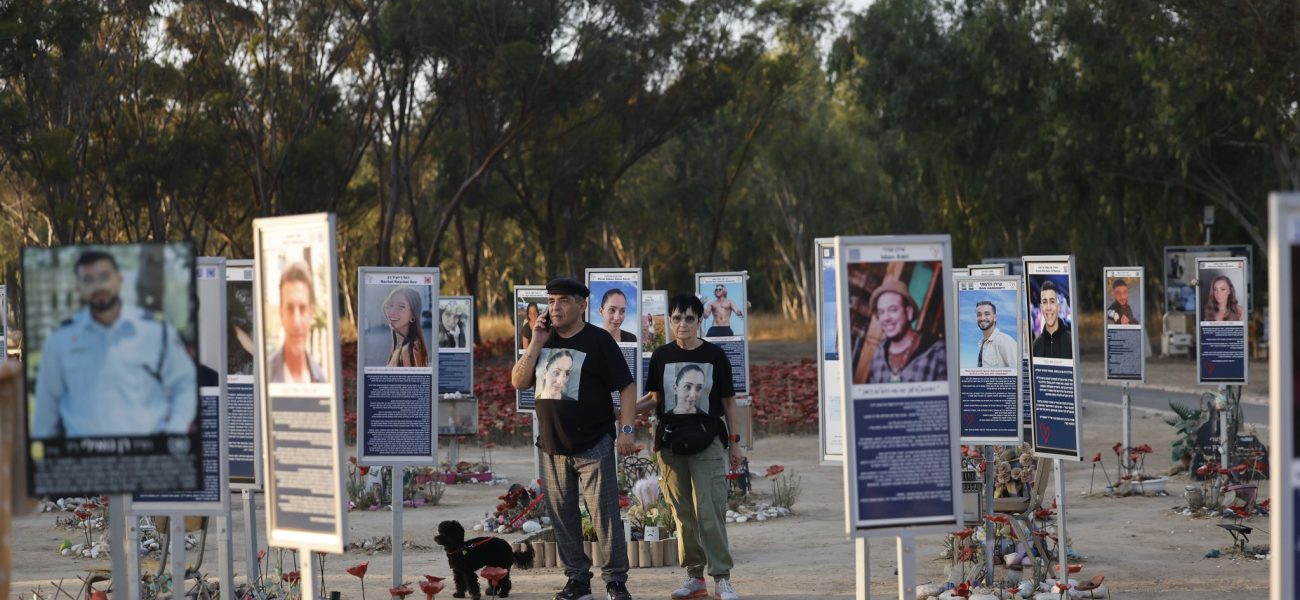
Vigils flared across the country. Memorial candles flickered, and placards—some bearing familiar faces, others grim statistics—punctuated public squares. For the families, this wasn’t just a number; it’s an agonizing marker in a seemingly unending chapter of loss. Their calls for justice, for resolution, haven’t lessened—they’ve merely morphed, growing more desperate, more insistent with every passing sun cycle. And yet, there’s a duality to the national mood: a fierce solidarity clashing often, quite jarringly, with simmering resentments and mounting questions about accountability. We’re watching a country collectively hold its breath, really, while trying desperately to move on.
Down in what some now call Hostage Square, activists kept up their drumbeat of demands. They’re tireless, relentless, unwilling to let the world forget. [QUOTE_PLACEHOLDER], declared one family member, their voice raw from countless rallies. And nearby, other groups staged protests, directing their ire at the very government that vows to protect them, chanting for a change in leadership, convinced that only new hands can untangle this mess. The political temperature, already boiling, feels like it’s just hit a new high point. It’s a testament to the internal pressure cooker Israel has become.
Meanwhile, the geopolitical ripples continue their spread. Pakistan, thousands of miles eastward, finds itself increasingly wary, not just of regional instability but of the escalating humanitarian crisis this conflict fuels. The perceived inaction of certain global powers, and the immense civilian suffering in Gaza, strikes a particularly sensitive chord in predominantly Muslim nations. It amplifies existing narratives of global injustice, feeding into public discontent and placing fresh burdens on governments already contending with domestic challenges. When you’ve got leaders in Islamabad or Jakarta watching this, they’re seeing the political temperature rise not just in the Levant, but in their own constituencies, too.
The numbers themselves tell a grim story, devoid of the emotional nuance seen on the streets but starkly defining the human toll. For instance, the UN Office for the Coordination of Humanitarian Affairs (OCHA) reported in early June that over 37,000 Palestinians have been killed in Gaza since the conflict began, with women and children making up a significant portion of those fatalities. This isn’t just data; it’s the cold hard reality facing an entire population, impacting regional stability and exacerbating already strained international relations—an effect seen from the Suez to the Straits of Malacca. And that’s not even counting the immense number of displaced people. It’s a catastrophe.
This prolonged ordeal has definitely pushed Israel, both its people and its policy-makers, into an unfamiliar and uncomfortable posture. They’re trying to project strength, sure, but the strain shows. The economic fallout, for one, isn’t minor; tourism is down, investment is spooked, and the national budget feels the squeeze. Psychologically, well, that’s perhaps the most insidious, long-term scar. Trauma, once an abstract concept for some, has become a national diagnosis. Kids, adults, they’re all touched by it. Everyone is on edge. They’re exhausted. Because 1,000 days, it turns out, is a long, long time to be at war, whether it’s on the front lines or just glued to the news.
📄 POLICY WIRE WHITEPAPER PUBLISHED: PAKISTAN'S NATIONAL SECURITY POLICY PRIORITIES
👉 READ BY CLICKING HEREWhat’s more, the conflict continues to drive a wedge in international diplomacy, as allies struggle to balance strategic interests with humanitarian concerns. We see this play out constantly. European capitals, Washington, even countries like India—they’re all having to re-evaluate their positions, trying not to alienate critical partners while navigating intense public opinion. The path ahead? No one’s got a crystal ball, but it ain’t looking straightforward. You’d think by now there’d be some clarity. There just isn’t.
What This Means
Observing 1,000 days since October 7 marks more than just an anniversary; it symbolizes a grim milestone in an ongoing geopolitical saga, fundamentally reshaping Israel’s domestic priorities and its international standing. Internally, the prolonged conflict means persistent political volatility. It’s harder for the current government—or any government, really—to regain public trust when faced with a population so fractured by grief and unresolved anger. Expect heightened public dissent and a potentially brutal election cycle when it finally arrives, focused almost exclusively on security and leadership efficacy. The economy, already reeling from the war’s demands, will continue to face headwinds. Recovery won’t be quick, even if the conflict somehow found a neat conclusion. But economically, every single day costs. You can’t just turn that tap off. For further insight into the broader economic landscape, you might want to look at Wall Street’s seemingly paradoxical boom amidst global energy sticker shock; it offers some interesting parallels regarding market resilience, or lack thereof, in turbulent times.
Externally, the enduring nature of this conflict continues to recalibrate regional power dynamics, particularly concerning relations with Arab nations and the wider Muslim world. The 1,000-day mark underscores the entrenched narrative of conflict, making diplomatic breakthroughs—such as normalization efforts with Saudi Arabia—exponentially more difficult, even if quietly pursued. There’s just too much bad blood — and too much raw emotion right now. Neighboring states, seeing the perpetual unrest, find their own populations increasingly vocal, pushing their governments for stronger stances. This, in turn, influences regional security architectures, creating a complex web of alliances — and antagonisms. For a look at another region dealing with profound political shifts and tightening control, consider the unfolding situation in Iran, where power shifts and tightened Basij grip foreshadow significant changes. The linkages between domestic stability and regional projection are undeniable, really, and this extended conflict only compounds their complexity.