


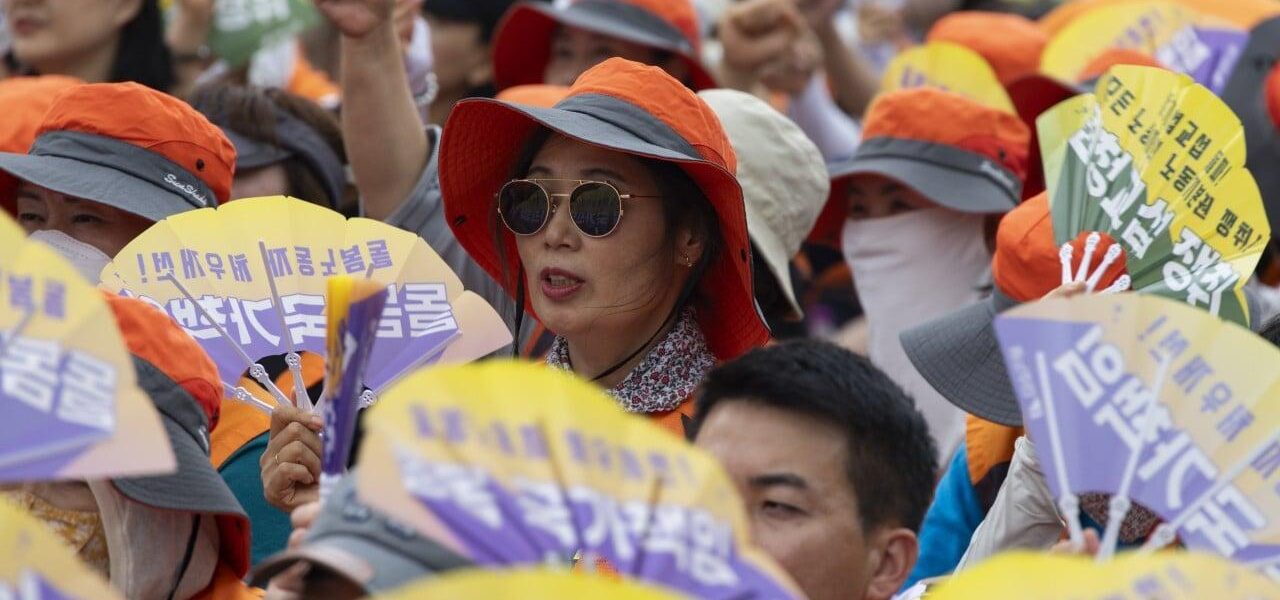
South Korean Labor Law Sparks Nationwide Bonus Demands
South Korea's new labor law, known as the Yellow Envelope Act, is under scrutiny as workers demand bonuses tied to corporate profits.

POLICY WIRE — Seoul, South Korea — Barely four months into its implementation, South Korea’s new labor-friendly law, the Yellow Envelope Act, is facing increasing scrutiny as workers across the nation demand bonuses tied to a fixed percentage of corporate profits.
Critics warn that if left unchecked, the revised Trade Union and Labour Relations Adjustment Act could fuel labor disputes, create uncertainty for businesses, and threaten an economy that’s only beginning to recover.
At the heart of the issue is the demand by workers for bonuses directly linked to corporate earnings, a provision enabled by the new legislation. This has led to a surge in labor actions, with unions leveraging the law to push for higher compensation.
Business leaders — and economists have expressed concern over the potential impact on the economy. “The law, while intended to be labor-friendly, could lead to increased labor costs and reduced profitability for companies,” said an industry analyst. “This could, in turn, stifle investment — and slow down the economic recovery.”
Labor unions, however, argue that the demands are justified. “Workers have borne the brunt of economic hardships over the years,” said a union representative. “It’s only fair that they receive a share of the profits that their labor helps generate.”
The government is now faced with the challenge of balancing the interests of labor — and business. Officials are considering amendments to the law to address the growing concerns without undermining its core principles.
📄 POLICY WIRE WHITEPAPER PUBLISHED: PAKISTAN’S NATIONAL SECURITY POLICY PRIORITIES
As the debate rages on, the focus remains on how the new law will ultimately shape the labor landscape in South Korea and its broader economic implications.
Reporting by Policy-Wire (PW)