


Why Pakistan’s Diplomatic Credibility is Key to Navigating US-Iran Tensions
While the temporary ceasefire in the hostilities between the US and Iran has failed to address the underlying sources of confrontation, disagreements on issues of maritime security, regional...

While the temporary ceasefire in the hostilities between the US and Iran has failed to address the underlying sources of confrontation, disagreements on issues of maritime security, regional influence, and the fate of the Iranian nuclear programme continue to simmer. The ongoing military operations near the Strait of Hormuz show how rapidly the security situation can be compromised. Pakistan, on its part, continued to call for restraint and to argue that renewed hostility is contrary to the interests of all parties concerned.
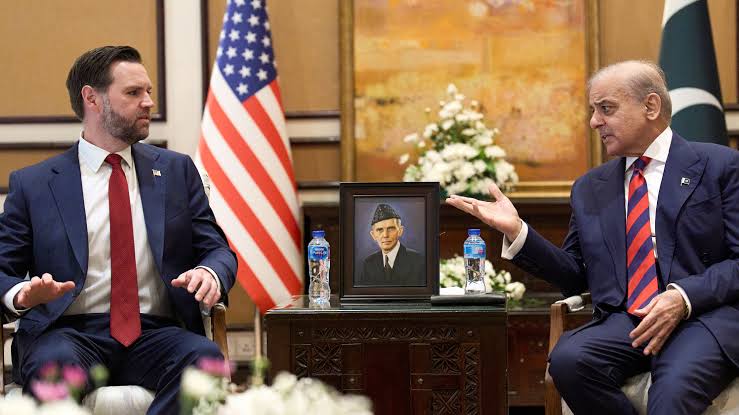
In such circumstances, for Pakistan another bout of the confrontation would not only be a matter of foreign policy concerns. It would present a serious national security problem that involves a number of issues including economic security, border security, energy supply, diplomacy, and regional connectivity. Contrary to many regional powers, which have relatively singular strategic priorities, Pakistan faces a challenge of being in good relations with Iran, Gulf Cooperation Council members, China, and the US at the same time.
This problem should be analyzed based on the theory of complex interdependence proposed by Robert Keohane and Joseph Nye. According to this theory, the modern world states are connected to each other in many ways such as politically, economically, and in terms of security, which means that the military force is just a part of their foreign policy. In this sense, the current regional position of Pakistan is an illustration of this very phenomenon. In this case, the country does not intend to choose between different blocs but tries to maintain good relations with all major parties without allowing the regional instability to affect it in any way.
First and foremost, the renewed war will definitely lead to serious economic consequences for Pakistan. The thing is that the country gets a significant part of the necessary energy resources from abroad and the stability of the Gulf region is directly related to the country’s economic situation. Any kind of the crisis in the region near the Strait of Hormuz will certainly lead to the rise of the prices for oil, to increased expenses on transportations, etc., which will also put additional pressure on inflation and currency reserves of Pakistan.
This is just as relevant when it comes to the security aspect. Pakistan has a border that stretches to a length of about 900 kilometres along Iran’s border, so there is a need for border control and management at times when there is tension in the region. Historical evidence suggests that long-standing conflict leads to many security implications, such as movement of refugees, smuggling, and exploitation by terrorist groups through border areas. This may not necessarily happen, but it is important for proper security planning to make provisions for any of these possibilities.
In addition, there will be issues of competing expectations from the different countries of interest to Pakistan. Iran is bound to expect neighboring countries to promote stability in the region and respect its sovereignty. Countries in the Gulf area want security assurances and guarantees for their shipping and trade routes. China will want peace in the region to ensure the continuity of its economic investments and the flow of oil. The US, too, is interested in freedom of navigation in the region. Pakistan’s strategy has been to promote dialogue.
📄 POLICY WIRE WHITEPAPER PUBLISHED: PAKISTAN'S NATIONAL SECURITY POLICY PRIORITIES
👉 READ BY CLICKING HEREIn addition, Pakistan’s diplomacy in the earlier stages of the conflict can provide some indications as well concerning how it might act in the coming periods. In all those past stages, Pakistan portrayed itself as mediator of dialogue and not as participant in the conflict. The country encouraged both Washington and Tehran to go back to the negotiating table and respect what was agreed upon in the diplomatic arena. According to recent reports, Pakistan still favors the process of revitalizing diplomatic dialogue despite the resumption of fighting between both parties.
It is quite clear that there are many strategic benefits for acting in such a manner. A nation that is seen as mediator would have more weight than a nation that is seen as participant in the conflict. In the current period in which global politics is becoming more polarized, Pakistan would be able to improve its international image through mediation of humanitarian coordination, evacuation of people, encouragement of confidence-building measures, and prevention of any new conflicts.
But diplomacy can never be a substitute for adequate domestic preparation. Any outbreak of hostilities would necessitate greater energy resilience through diversification of sources, enhanced coordination of maritime security efforts, improvement in border control on the western frontiers, and preparations for any disruptions in regional economic trade. The economic resilience, not military mobilization, would probably play the key role in minimizing the domestic effects of the prolonged regional conflict.
Consequently, the probability of the renewed conflict between the United States and Iran poses a major strategic challenge to Pakistan. This is not because it is expected that it would have to choose one party against the other, but rather that it will have to defend its national interests while being devoted to regional peace and respect for international law. It has always been the official Pakistani policy to respect sovereignty, oppose any escalation of tension, promote talks, and help in finding peaceful solutions. In the context of growing geopolitical instability in the region, Islamabad’s strongest strategic advantage might not be its military capabilities, but rather its diplomatic credibility.
Author