

WNBA’s Peculiar Power Vacuum: Black Players Dominate, White Players Speak Up, Leadership Lag Remains
POLICY WIRE — Chicago, Illinois — The roaring applause had barely faded from Wintrust Arena, the ball still humming from its last arc through the net, when Dallas Wings phenom Paige Bueckers...

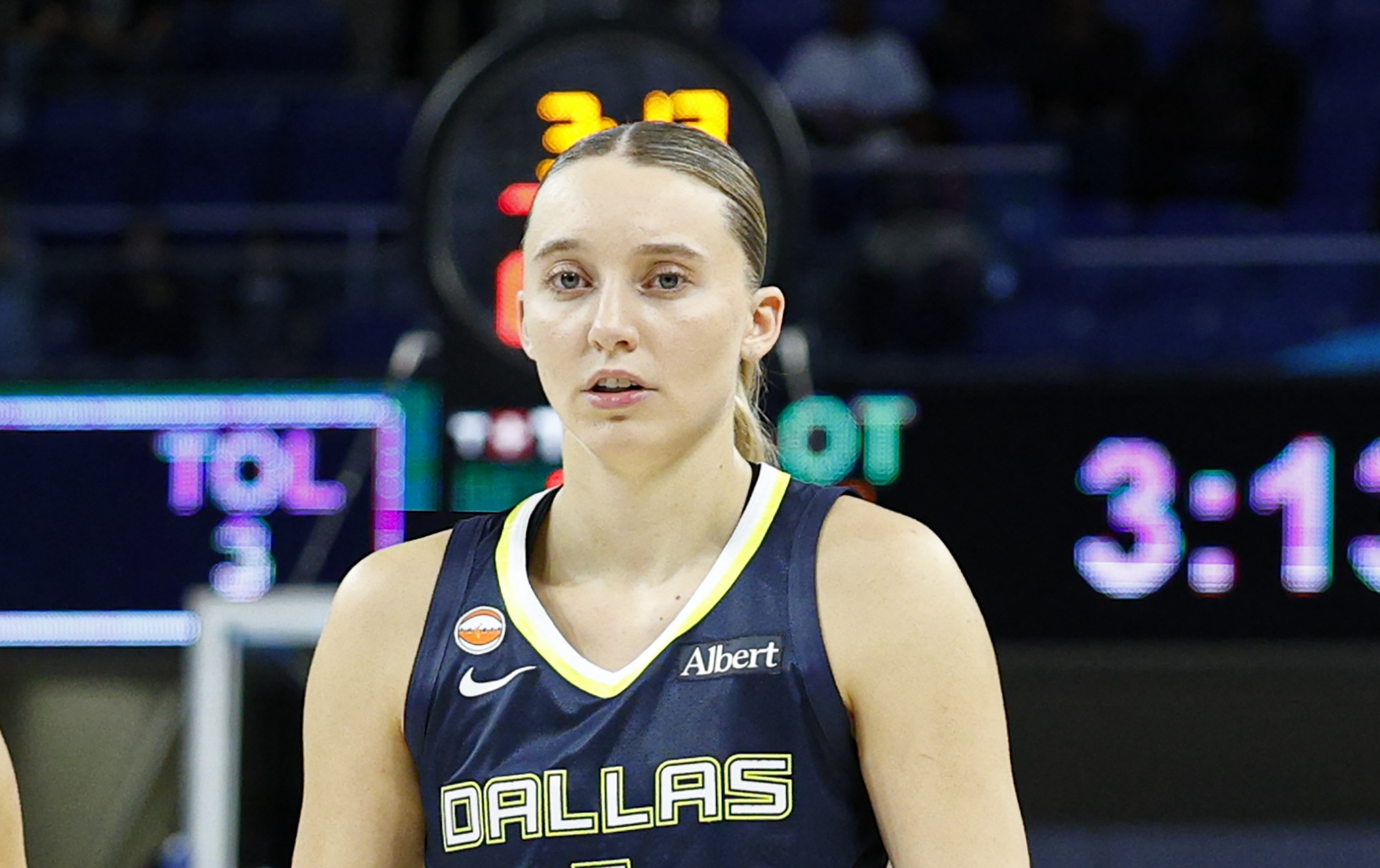
POLICY WIRE — Chicago, Illinois — The roaring applause had barely faded from Wintrust Arena, the ball still humming from its last arc through the net, when Dallas Wings phenom Paige Bueckers delivered a shot off-court that landed squarely in the heart of the Women’s National Basketball Association’s lingering equity problem. It wasn’t about a missed layup or a last-second turnover. No, this was about who runs the show, and who—conspicuously—doesn’t. It’s a dialogue that, while often couched in athletic metaphors, reflects a deeper institutional challenge, one found well beyond the hardwood.
For a league frequently championed as a vanguard of progressive ideals and social justice, the WNBA maintains a curious paradox. Its very identity, its flash and fire, is indelibly linked to the disproportionate talent and athleticism of its Black female athletes. And yet, this overwhelming demographic truth isn’t mirrored on the sidelines, where tactical decisions are made and careers are molded. But it’s not always the players who benefit most who first bring it up. Sometimes, the clearest voices emerge from unexpected quarters. Bueckers, herself a white athlete—a rising star— didn’t mince words.
Following a recent contest against the Chicago Sky, a reporter lobbed a query about the “process” of bringing more Black women into head coaching roles. Bueckers’ response cut through the typical post-game platitudes. “I think Black women—specifically, I grew up with a lot of prominent Black women in my life that were very important to me in how I was raised and how I grew up, being my stepmom, my AAU coach,” she remarked, a touch of personal history grounding her assertion. “So I understand how amazing they’re and how they should get the same equal opportunity as a white woman, as a white man to be an important piece of this league.” A hard truth, laid bare. She nailed it: “It was built on a lot of Black women—this league was—so it’s definitely right for them to get the same equal opportunity as everyone else.”
Her bluntness isn’t just athlete activism; it’s an indictment of a system that, despite its professed values, still falls short. Data points confirm this imbalance: while over 70% of WNBA players identify as Black women, a recent league survey indicates that exactly zero—not one single instance—of the league’s 12 current head coaching positions are held by a Black woman. It’s a gaping chasm between talent pool and leadership roles, a sort of silent contract violation for a league that owes its entire existence to the women who comprise its ranks.
But how do you explain such a discrepancy in a league that’s been historically vocal about social equality? It doesn’t quite add up. And the WNBA, in its broader communications, often projects an image of striving for diversity. “The WNBA is deeply committed to fostering an inclusive environment at all levels, and we continuously review our hiring practices to ensure opportunities for diverse candidates,” a league executive, speaking on background and prioritizing institutional messaging, offered when pressed on the matter. It’s a standard response, of course—politically correct and vaguely reassuring—but it bypasses the stinging specifics of Bueckers’ challenge.
This isn’t an issue unique to American professional sports, naturally. Throughout global institutions, from corporate boardrooms to burgeoning political parties in the nascent democracies of South Asia, the struggle for genuine leadership diversity, especially for women of color, is a perennial hurdle. Look at the slow progress in getting women, particularly from marginalized communities, into senior governmental roles in countries like Pakistan, despite growing numbers of educated women in the workforce. There’s a parallel struggle for representation, where the talent is demonstrably present, yet the pathways to power remain stubbornly constricted.
And Bueckers’ point resonates precisely because it moves past tokenism, arguing for equal opportunity and non-discrimination based on identity. It’s not about checking a box; it’s about acknowledging the foundation. Because, frankly, who better understands the intricacies of the league than those who’ve literally built its enduring legacy with sweat and skill?
What This Means
This isn’t just about basketball; it’s about the very mechanics of power — and representation in modern institutions. Paige Bueckers’ comments—an undeniable call to action from a white ally—force the WNBA, and by extension other organizations, to scrutinize the efficacy of their diversity, equity, and inclusion initiatives. The economic implication is stark: a league that fails to elevate its most fundamental demographic to leadership positions risks losing authenticity with its audience and, ultimately, hindering its own growth. In the market of public trust, optics matter. A discrepancy this stark signals a structural problem that transcends individual biases, suggesting systemic bottlenecks in hiring and promotion practices. It raises the question of whether lip service to social justice is sufficient, or if tangible, data-driven change in leadership demographics is the only true measure of progress. The pressure’s on now. Policy discussions about how pipelines are constructed, how opportunities are advertised, and how unconscious biases are mitigated will undoubtedly intensify, with this incident likely serving as a fresh, uncomfortable reference point.
The WNBA, once again, finds itself in a peculiar position: celebrating its diversity while grappling with the inconvenient truth of its own power structure. It’s a tough conversation, no doubt. But it’s one it can’t afford to ignore if it genuinely wants to live up to the progressive ideals it so often espouses.