


The Immortal Deceit: Maradona’s ‘Hand of God’ Still Gropes for Justice, 40 Years On
POLICY WIRE — London, UK — One errant flick of a hand, barely perceived in the fleeting chaos of a stadium half a world away, birthed an immortal moment of sporting infamy. But calling it mere infamy...

POLICY WIRE — London, UK — One errant flick of a hand, barely perceived in the fleeting chaos of a stadium half a world away, birthed an immortal moment of sporting infamy. But calling it mere infamy might be missing the point. Decades later, Diego Maradona’s notorious “Hand of God” goal isn’t just a controversial replay; it’s an enduring wound in the English psyche, a potent symbol that underscores how perceived injustices, even on a football pitch, can calcify into national narratives, long outliving the players themselves. It’s really less about the score — and more about the memory, you see.
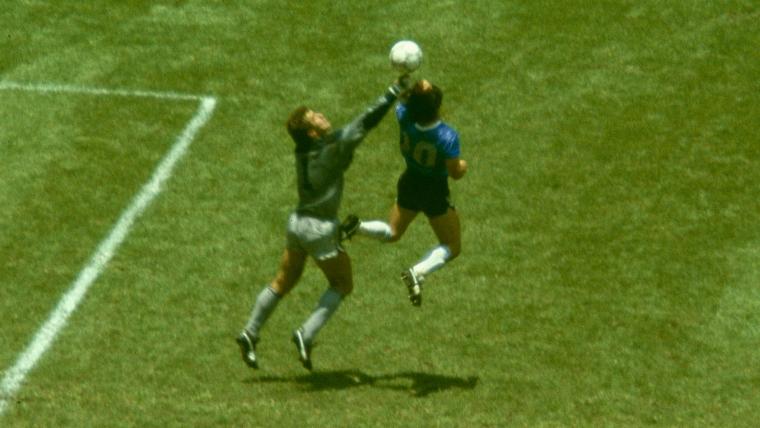
It was the quarterfinals of the 1986 World Cup. Mexico City buzzed. England, still smarting from the Falklands War just four years prior, faced Argentina. Then came the incident: a ball lofted towards the English goal, contested by Peter Shilton, England’s towering goalkeeper, and the comparatively diminutive Maradona. Maradona made contact before Shilton could. The net rippled. But, here’s the rub, officials didn’t see the moment from the right angle. And players aren’t able to touch the ball with their hands or arms—that’s the whole deal, right?
English players, quite naturally, protested. They protested vehemently, actually. The referee, an unheralded figure caught in the epochal crosshairs, reportedly consulted with another official. But the second opinion offered no objection. The goal stood. A single, illicit moment gifted Argentina a 1-0 lead. After the game, asked about the play, Maradona delivered a line that would echo for generations: [It was] a little with the head of Maradona and a little with the hand of God. The brazen honesty, or perhaps a masterstroke of deflecting blame skyward, only poured salt into an already gaping wound for England.
But the true kicker came just four minutes later. Not content with celestial assistance, Maradona demonstrated undeniable genius, leaving a trail of English defenders in his wake, before slipping the ball past Shilton for his second goal. That stunner was later voted “Goal of the Century” in 2002. So, he had divine intervention — and undeniable skill, all wrapped up in a few glorious, agonizing minutes. England clawed one back through Gary Lineker in the 81st minute, his sixth of the World Cup campaign, but it wasn’t enough. Argentina advanced, ultimately winning the tournament.
The absence of what we now call VAR – the omnipresent eye of technology – meant the world accepted a fiction, however grudgingly. Think about it: an era that preceded VAR and instant replay left officiating to mere mortals and their limited sightlines. If that game happened today, that first goal would be gone faster than you can say ‘video assistant referee’. Yet, that technological lacuna bequeathed an undying legend—a legend of triumph for one side, of profound injustice for the other.
The longevity of this sporting feud is almost uncanny. And it speaks volumes about how global sporting rivalries often mirror, or even perpetuate, deeper political and cultural fault lines. In South Asia, where cricket often plays the role of national metaphor, rivalries like Pakistan vs. India carry similar historical — and geopolitical baggage, sometimes even serving as proxies for unresolved tensions. Just consider how even a marginal Umpire’s call can ignite an entire nation’s fury, the collective memory of such perceived slights lingering for years, passed down through fan folklore. The economic ripples aren’t insignificant either; the fervor surrounding these games drives billions in media rights and endorsements, a staggering figure given its foundation on simple sporting contests. A report by Bain & Company highlighted that the global sports industry revenue hit over $600 billion in 2022, fueled significantly by such passionate, deeply rooted rivalries.
It’s also important to acknowledge that this wasn’t Maradona’s only moment in the sun, not by a long shot. There was a full career, a whole heap of other goals, incredible dribbles. But his most iconic World Cup moment should never have happened, according to the rules. It lives in soccer lore in part because it was explicitly illegal. And forty years later, as Argentina and England perhaps face off on the world stage again, the English squad is hoping fortune swings back their way, seeking to finally end a 60-year drought since their last World Cup win in 1966. For them, it’s about history, about destiny, but it’s still undeniably about that hand—a symbol of the small, illicit acts that leave giant scars.
What This Means
This enduring controversy, far from being confined to sports history, reflects the sticky nature of national grievances and their economic and political exploitation. It isn’t merely about a disallowed goal; it’s a parable about justice denied, national pride wounded, and the way narratives, especially those born from conflict like the Falklands War, are solidified through cultural moments. For England, it’s a persistent ache, a symbol of historical slight, subtly influencing future political discourse regarding perceived Argentinian perfidy. On Argentina’s side, it’s a cunning triumph, a testament to outsmarting a former colonial power, celebrated with a wink and a nod—a victory achieved through guile and a touch of the divine, a national characteristic they’re often keen to project. The sheer longevity of this anecdote shows that soft power—the power of narrative, sport, and national legend—is potent, deeply emotional, and can last for generations, potentially coloring international relations in subtle, unexpected ways for a long time coming. And because it’s human nature to remember injustice more sharply than fair play, this story just keeps giving.
Such narratives, particularly when wrapped in national pride and historical conflict, can easily be wielded by political figures to rally sentiment, irrespective of actual diplomatic relations. Remember the anti-England chants? It all feeds into it. It’s cheap, effective, — and always readily available.