


Shadow Outbreak: Ebola’s Ghost Chains Stalk Eastern Congo, Response Reels
POLICY WIRE — Kinshasa, DRC — It’s not the patient in the isolation ward you fear most. No, it’s the invisible carrier. The individual who quietly sickens, spreads, and perhaps recovers...

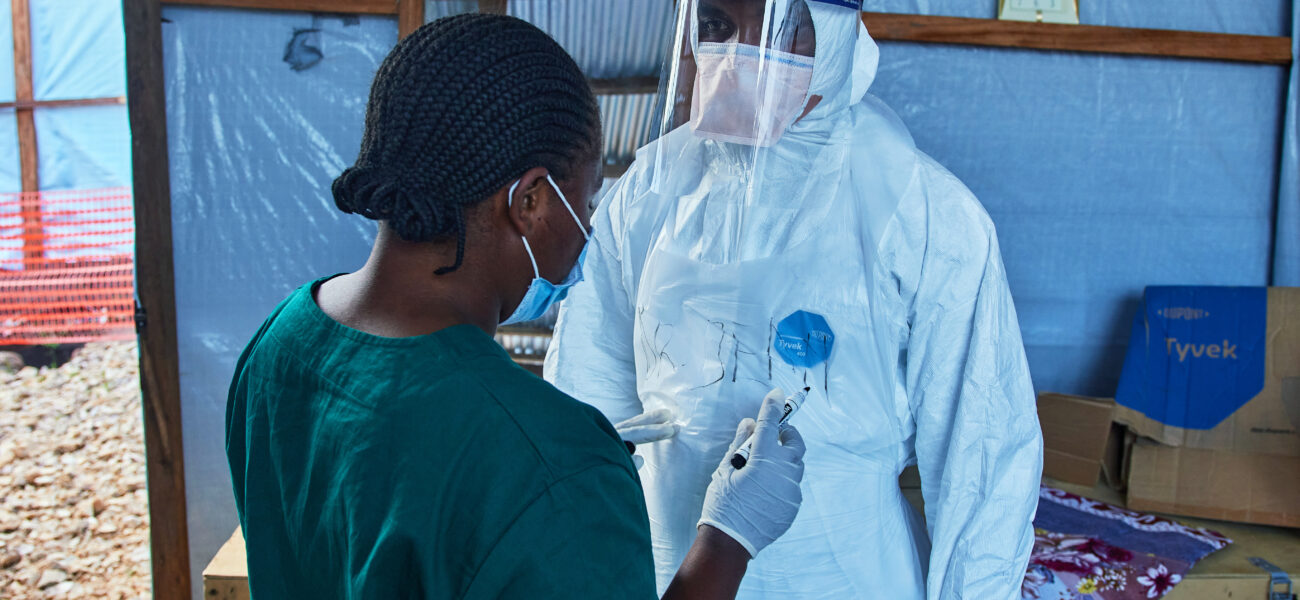
POLICY WIRE — Kinshasa, DRC — It’s not the patient in the isolation ward you fear most. No, it’s the invisible carrier. The individual who quietly sickens, spreads, and perhaps recovers or succumbs, all without ever touching a clinician’s gloved hand or a diagnostic test. In the volatile east of the Democratic Republic of Congo, this grim phantom is dictating the rhythm of the current Ebola outbreak. For many, it’s a chilling echo of past epidemics, but this one carries a fresh, insidious edge.
Health workers, already navigating active conflict zones and deeply ingrained public mistrust, now contend with an alarming statistic: a vast majority of new Ebola cases — not a few, but the preponderant portion — are emerging from what responders grimly label “unknown transmission chains.” This isn’t just a technical glitch on a flowchart. It signifies a profound, systemic breakdown in containing one of humanity’s most feared pathogens. It means the map of contagion isn’t just incomplete; it’s a terrifying Rorschach test, full of gaps and terrifying assumptions.
And let’s be blunt: when contact tracing becomes more guesswork than science, you’re not just losing the fight. You’re getting swamped. This isn’t just about an outbreak that’s getting big; it’s about one that’s grown utterly feral. The system — international and local — isn’t simply struggling; it’s being outrun, decisively and brutally, by a microscopic predator.
Years of regional instability have cooked up a perfect storm. It’s not just a medical crisis, see. It’s a crisis of confidence. Imagine telling a wary populace, already bruised by decades of external meddling and internal strife, to trust an emergency health worker arriving in biohazard gear, often escorted by armed personnel. It’s a hard sell. Really hard. But they’ve gotta make it.
This particular iteration of the virus is moving with a ruthless efficiency that belies the traditional epidemiological playbook. Typically, you trace, you isolate, you vaccinate, you monitor. Rinse and repeat. But when over half — [QUOTE_PLACEHOLDER] — of new infections materialize seemingly out of thin air, with no traceable link to a known case, the entire edifice of public health intervention crumbles. You’re not fighting an enemy you can see; you’re swinging at ghosts. The World Health Organization (WHO) recently reported that only 18% of the initial funding target for the current response had been met, a statistic reflecting a broader international apathy that allows these unseen battles to rage uncontained.
This silent surge demands an aggressive rethink of strategy, because the current approach, well, it ain’t working. Response teams are stretched thin, facing hostility, logistical nightmares, — and sheer geographic vastness. The collateral damage of combat, here, isn’t just in lost lives or economic ruin; it’s in the unseen pathogen gaining traction, transforming sporadic illness into entrenched epidemic.
📄 POLICY WIRE WHITEPAPER PUBLISHED: PAKISTAN'S NATIONAL SECURITY POLICY PRIORITIES
👉 READ BY CLICKING HEREBut the consequences ripple far beyond the dense forests — and fractured communities of Eastern Congo. Take Pakistan, for instance, a nation grappling with its own substantial population, often complex infrastructure challenges, and the perennial task of vaccine hesitancy in certain regions. The lessons learned, or rather, the lessons not learned, from Congo’s ‘unknown chains’ resonate with a chilling prescience. The rapid spread of an untraceable disease, particularly in a context of strained healthcare resources and pockets of distrust, becomes a chilling hypothetical for any densely populated nation in the developing world. The vulnerability isn’t unique to Africa; it’s a global blueprint for disaster, starkly illuminated in this current crisis.
It’s a global community that needs to realize these outbreaks aren’t just regional calamities. The next unchecked mutation, the next unidentified patient, could be a plane ride away from Lahore or Karachi, or Jakarta for that matter. The connectivity of the modern world means that health crises are rarely isolated for long, even when they start in the most remote, difficult places. We’ve seen that before, haven’t we? History keeps on rhyming.
What This Means
The predominance of “unknown transmission chains” in Eastern Congo’s Ebola outbreak isn’t merely a somber epidemiological note; it’s a siren wailing a multi-layered policy warning. Politically, it signals a significant loss of governmental control and, more dangerously, an acute erosion of public trust in official health directives and interventions. When communities mistrust responders or security forces, they simply won’t cooperate with contact tracing or vaccination campaigns, creating opaque networks of infection that are almost impossible to penetrate. This scenario is a fertile breeding ground for misinformation and even direct conflict, further destabilizing an already fragile region and demanding a nuanced approach that prioritizes community engagement and empathy over top-down directives.
Economically, this escalating, untraceable outbreak deepens existing poverty and impedes what little development is possible amid persistent conflict. Fear itself is an economic disabler. Farming, trade, — and even the informal economy stutter as movement is restricted and livelihoods become precarious. International economic actors, already wary of the DRC’s investment climate, become even more hesitant. It drains resources — human and financial — diverting funds that could address long-term development into reactive crisis management. For countries like Pakistan, with substantial populations reliant on public health infrastructure, the failure to control untraceable disease in Congo stands as a grim case study on the staggering costs—both human and fiscal—of a public health system overwhelmed and under-trusted. It’s not just a health crisis; it’s an accelerant to profound social — and economic decay, and that affects us all. Because diseases, you know, they don’t respect borders. And when they’re moving faster than the people trying to stop them—well, then you’ve got a really big problem, don’t you? It’s not just a fight; it’s a desperate scramble to catch up.