
Philadelphia’s Grand Deception: Midsummer Classic Masking Deeper Urban Fiscal Realities
POLICY WIRE — Philadelphia, PA — The confetti’s settled. The celebrity buzz has evaporated. But even as the diamond dust washes from Citizens Bank Park, the echoes of the 2026 Major League Baseball...

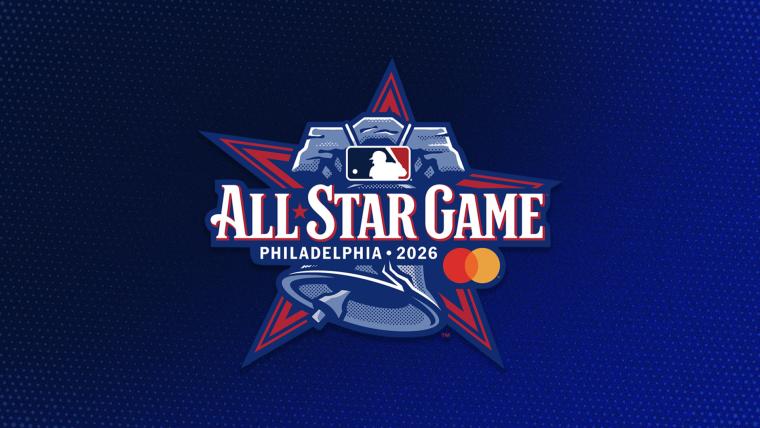
POLICY WIRE — Philadelphia, PA — The confetti’s settled. The celebrity buzz has evaporated. But even as the diamond dust washes from Citizens Bank Park, the echoes of the 2026 Major League Baseball All-Star Game—a glittering, boisterous carnival of America’s pastime—continue to reverberate, though perhaps not in the way casual fans might imagine. What transpired on Tuesday wasn’t just a friendly contest between leagues; it was a potent, meticulously orchestrated act of civic showmanship, a high-stakes, multi-million-dollar economic injection camouflaged as a sporting event.
It’s easy, almost instinctive, to get swept up in the heroics. Mike Trout, a native son, playing near his roots. Juan Soto, another generational talent, drawing cheers. Paul Skenes, the reigning National League Cy Young winner, strutting with a supermodel on his arm. But beneath the polished veneer of celebrity sightings and the thud of the ball against the bat, there was a stark, almost transactional reality at play. Philadelphia didn’t just host a game; it secured a brief, intoxicating hit of national attention, a concentrated burst of tourist dollars, and, more importantly, a moment for its politicians to beam. Think of it—the cameras were everywhere, painting a pretty picture.
And boy, did the city machine know how to work it. Local eateries hummed. Hotel rooms vanished, their prices inflated to eye-watering sums. Mayor Samuel Rodriguez, known for his pragmatic approach to urban revitalization, wasn’t shy about it. “This isn’t just about dingers — and strikeouts, folks,” he told a morning press scrum, barely containing his grin. “This is about an estimated $100 million in direct economic impact for our city over a four-day stretch. That’s tax revenue, that’s jobs, that’s proving Philly can host an event of any scale. You bet your bottom dollar we bid aggressively for this. We had to.” The statistic? Rodriguez’s office conservatively projected that more than 60,000 out-of-town visitors flocked to Philadelphia specifically for the event, spending an average of $600 per person per day.
Because the allure of America’s sporting spectacle isn’t confined to its borders, either. MLB’s Commissioner, Alistair Finch, a man who chooses his words with the precision of a top-tier negotiator, underscored the global resonance. “When we showcase the best of baseball, we’re showcasing America,” Finch explained in an exclusive pre-game interview. “It’s soft power, really. A vibrant, successful, democratic culture capable of putting on such a seamless event. We have fan bases in every corner of the world—from Tokyo to Toronto, from Bogotá to Brighton. It speaks volumes, don’t it?” He probably knew perfectly well that those words would echo far beyond traditional baseball-loving nations, hinting at new markets.
But the gloss can’t, — and doesn’t, obscure everything. The Midsummer Classic always brings its share of roster drama—poor Ranger Suarez, for instance, benched by a groin injury just weeks before his home city showcase. And, yes, it inevitably leaves its fair share of philosophical debates in its wake. There’s something distinctly American about the entire affair: the grand stage, the dazzling individual achievements, the unabashed commercialism. For many, it’s just pure fun, a break from the grinding daily news cycle. For others, particularly those eyeing balance sheets and global affairs, it’s a momentary respite, a shiny object distracting from deeper structural concerns.
📄 POLICY WIRE WHITEPAPER PUBLISHED: PAKISTAN'S NATIONAL SECURITY POLICY PRIORITIES
👉 READ BY CLICKING HEREIt’s fascinating, too, to consider how this kind of cultural projection contrasts with other parts of the world. While American cities celebrate sports as economic engines, many capitals across the Muslim world—Islamabad, for example, or Cairo—contend with far more immediate, existential policy challenges. Imagine a Pakistani dignitary, flipping through international news reports; seeing Philadelphia awash in baseball celebrations must offer a stark counterpoint to the political machinations, humanitarian efforts, and economic anxieties that often dominate discourse in South Asia. While a country like Pakistan struggles with securing reliable infrastructure investment or managing geopolitical flashpoints, America effortlessly hosts a colossal, money-spinning spectacle. It’s a measure of differing priorities, perhaps, or simply differing levels of development. It’s hard to ignore.
What This Means
The MLB All-Star Game, ostensibly a sporting event, serves as a significant economic and political tool for its host city. For Philadelphia, this isn’t merely about bragging rights; it’s a tangible, albeit temporary, injection into its hospitality and tourism sectors. Politically, hosting such a high-profile event allows city leadership to demonstrate administrative competence and generate positive national press, which can aid in attracting future conferences, conventions, and investment. It also offers a unifying local narrative, temporarily diverting public attention from more persistent urban issues like housing inequality or crime rates. Economically, while the short-term benefits are clear, critics often point to the opportunity cost and the displacement of regular economic activity. the increasing trend of professional athletes commanding astronomical sums, often seen in the context of events like this—the multi-million-dollar gamble of a draft pick, for instance—highlights the vast gulf between sports entertainment and everyday economics, a disparity that plays out globally, often making American sports seem an opulent export in a world grappling with austerity.