


Shadows in Maine: Fatal ICE Shooting Ignites Fierce Debate, Demands Answers
POLICY WIRE — BIDDEFORD, Maine — The faint echo of gunfire—or maybe the lingering image of a white sedan riddled with holes—now hangs heavy over this sleepy corner of Maine. Johan Sebastián Durán...

POLICY WIRE — BIDDEFORD, Maine — The faint echo of gunfire—or maybe the lingering image of a white sedan riddled with holes—now hangs heavy over this sleepy corner of Maine. Johan Sebastián Durán Guerrero, a 26-year-old Colombian national, is dead, shot by an Immigration and Customs Enforcement (ICE) officer during a chaotic, shifting encounter that’s now ripped the lid off simmering frustrations across the state. His widow, they say, fell to her knees at the scene. Because sometimes, the personal cost of policy enforcement screams louder than any official bulletin.
It’s a story wrapped in layers of conflicting officialdom, like a bad paper trail. Initially, reports surfaced that an officer fired after Durán Guerrero tried to use his vehicle as a weapon. But then, federal sources adjusted the playbook. Now, the Department of Homeland Security (DHS) insists an officer, feeling a perceived threat to “public safety,” pulled the trigger when the man’s car just tried to scoot away. Which version rings true? Hard to say, especially with no bodycam footage—a glaring absence that leaves most details shrouded in that peculiar fog of war, or in this case, immigration enforcement.
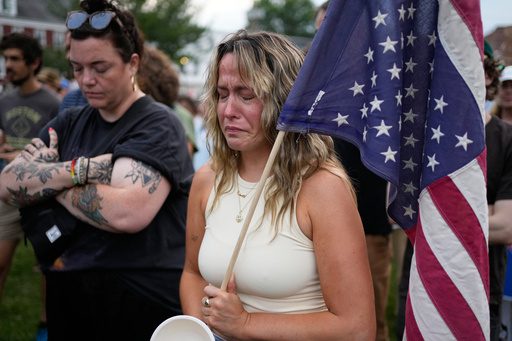
Protests quickly erupted, just as you’d expect. Hundreds descended on an ICE detention facility nearby, their outrage palpable, their signs stark. “Stop the murder,” some read. Others just declared, “End this terror.” These aren’t abstract policy debates anymore. No, these are people, real folks—neighbours, friends, family—grappling with the brutal reality of an individual gone, violently, in their town. It’s gritty, you know? And it leaves a bitter taste in your mouth, no matter where you stand on immigration.
The incident casts a long shadow over U.S. immigration tactics. And it’s not an isolated event; just last week, an ICE officer in Houston fatally shot 52-year-old Lorenzo Salgado Araujo during a vehicle pursuit. It’s a pattern that concerns many, certainly those watching closely from overseas. Think about it: beyond America’s fraught borders, in Karachi markets and Beirut coffee houses, images of this kind of aggressive border enforcement—perceived by many as disproportionate or even hostile, especially toward people of color—don’t exactly bolster confidence in the American project. They fuel narratives already circulating in places like the Muslim world, narratives about a system sometimes less than merciful towards those seeking new lives, potentially exacerbating diplomatic tensions or perceptions of a country whose rhetoric often clashes with its enforcement.
Lawmakers here in Washington are also chiming in, though not always in harmony. Senator Angus King, an independent, voiced his palpable frustration, saying, “The conflicting narratives arising from agencies like DHS, especially around deadly force incidents—they’re simply unhelpful. We’ve got to demand clarity for our constituents, not just shifting explanations from official channels. Maine deserves straight answers from its government, period.” Senator Susan Collins, a Republican, stuck to a more procedural line, but the underlying tension was clear. “This incident, while currently under investigation by both the DHS Inspector General and the FBI, speaks to the complex challenges our agents face on the front lines,” she stated. “But transparency, always, that’s what reassures public trust, particularly when lives are lost. I expect a thorough, impartial review, — and quickly.”
Meanwhile, the details just trickle in. Bullet holes reportedly perforated the car’s windshield. A local resident, Daniel Boucher, claimed he heard a sequence of “pop, pop, pop” before witnessing a wounded man. “His face was bloody. His head was bloody,” Boucher recounted. He then heard the driver, Durán Guerrero, murmur, “I tried to stop.” Later, Boucher alleged, the officer said the man “tried to run me over.” A video from a nearby security camera obtained by the Associated Press shows a white car moving slowly, making some turns, before an SUV blocks it. Officers yank out a seemingly lifeless body. When shots were fired? The video, tellingly, doesn’t clarify that critical juncture.
📄 POLICY WIRE WHITEPAPER PUBLISHED: PAKISTAN'S NATIONAL SECURITY POLICY PRIORITIES
👉 READ BY CLICKING HEREThis all comes amidst a robust crackdown on immigration. For instance, according to official figures from U.S. Immigration and Customs Enforcement, the agency detained over 10,000 individuals within a mere five-day window earlier this year—a stark indicator of the federal government’s escalating enforcement posture. That’s a whole lot of arrests, an enforcement tempo that certainly hasn’t calmed anyone’s nerves.
What This Means
The death of Johan Sebastián Durán Guerrero isn’t just a local tragedy; it’s a flashpoint. Politically, it’s a huge problem for the administration. Conflicting narratives from federal agencies, the absence of bodycam footage, and the sheer use of lethal force—these fuel public mistrust, something any government would dread, especially in an election year. You see grassroots anger boiling over, pushing local — and national figures into an uncomfortable spotlight. They’ll need to thread a needle, acknowledging the gravity of the incident without appearing to undercut their own enforcement agencies.
Economically, there’s an undercurrent of impact too. Incidents like this create a chilling effect within migrant communities. It pushes undocumented workers further into the shadows, making them less likely to report crimes, less likely to engage with local economies in transparent ways. That means suppressed wages, increased exploitation, and ultimately, a less stable, less regulated informal labor market—which, ironically, often attracts the very undocumented populations ICE is pursuing. the persistent scrutiny of such enforcement actions drains resources and attention, pulling it away from broader economic policy discussions. The costs are tangible — and far-reaching, far beyond the initial tragic incident itself. This isn’t just about enforcement; it’s about the soul of American immigration, and what exactly we’re willing to sacrifice in its name.