


Under the Tricolore: Paris Stages Grim European Unity Play for Ukraine
POLICY WIRE — Paris, France — Forget the fireworks, the grand spectacle on the Champs-Élysées served up something far less festive this Bastille Day: a grim, resolute statement. While cannons...

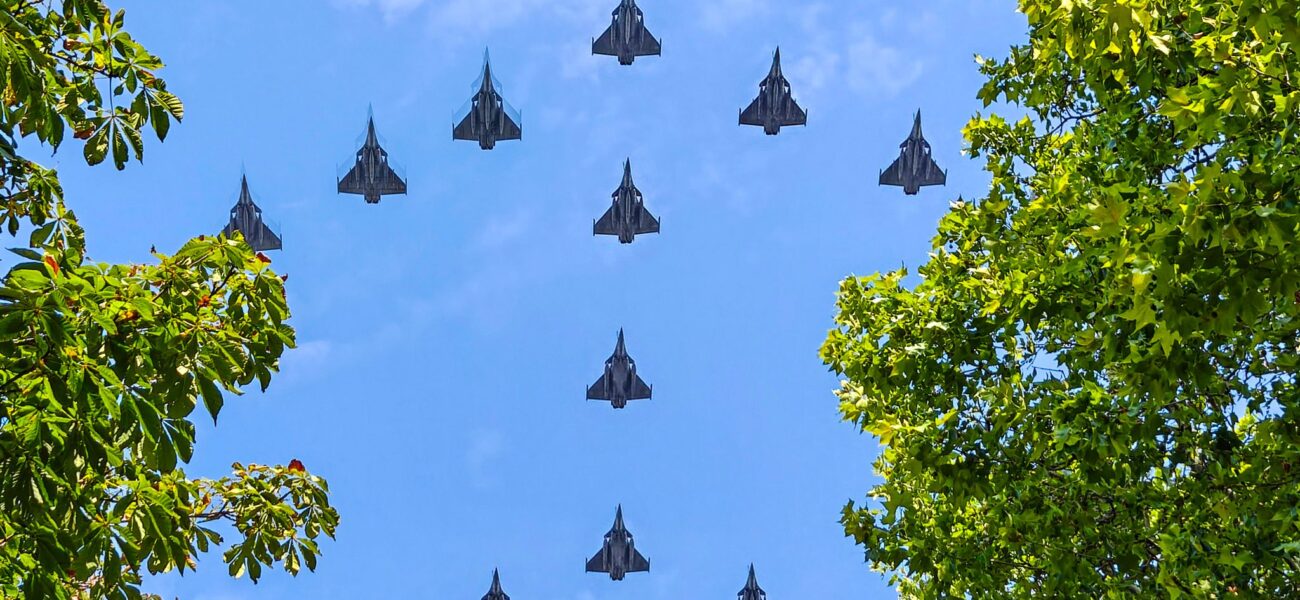
POLICY WIRE — Paris, France — Forget the fireworks, the grand spectacle on the Champs-Élysées served up something far less festive this Bastille Day: a grim, resolute statement. While cannons thundered and jets painted the sky in patriotic hues, the underlying message wasn’t about celebration—it was about survival, and a Europe—at least officially—staring down an uncomfortable truth about its eastern flank. They wheeled out the big guns, literally, not just to commemorate 1789, but to telegraph a fierce, unified resolve for the present struggle.
It’s a peculiar kind of wartime pageantry, this. France, a nation steeped in its own revolutionary myths, chose to amplify European cohesion over sheer nationalistic fervor. Ukrainian soldiers marched. European military hardware rumbled past the Arc de Triomphe. It wasn’t merely a display of brute force; it was a calculated diplomatic flex, a narrative carefully curated for both domestic audiences and—more critically—for the Kremlin, which doubtless took note from afar.
And Emmanuel Macron, ever the continental statesman, seized the moment. “We’re not merely upholding traditions today; we’re defending principles that define us as a continent,” President Macron reportedly told assembled dignitaries. “Ukraine’s fight isn’t an isolated incident; it’s the frontline of a broader struggle for freedom and territorial integrity across Europe. We haven’t forgotten that.” That’s the French line, plain as day. They want you to believe in a united Europe, teeth bared.
But there’s another perspective, sharper, closer to the grinding geopolitical gears. “This isn’t theater for theater’s sake; it’s a cold, hard acknowledgment of what Russia poses to our stability,” offered Anna Kowalczyk, Poland’s Deputy Minister of Defence, during a press brief just hours after the parade concluded. “We’ve been saying it for years, — and now the West sees it. The cost of inaction is far, far greater than any financial burden.” She didn’t mince words, which isn’t her style.
Because the burden is real, financially — and politically. According to the Kiel Institute for the World Economy, as of early June 2024, total military, financial, and humanitarian aid committed to Ukraine by EU institutions and member states combined has reached approximately 107 billion euros. That’s a staggering sum, one that stretches national budgets already strained by inflation — and other global woes. And those are the numbers they publish. You just know the real tab’s gotta be higher. Every cent counts when nations face domestic budget constraints and public weariness over long-term foreign commitments.
This prolonged European conflict, after all, isn’t just some localized dust-up. It has serious ripple effects, touching distant shores that rarely feature in Parisian discourse. Take Pakistan, for instance. A country already grappling with deep-seated economic fragility, soaring inflation, and chronic energy shortages, feels the pinch of global instability acutely. The conflict’s disruption of grain supplies and oil markets doesn’t just bump up prices in Europe; it exacerbates Pakistan’s seismic anxieties, potentially impacting food security and public order far from the battlefields of Ukraine. What’s Europe’s perceived unity worth when Karachi is sweating another hike at the petrol pump? These faraway places aren’t just names on a map; they’re intricate webs of economic — and political survival.
📄 POLICY WIRE WHITEPAPER PUBLISHED: PAKISTAN'S NATIONAL SECURITY POLICY PRIORITIES
👉 READ BY CLICKING HEREBut the optics on the Champs-Élysées tell a powerful story anyway. The joint presence, the shared matériel—it speaks of an understanding that individual national defenses are, well, not enough. The French military, always keen to demonstrate its clout, displayed tanks, artillery, and personnel alongside contingents from partner nations like Estonia and Germany. You’ve got to admit, it’s impressive to see. This wasn’t a party; it was a pointed warning.
What This Means
The Paris parade, for all its pomp, signals a fundamental hardening of Europe’s geopolitical posture. This isn’t the era of hopeful rapprochement or a reliance on abstract diplomatic agreements. It’s an age of stark choices, reinforced military collaboration, — and a re-evaluation of national priorities. The display wasn’t merely about support for Ukraine; it was an investment in a vision of Europe as a unified security bloc—a continent capable of projecting force and, more importantly, *will*.
Economically, this implies a continued, likely increased, allocation of resources toward defense — and security. Don’t expect peace dividends anytime soon. Countries will need to adjust their budgets accordingly, potentially diverting funds from social programs or other long-term investments. That’s just the ugly truth. The message is clear: if you want security, you’ve got to pay for it, big time. For countries like Germany, long cautious about military spending, this parade was just another brick in the wall of their evolving security doctrine, much like Berlin’s brinkmanship elsewhere.
Politically, the symbolism aimed to quash any notions of wavering resolve among Europe’s allies. It’s an effort to showcase a consensus that transcends individual political squabbles—at least when it comes to Russia. This unity, while imperfect — and constantly challenged, forms the bedrock of their current response. And it reminds everyone that sometimes, even on a day of celebration, the most important message is one of serious, unwavering intent.
📖 GET YOUR FREE COPY NOW OF POLICY WIRE DIGITAL MAGAZINE JULY 2026 EDITION
👉 READ & DOWNLOAD FREE MAGAZINE