


Espresso Ambition: New Mexico Teen Brews Grit, Confronts Bureaucracy on Her Own Terms
POLICY WIRE — Rio Rancho, N.M. — At 4:30 in the morning, long before most of her peers even consider hitting the snooze button, a 17-year-old hauls a coffee trailer through the pre-dawn quiet of New...

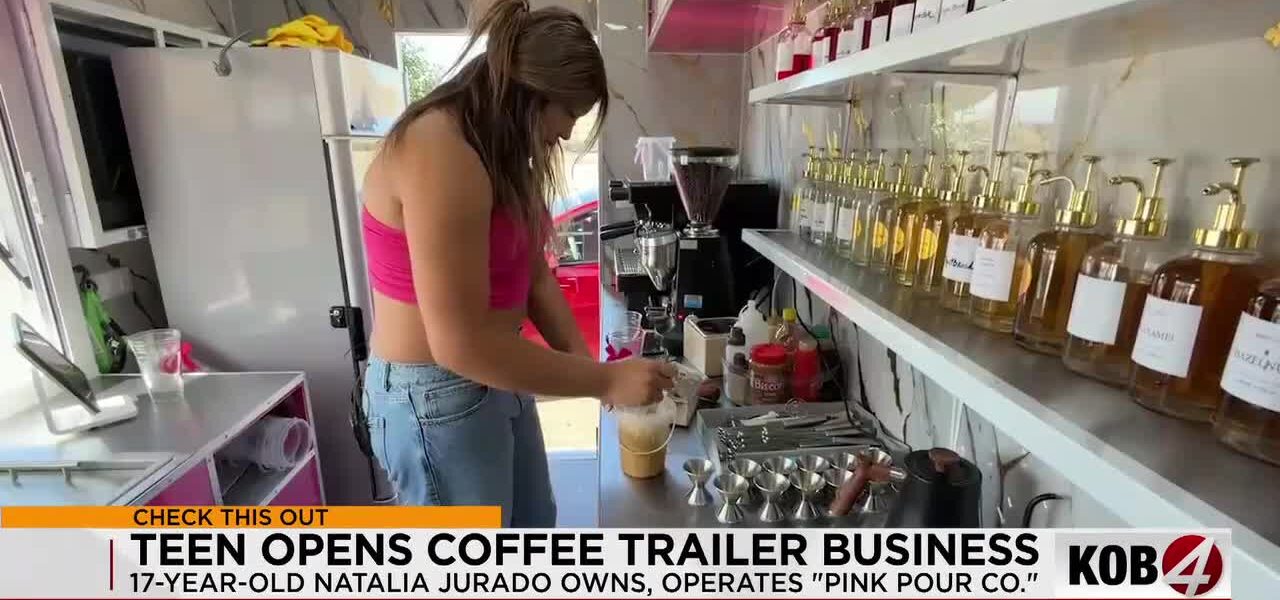
POLICY WIRE — Rio Rancho, N.M. — At 4:30 in the morning, long before most of her peers even consider hitting the snooze button, a 17-year-old hauls a coffee trailer through the pre-dawn quiet of New Mexico. Natalia Jurado isn’t delivering newspapers or stacking shelves for pocket money; she’s commuting to her own small empire. It’s a far cry from the typical summer gig, more akin to a grizzled veteran navigating a treacherous, paperwork-riddled landscape than a high school senior eyeing college applications.
She’s not just slinging lattes, folks. And this isn’t some adorable lemonade stand, either. Jurado, still years from legally buying a celebratory beer, has birthed Pink Pour Co., a mobile coffee outfit that’s quickly becoming a local fixture in Rio Rancho’s Lowe’s parking lot. But don’t let the Instagram-friendly branding fool you. Her journey, steeped in home-brewed syrups and the harsh reality of self-employment, tastes a lot like unvarnished grit and sleepless nights.
Because the kid didn’t just stumble into this. Initially, she was running an unofficial drive-thru from her family home. “It was just a tiny little space,” Jurado admits, recounting the chaos of back-to-back orders. Her mother, likely a pragmatic co-conspirator, saw the writing on the wall (and the growing queue in the driveway) and suggested an upgrade: a mobile trailer. Boom. By early June, the wheels were in motion. Literally. She’s concocted a system: custom cold foam, house-made syrups, a meticulous ritual of prep — and setup.
But here’s the rub, the bitter shot in this otherwise inspiring brew: nobody warns you about the forms. Nobody mentions the hidden leviathan of bureaucracy that rises to meet even the smallest dream. “I never knew about permits, I never knew about business licenses,” Jurado laments, the faint weariness in her voice palpable, even through a determined grin. “I never knew about tax gross receipts every single month that you have to be doing.” She’s shed tears in her truck, plenty of ’em, grappling with paperwork that would make seasoned entrepreneurs balk. Yet, she pushes through. “This is for my future. I’m building a community,” she insists. That’s some serious resolve for someone whose biggest concern used to be acing a history exam.
“Natalia’s drive? It’s exactly what small business needs, even if our permitting processes sometimes feel designed for Fortune 500s,” observed Sarah Jenkins, Director of the Rio Rancho Chamber of Commerce. “We’re always trying to streamline, you know, for folks just like her who just wanna get to work.” Her sentiment, shared by many local officials, highlights an enduring paradox: the praise for entrepreneurial spirit often clashes with the labyrinthine systems designed (or, rather, evolved) to regulate it.
The entrepreneurial impulse isn’t unique to a New Mexico teen. It’s a universal language, spoken loudly in the bustling bazaars of Karachi just as it’s in the suburban lots of the American Southwest. Small businesses, often family-led and battling similar administrative headaches, form the economic backbone across the globe—from the corner chai walla in Lahore to a coffee trailer in Rio Rancho. They face localized versions of the same fight: carving out a niche, building clientele, and figuring out how to comply with, well, *everything*. A 2023 report by the U.S. Small Business Administration found that microbusinesses, those with fewer than ten employees, represent over 90% of all American businesses—a stark reminder of how critical these individual efforts are, even as regulations disproportionately burden them.
📄 POLICY WIRE WHITEPAPER PUBLISHED: PAKISTAN'S NATIONAL SECURITY POLICY PRIORITIES
👉 READ BY CLICKING HEREThe stakes are personal for Jurado. Everything currently rests under her mom’s name, a protective legal umbrella until her 18th birthday in September, when the full weight—and reward—will become hers. She’s attending high school online and taking classes at Central New Mexico Community College, somehow squeezing in trigonometry between steaming milk and cashing out regulars. She doesn’t have the luxury of procrastination, she notes: “The older you get, the more time you’re wasting and why not start it when you’re still young?” It’s a pragmatic wisdom far beyond her years, a silent critique of an education system often criticized for not adequately preparing students for the raw, unpolished demands of the actual working world.
But the support from her mother remains steady. And the regulars, they’re showing up. She’ll need them. This autumn, as many seniors are wrestling with college applications or last-ditch efforts on the football field, Natalia Jurado will be meticulously tallying receipts, brewing espresso, and attempting to solve complex tax codes while simultaneously trying to understand calculus. It’s an intense, exhausting, deeply American hustle, echoing the silent, grinding work ethic seen from here to Dubai’s shifting sands.
What This Means
Natalia Jurado’s story isn’t just a heartwarming tale of teen enterprise; it’s a sharp observation on the evolving landscape of work, youth ambition, and the perennial challenges of small business. It throws a spotlight on the often-invisible gauntlet new entrepreneurs, especially young ones, must run just to get off the ground. Economically, her venture, like millions of others, represents micro-investment and local job creation—even if she’s the only employee, her business circulates capital in the local economy. Politically, it should spark questions about regulatory frameworks: are they truly designed to foster innovation, or do they inadvertently create prohibitive barriers, particularly for those with limited capital and expertise? Her determination to confront paperwork head-on speaks to a generational shift, where direct engagement with real-world complexities is prioritized, sometimes by necessity, over traditional pathways. And for local governments, it’s a mirror: are their departments seen as facilitators or formidable obstacles? What Natalia’s doing in Rio Rancho isn’t just about selling lattes; it’s a testament to the new generation’s pragmatic spirit and their unexpected plunge into the deep end of the free market, often without a life vest. New entrepreneurs are shaping our future, — and they’re demanding our systems keep pace.