


Chromed Colossi: The West’s Peculiar Embrace of Gigantic Status
POLICY WIRE — Washington D.C., USA — It wasn’t too long ago that a pickup truck was just that: a truck. It hauled lumber, navigated muddy job sites, or perhaps towed a camper on a dusty...

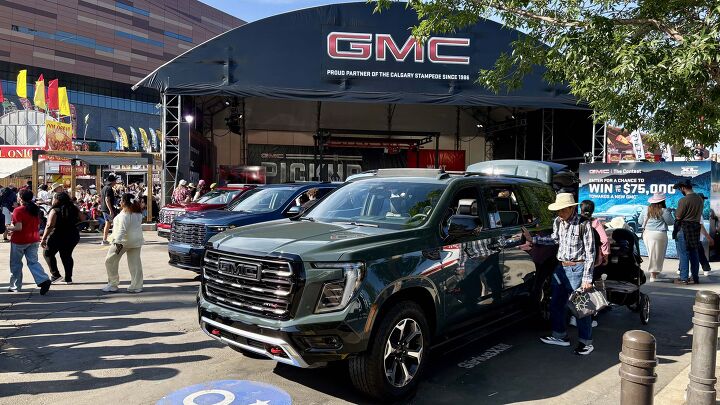
POLICY WIRE — Washington D.C., USA — It wasn’t too long ago that a pickup truck was just that: a truck. It hauled lumber, navigated muddy job sites, or perhaps towed a camper on a dusty holiday. Nobody called it “aspirational.” Yet, roll through any affluent Western suburb today, and you’ll witness a peculiar phenomenon: chrome-laden, multi-ton beasts—often GMCs—gleaming in driveways, scarcely a speck of mud on their gargantuan tires. These aren’t just vehicles; they’re rolling monuments to a new, curious kind of status.
It’s a peculiar reversal of fortunes, isn’t it? For decades, luxury cars were sleek sedans or exotic imports, built for speed — and sophistication. Now, folks are shelling out six-figure sums for what amounts to a plush, oversized workhorse, driven less by utility than by an unspoken desire to command space, visually and physically. This shift isn’t accidental, but a meticulously engineered consumer psychology campaign—a brilliant, if somewhat unsettling, victory for marketeers.
“Consumers aren’t just buying transport anymore; they’re investing in capability, even if that capability mostly translates to an elevated driving position and an intimidating grille in rush hour,” commented Mr. Marcus Thorne, Executive Vice President of Global Strategy at an auto industry consulting firm. “We’ve seen a clear demographic trend towards what they perceive as safety — and technological robustness. And yes, a certain ‘presence.’ They want to be seen.”
And boy, are they seen. These gargantuan vehicles dominate traffic lanes — and dwarf smaller cars. The data doesn’t lie: light trucks, which include SUVs and pickups like GMC’s lineup, commanded over 79% of new vehicle sales in the U.S. in 2023, according to figures compiled by Statista. It’s a dizzying climb from mere decades ago when sedans reigned supreme. But this isn’t just about domestic markets; the thirst for these opulent machines spills over.
Take, for instance, the gilded enclaves of Islamabad or Dubai. You’ll spot gleaming Yukons and Sierras, imported at exorbitant rates, navigating streets where local infrastructure wasn’t quite designed for such behemoths. This phenomenon isn’t solely driven by utility in those locales either. Often, it’s about mirroring Western symbols of wealth and success, particularly among those with strong expat connections or repatriated wealth. The desire for a physical manifestation of prosperity, a mobile fortress that telegraphs one’s position, knows no geographical bounds, it seems.
But there’s a hefty cost, — and I’m not just talking about the sticker price or the pump. Environmental concerns loom larger with each passing year, and these vehicles are often poster children for increased carbon footprints. Because, frankly, the bigger they’re, the more fuel they generally slurp, — and the more emissions they kick out.
📄 POLICY WIRE WHITEPAPER PUBLISHED: PAKISTAN'S NATIONAL SECURITY POLICY PRIORITIES
👉 READ BY CLICKING HERE“We’re witnessing a paradox,” states Dr. Anya Sharma, Director of the Global Sustainability Council, her voice tinged with weariness. “As governments talk ambitious climate targets, the consumer market, particularly in high-income nations, is effectively racing in the opposite direction. It’s a societal choice with global consequences, exacerbating challenges felt most acutely in vulnerable regions already grappling with extreme weather events like El Niño’s brutal economic hammer blows.” It’s a harsh truth. These oversized chariots of individual choice collectively steer the planet onto a precarious course.
They aren’t going away anytime soon, though. Carmakers aren’t blind; they’re simply following the money. Profit margins on these lavish trucks — and SUVs are often significantly higher than on smaller vehicles. And consumers, well, they love what they love. You see ’em everywhere, from the grocery store run to the school pickup line—commanding their territory, oblivious, or perhaps just indifferent, to the wider implications.
What This Means
The ascendancy of the GMC-style vehicle as a Western status symbol represents more than just a passing automotive fad; it’s a telling commentary on societal values. Economically, it signifies a market increasingly segmented by a desire for conspicuous consumption and perceived premium experiences, even if these contradict evolving sustainability goals. Carmakers, having largely shifted production capacity and marketing spend towards these higher-margin products, aren’t incentivized to reverse course. It entrenches a manufacturing bias that impacts the entire industry, making smaller, more fuel-efficient vehicles less profitable and therefore less readily available or aggressively marketed.
Politically, this trend poses a quiet challenge to climate policy. Governments push electric vehicle adoption and emission standards, but the continued—indeed, growing—popularity of massive gasoline-powered trucks complicates the narrative and slows progress. It’s a disconnect between policy aspiration and consumer behavior that politicians find tricky to address directly, for fear of alienating a powerful demographic. But it’s also a reflection of underlying societal trends, an unspoken declaration of personal priorities in an age of perceived uncertainty. It suggests a retreat into larger, more protective shells, a metaphor, perhaps, for how many in the West navigate a complex, often threatening, global landscape. It isn’t just about four wheels — and an engine; it’s a cultural artifact, weighty with meaning and metal.