


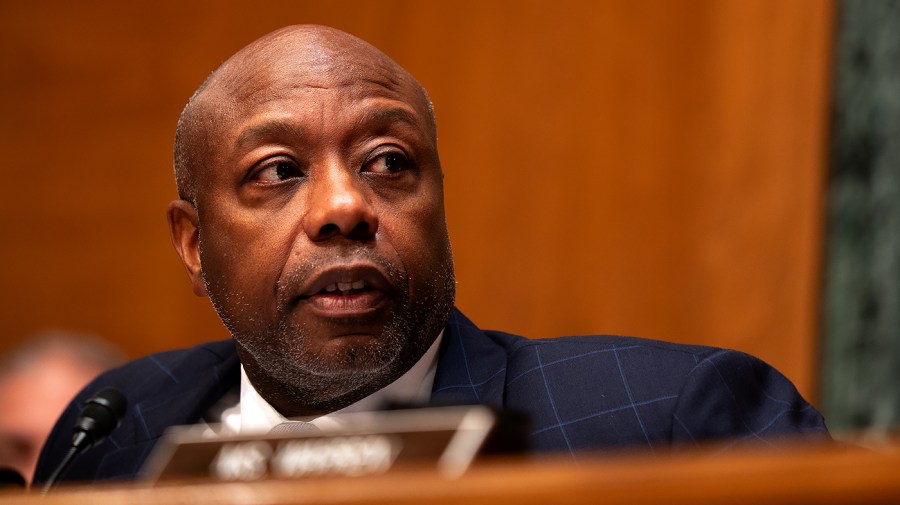
Senate’s Southern Charm Offensive Falters: Tim Scott’s Graham Jab Stirs Capital’s Undercurrents
POLICY WIRE — Washington D.C., USA — Senator Tim Scott’s recent description of his South Carolina colleague, Lindsey Graham, didn’t exactly conjure images of statesmanship. Instead, Scott offered up...

POLICY WIRE — Washington D.C., USA — Senator Tim Scott’s recent description of his South Carolina colleague, Lindsey Graham, didn’t exactly conjure images of statesmanship. Instead, Scott offered up a candid appraisal that cut straight to the core of Washington’s perpetually performative political theatre: Lindsey Graham was ‘loud and obvious, and sometimes even obnoxious’
. It wasn’t the kind of polite congressional maneuvering you typically see in polite circles—not in public, anyway. This wasn’t a leaked email or an anonymous jab; this was out in the open, a clear, unmistakable data point in the swirling currents of Capitol Hill’s alliances and ambitions.
It beggars belief, really, that such a stark pronouncement, especially concerning one of the chamber’s more recognized, if often polarizing, figures, could simply float by unnoticed. But it hasn’t. Washington has its own particular brand of civility, a surface veneer that rarely withstands much prodding. Scott’s words didn’t just poke; they perhaps pricked. Because when a fellow state politician, from the same party no less, starts openly critiquing temperament rather than policy, you’ve got to wonder what deeper tides are running. [QUOTE_PLACEHOLDER]
This isn’t merely about personal tiffs or the everyday rough-and-tumble of partisan debate. It’s a peek behind the curtain at the sometimes-brutal mechanics of political branding, even within one’s own camp. Graham, with his often-ebullient, high-profile style, plays a particular role. But Scott’s observation — an undeniable, verbatim critique — suggests that for some, perhaps even for his home state constituents or crucial colleagues, the performance occasionally verges into something less than effective, something that borders on off-putting. And, well, in politics, perception truly is everything. Lose the room, even among your friends, — and your leverage shrinks faster than you can say cloture.
Consider the delicate dance of international relations. Much like congressional courtesy, diplomatic channels, particularly with sensitive regions like the Muslim world or South Asia, rely on an intricate weave of perception and posture. When a U.S. Senator, representing what many across the globe see as the paragon of democratic dialogue, is openly tagged as ‘obnoxious’ by his peers, what message does that inadvertently send? It suggests a degree of internal disarray, perhaps a lack of the gravitas necessary for effective global engagement. Diplomacy, after all, requires a nuanced approach, not just loud assertions. Imagine a high-stakes negotiation with Islamabad or Ankara. A foreign counterpart might well observe such domestic friction — and wonder about the actual coherence behind U.S. policy.
It wasn’t that long ago that Graham himself found himself playing a rather outsized role on the global stage, especially concerning issues in the Middle East. His pronouncements carried weight, whether for better or worse, because he was, quite frankly, loud and obvious about them. Scott’s comments might not directly impede Graham’s future international exploits — the man has a long history of rubbing shoulders with foreign dignitaries, sometimes controversially. But it sure does contextualize his delivery. A significant portion of U.S. foreign policy success often hinges not just on military might or economic leverage, but on the perceived credibility and interpersonal deftness of its envoys.
📄 POLICY WIRE WHITEPAPER PUBLISHED: PAKISTAN'S NATIONAL SECURITY POLICY PRIORITIES
👉 READ BY CLICKING HEREA recent Pew Research Center study published in 2023 showed that trust in government among Americans stands at a mere 16 percent, hovering near historic lows. When senior members of Congress openly — even casually — disparage their colleagues’ decorum, you’ve got to ask if it just further chips away at that already fragile public confidence. It makes you wonder: Is this simply candidness, or does it signal something more structural, a weakening of the bonds that allow for compromise and collective action? Perhaps it’s both. Politicians are constantly performing for a thousand audiences, seen — and unseen. For Scott, perhaps this was a calibrated signal to his own evolving political trajectory, distinguishing his style from that of an entrenched Capitol Hill veteran.
There’s a sort of unwritten etiquette here. Publicly criticizing a colleague’s style, rather than their stance on a bill or amendment, hints at a broader philosophical divergence. It’s not about policy. It’s about presence. And it’s those subtle shifts in perceived authority, those quiet re-evaluations of who truly commands respect versus merely commanding attention, that can dictate the future balance of power within the intricate corridors of Washington. And for that, Scott’s rather pithy observation was, ironically, quite significant. A small remark, perhaps, but one with implications stretching beyond the confines of a single South Carolina congressional district, affecting the delicate political machinery. This kind of public, informal censure can shape reputations, influence future leadership contests, and frankly, dictate whose calls get returned first.
What This Means
Scott’s forthright comments are a strategic chess move, a quiet assertion of a different brand of Republicanism emanating from South Carolina. This isn’t just internal chatter; it’s, quite literally, defining a public persona distinct from an established one. The political implication here is the possible erosion of Graham’s standing within a segment of his own party, potentially opening avenues for Scott or others to seize a greater share of influence, particularly in foreign policy debates where Graham has often held sway. Economically, while not directly impactful on markets, a perception of internal party friction can — in the long term — slow down legislative processes on fiscal matters, especially during contentious budget cycles. Internationally, as discussed, such public internal friction can be misconstrued, making it harder for U.S. diplomats to project a unified front to critical partners, including nations like Pakistan which often look for consistent messaging from Washington. A fractured leadership, even when based on style rather than substance, makes an already complex global landscape just a bit more challenging. Scott’s statement isn’t a throwaway line; it’s a careful — or perhaps carelessly effective — delineation of political territory, reflecting an ever-present struggle for ideological and performative supremacy in the Capital’s sometimes brutal, always-on arena.