


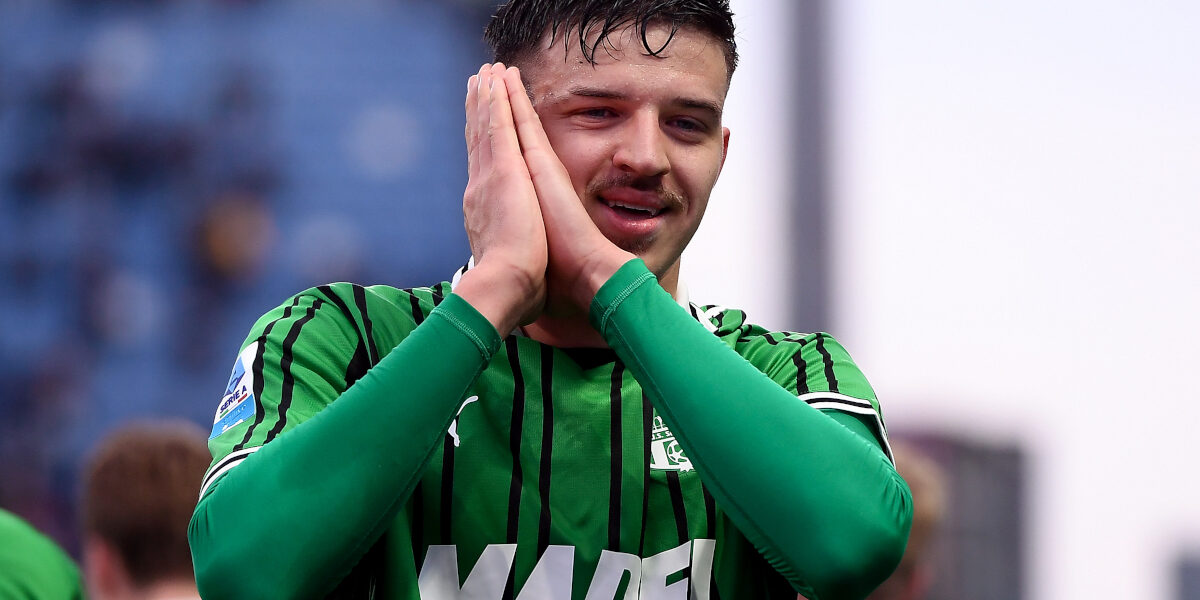
Bosnian Prodigy’s Premier League Pivot: Beyond the €40M Tag
POLICY WIRE — London, UK — Forget the glamour for a moment. This isn’t about pristine pitches or roaring crowds; it’s about cold, hard cash and the brutal arithmetic of professional football. Here,...

POLICY WIRE — London, UK — Forget the glamour for a moment. This isn’t about pristine pitches or roaring crowds; it’s about cold, hard cash and the brutal arithmetic of professional football. Here, human talent isn’t merely developed; it’s a commodity, rigorously valued, bought, and sold in a global bazaar that operates with startling efficiency and — frankly — ruthless intent. The latest entry into this high-stakes calculus? Tarik Muharemovic, the young Bosnian defender, now squarely in the sights of three English clubs desperate to carve out their slice of the world’s richest football pie.
It’s an open secret, but Leeds United, Bournemouth, and Sunderland are locked in a silent arm-wrestle for Muharemovic’s signature. This isn’t just about a 23-year-old center-back; it’s about what his €40 million price tag represents. That hefty sum, requested by his current club Sassuolo, signals the ever-inflating stakes in England’s Premier League and Championship—a league system where the financial abyss of relegation is as terrifying as the rewards of promotion are tantalizing. But let’s be real: half of that €40 million? That’s headed straight back to Juventus, Muharemovic’s former club, because that’s just how this particular carousel works.
Sources whispered across various Italian sport desks, particularly Sky Sport Italia’s Gianluca Di Marzio, confirm the impending decision. Leeds, they say, feels confident. Perhaps overly so, given the precarious nature of these things. A verbal offer, according to transfer pundit Fabrizio Romano, is on the table. But two other clubs aren’t just making up the numbers. Bournemouth wants him. Sunderland wants him. And this isn’t some polite bidding war; it’s a blood sport, with careers — and vast fortunes hanging in the balance.
“Every penny spent is a strategic gamble in this league,” a senior source close to Leeds United’s transfer committee—speaking on condition of anonymity to discuss sensitive club negotiations—told Policy Wire. “You aren’t just buying a player; you’re buying a piece of security, a fragment of future success. But you’ve got to balance the ambition with the economic reality. And we’re always looking for value, that hidden gem, regardless of the noise around the price tag.” It’s the sort of pragmatism that keeps the lights on, one assumes.
And it’s this ruthless valuation of talent that saw Juventus consider bringing him back, lured by the effectively half-price discount, only to ultimately pass. The bianconeri have, over the years, honed a craft of maximizing returns on their academy products and developing young talent into valuable assets. A club insider, privy to Juventus’s operations during Andrea Agnelli’s tenure, once quipped, “We build stars, or we build capital. Either way, the club profits.” A stark, almost cynical, but ultimately honest assessment of elite football’s business model. It’s not about love; it’s about logic.
Muharemovic, a Bosnian international who featured in the recent World Cup qualifiers, isn’t just a number, though. He’s a powerful symbol. For Bosnia and Herzegovina, a nation grappling with its own complex geopolitical identity and economic challenges, seeing one of its own compete at the sport’s highest echelons isn’t merely entertainment. It’s a source of immense national pride, a potent cultural export, and for countless young aspiring athletes across the Muslim world and developing nations, it’s a testament to what’s possible. Their success can, and does, translate into a tangible, if unquantifiable, boost in national morale and even remittances sent back home, proving that the ‘soft power’ of football carries serious weight.
📄 POLICY WIRE WHITEPAPER PUBLISHED: PAKISTAN'S NATIONAL SECURITY POLICY PRIORITIES
👉 READ BY CLICKING HEREThe English Premier League, let’s be frank, is an economic behemoth, almost a parallel universe where normal financial rules rarely seem to apply. The average Premier League club spent over £100 million in the most recent summer transfer window alone, according to analyses by Transfermarkt, underscoring the dizzying financial power at play. That’s why clubs like Leeds, if they find themselves back in the top flight, or even a determined Championship side like Sunderland, will go to extraordinary lengths—and expense—to get their targets. But where does the line between ambition — and outright financial recklessness lie? Nobody quite knows, but they’re all happy to push it.
What This Means
Muharemovic’s transfer saga is more than just football chatter; it’s a vivid microcosm of the global sports economy. For English clubs, it’s a testament to the hyper-competitive market driven by lucrative broadcasting deals and the ever-present threat of financial penalties for underperformance. Spending big on potential, even when it costs an eye-watering €40 million, is seen not as an indulgence, but often as a necessity. It’s a perpetual arms race. If Leeds gets him, it signals a renewed intent for Premier League consolidation or a desperate bid for promotion, knowing that failure costs significantly more than any transfer fee.
For players from nations like Bosnia, transfers like this offer pathways, not just for individual wealth, but for their national teams to gain experience on the global stage. It builds reputation. It encourages younger talent back home. And for clubs like Sassuolo and Juventus, it showcases an increasingly sophisticated business model centered on player development and strategic resale. They’ve turned player contracts into futures markets, hedging against risks while maximizing profits. It’s a game of chess, played with human pieces, and the next few days will reveal which kingdom secures its valuable knight.