

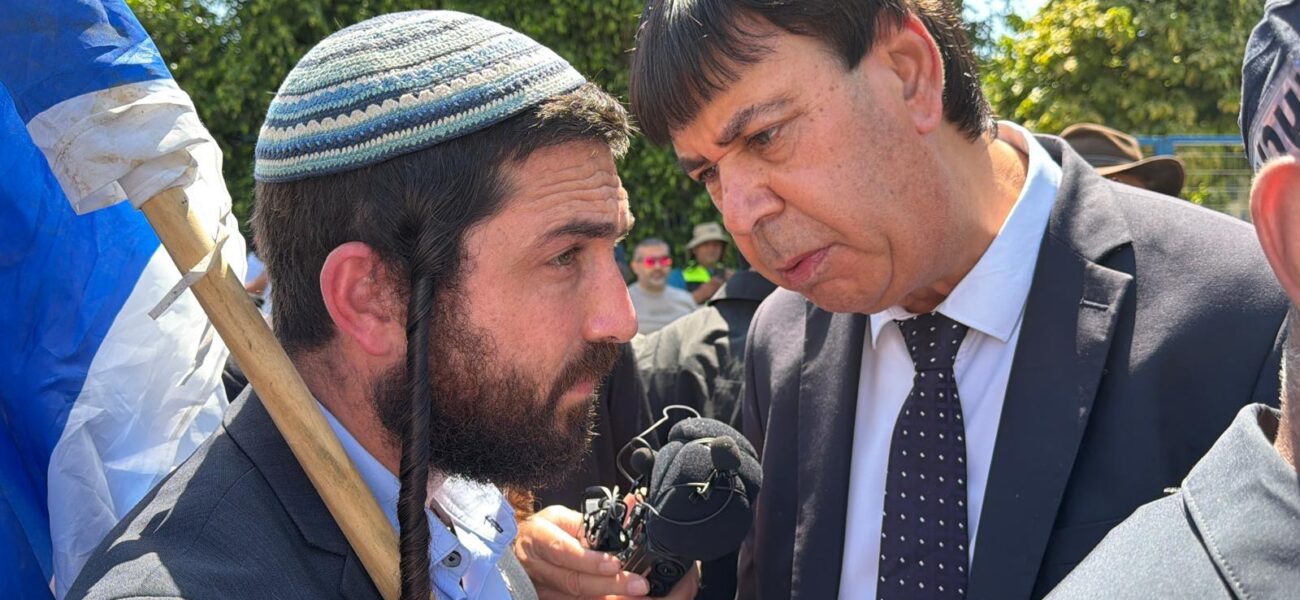
Rahat’s Reckoning: Sukkot’s Calculated Provocation Ignites Bedouin Fury
POLICY WIRE — Tel Aviv, Israel — The optics, often everything in Israeli politics, were precisely what Benny Sukkot aimed for. His much-publicized, some would say calculated, visit to Rahat, the...

POLICY WIRE — Tel Aviv, Israel — The optics, often everything in Israeli politics, were precisely what Benny Sukkot aimed for. His much-publicized, some would say calculated, visit to Rahat, the largest Bedouin city in the Naqab (Negev) desert, wasn’t a goodwill gesture. Not by a long shot. It was a strategic maneuver, a public declaration of intent designed to ripple through the deeply fractured political landscape, simultaneously emboldening his base and drawing a stark line in the sand with the region’s disenfranchised Arab citizens.
Because the street skirmishes that inevitably followed his arrival weren’t accidental—they were, for certain factions, practically a feature, not a bug. Sukkot, a minister known for his hardline stance on Bedouin land claims and minority rights, knew precisely the reaction he’d stir. It’s the kind of strongman theater that plays well to a specific demographic, proving a willingness to ‘stand tough’ against perceived challenges to state authority, regardless of the human cost on the ground. And make no mistake, the cost here wasn’t just abstract.
On that searing afternoon, as stones flew and tear gas canisters arced through the desert air, the message from the minister was clear: ‘My commitment to sovereign law and order isn’t negotiable. These aren’t just protests; they’re an attempt to undermine the state’s authority. And I won’t back down from those who seek to dictate our policies through street violence.’ He said it with the grim resolve of someone enjoying a script written just for him, every word a deliberate provocation.
The unrest that flared across Rahat wasn’t a sudden explosion of temper, but the predictable consequence of years, even decades, of neglect, legal battles over land, and deeply entrenched socioeconomic disparities. The Bedouin community, a significant indigenous population within Israel, often feels caught between unrecognized villages and the relentless march of state-sponsored development. Around one-third of Israel’s Bedouin population, which numbers approximately 300,000, lives in these unrecognized settlements, facing inadequate infrastructure and services, according to the Association for Civil Rights in Israel. That’s a lot of folks living in limbo, no matter how you spin it.
But the political chess being played here extends beyond municipal borders. Sheikh Sayyid Abu Fariah, a prominent Bedouin leader — and former municipal council member, didn’t mince words. ‘They come here, wave their flags, provoke our youth—then blame us when the fire spreads. It’s a cruel game, this assertion of dominance. We’re citizens, you know? And we’re simply demanding dignity — and rights, not special favors. We want a seat at the table, not just rubber bullets in the streets.’
📄 POLICY WIRE WHITEPAPER PUBLISHED: PAKISTAN'S NATIONAL SECURITY POLICY PRIORITIES
👉 READ BY CLICKING HEREHis words capture the exasperation, the feeling of being perpetual subjects of policy rather than active participants in their own future. And frankly, it’s an old, familiar song in many parts of the world, isn’t it? Minority groups, whether they’re Muslims in Myanmar or the Uyghurs in China, constantly grapple with similar narratives of state control versus indigenous claims. This particular incident, raw and confrontational as it was, isn’t an isolated flare-up but a microcosm of broader geopolitical tensions where identity, land, and power intersect in volatile ways.
For observers across the Muslim world, especially in nearby Arab nations, these clashes resonate with a predictable, and often weary, familiarity. Every incident of tension involving Palestinian citizens of Israel, including its Bedouin communities, reinforces existing narratives of occupation and suppression. It’s not just a local squabble; it’s international fodder for a conflict that transcends borders and historical timelines. The implications aren’t lost on the region’s diplomats, who often leverage such events to galvanize support or criticize perceived injustices.
What This Means
The Rahat confrontations aren’t merely a headline about street violence; they’re a barometer of Israel’s internal strains and a loud declaration of its government’s increasingly assertive approach to minority communities. Politically, Sukkot’s provocative visit serves to shore up his ultranationalist credentials, appealing to a segment of the Israeli electorate that values a ‘strong hand’ above all else. This tactic often creates a zero-sum game, where gains for one political bloc mean further alienation for another.
Economically, persistent instability and unresolved land issues hinder the Bedouin community’s integration and development. This lack of economic opportunity fuels grievances, creating a vicious cycle that’s tough to break. From a regional perspective, the incident provides fresh ammunition for critics in Tehran, Beirut, and Islamabad, further complicating diplomatic overtures like the Abraham Accords. Such clashes only strengthen the perception—whether accurate or not—that minority Muslim communities within Israel are systematically marginalized. It makes the job of any diplomat trying to forge peace or cooperation that much harder, because the optics back home look like Israel is doubling down on contentious internal policies. It’s a subtle yet significant impact, but it’s one that consistently shapes broader international relations within the volatile Middle East and beyond. These small sparks can ignite bigger fires, as history often reminds us.