


Tehran’s Quiet Quandary: The Unspoken Vulnerability at the Heart of the Islamic Republic
POLICY WIRE — Washington, D.C. — Succession in nations governed by single, all-encompassing figures has always been less a smooth transfer of power and more a subterranean rumble, shaking foundations...

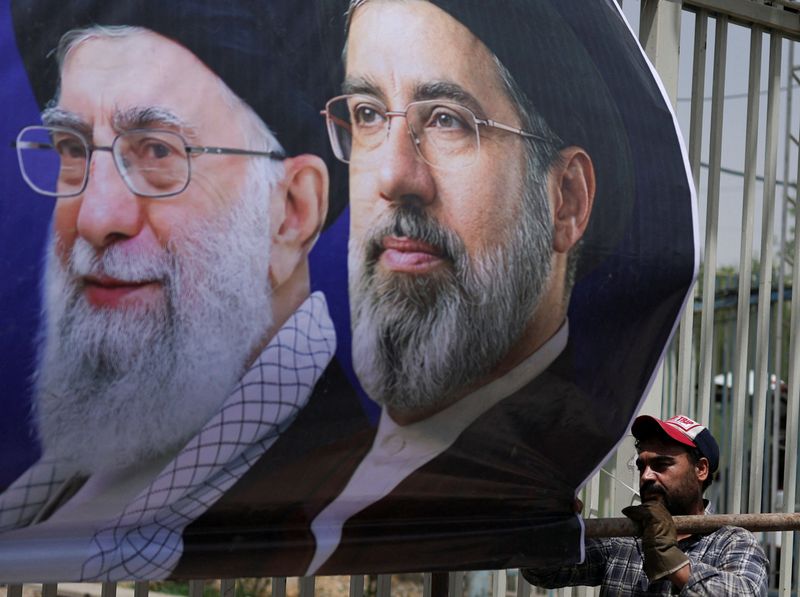
POLICY WIRE — Washington, D.C. — Succession in nations governed by single, all-encompassing figures has always been less a smooth transfer of power and more a subterranean rumble, shaking foundations before any new cornerstone is laid. We often fixate on grand displays of force, but sometimes, the greatest political instability festers in the silence, in the unanswered questions about who comes next.
Iran, a nation accustomed to projecting an image of iron-clad resolve, finds itself in just such a delicate bind. The figurehead of its revolution, its Supreme Leader, casts a long shadow—but shadows inevitably stretch longer as the light begins to wane. And make no mistake, that inevitable twilight creates a deep, unsettling anxiety amongst its numerous factions, the Revolutionary Guards especially. They’ve built careers — and fortunes around the current structure, haven’t they? A leadership vacuum isn’t just theoretical for them; it’s existential. It’s not just about ideology anymore, it’s about their slice of the pie, too.
No one’s openly talking about it, not really. But beneath the stoic pronouncements and the defiant posturing, the machinery of the Islamic Republic is grinding with an unacknowledged vulnerability. They’ve been at this political dance for decades, perfecting the art of maintaining control through intricate patronage networks and fierce ideological discipline. Yet, the unaddressed reality of succession – specifically, the absence of a clearly designated, broadly accepted heir – chips away at that facade of monolithic power. Because without a clear successor, every move is scrutinized, every silence amplified. The nation waits with bated breath, wondering when a handpicked successor will truly emerge, and if he’ll command the same respect and fear.
But how do you prepare for the irreplaceable, particularly when the system is so rigidly structured around one individual? They can’t just put up help wanted signs, can they? Foreign policy, already a high-stakes gamble for Tehran, becomes an even more precarious affair with this underlying tremor. It’s felt in Baghdad, in Beirut, and even in Gaza—where Iranian influence shapes local realities. And it’s a palpable concern for states like Pakistan, a country with its own complex sectarian and political landscape, sharing a significant border with Iran. Islamabad constantly watches regional developments; any internal instability in its western neighbor invariably sends ripples through its own intricate web of security calculations and its burgeoning, if sometimes fraught, ties to the wider Muslim world.
Recent reports suggest currents of omission—or perhaps, outright denial—surrounding the urgency of this transition. It’s like watching a tightrope walker pretend there’s no net, but everyone in the audience knows better. It’s hard to ignore, isn’t it?
Economically, this uncertainty isn’t just theoretical either. Analyst consensus from the International Crisis Group estimates that the mere perception of an undecided succession has led to a [QUOTE_PLACEHOLDER] in net foreign investment inquiries into Iran during the last fiscal year. It’s a testament to how profoundly political ambiguity can chill even the most optimistic of economic prospects. And domestic trust? That’s an entirely different kettle of fish. The Revolutionary Guards, once monolithic, aren’t a single, perfectly aligned bloc; their various commanders and factions already jockey for influence. This hidden struggle only intensifies under a vague transition period, transforming latent rivalries into more immediate threats to national cohesion. It’s an unenviable situation for the people trying to hold it all together.
What This Means
This prolonged period of leadership opacity isn’t merely an internal Iranian affair; it’s a powder keg beneath the already volatile dynamics of the broader Middle East. Politically, the ambiguity empowers regional adversaries to probe for weaknesses and exploit any perceived decline in central authority. Proxies across the Levant and in Yemen might find themselves with less direct guidance or, worse, competing instructions, leading to greater regional unpredictability. It’s a destabilizing force for Saudi Arabia, naturally, — and for other Gulf states keenly observing Tehran’s next steps.
Economically, capital markets despise uncertainty, — and Iran provides it in spades. International sanctions already throttle its economy, but internal leadership disarray amplifies the risk perception for potential foreign investors and trading partners, further choking growth and contributing to domestic discontent. Domestically, the power vacuum exacerbates the internal jockeying between various political and military factions, particularly between the pragmatic elements and the staunch hardliners. Whoever eventually assumes the mantle won’t just inherit a country; they’ll inherit a fragmented power structure, one that’s had too much time to drift and plot in the shadows.
And because Iran remains a dominant regional player, its internal tremors will reverberate far — and wide. Imagine the security implications for a neighbor like Afghanistan, always teetering on the edge. Or for the significant Shia populations throughout the Gulf and South Asia, who often look to Iran for religious and political inspiration. When Iran wobbles, the entire region feels the tremors. It’s a classic case: the stability of the entire region now hinges on the unspoken question of who will wear the clerical crown next, and how gracefully – or violently – that transition plays out. Nobody’s got a crystal ball, but plenty of folks are holding their breath. What else can they do?