


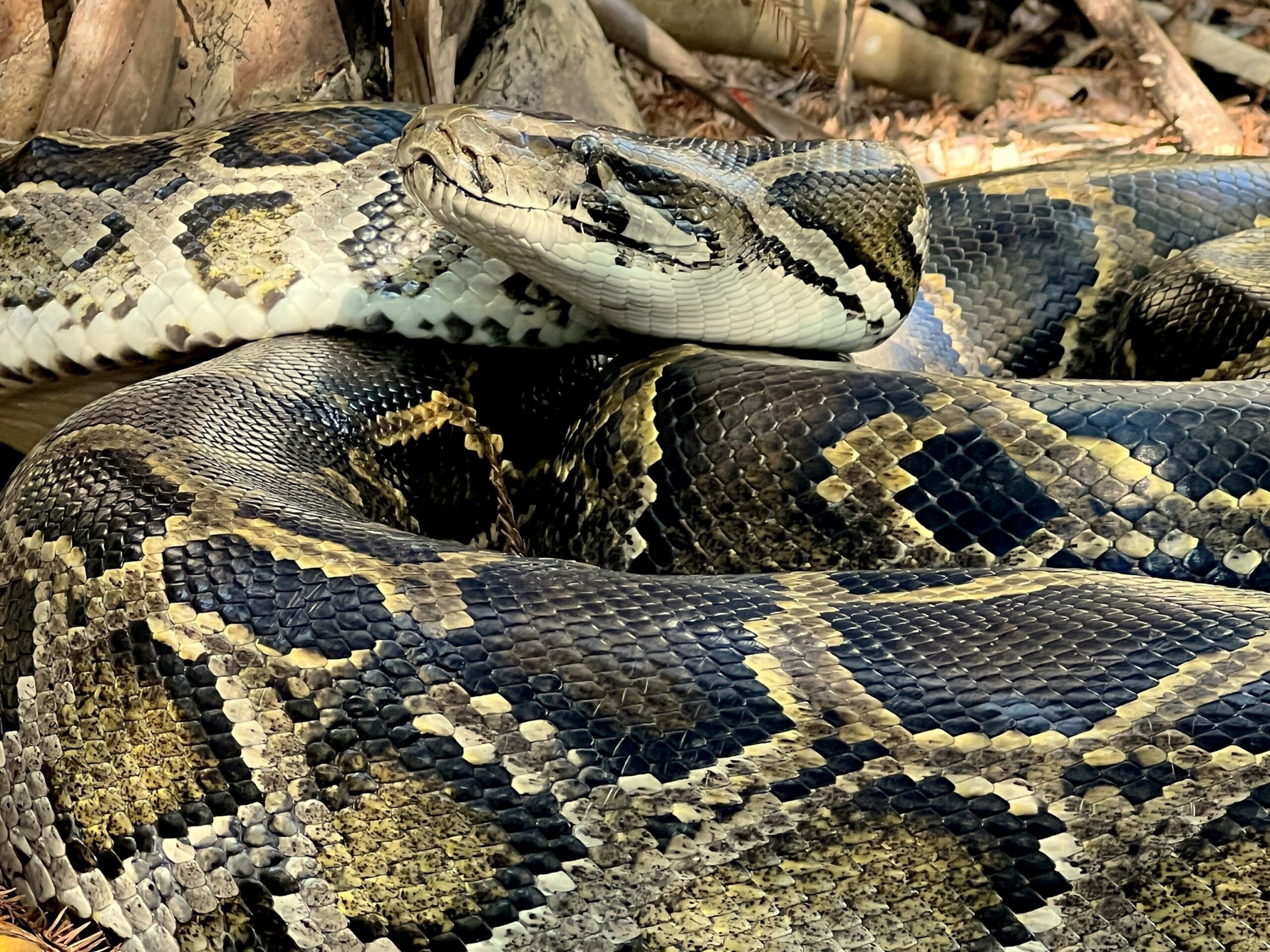
Florida’s Serpent Scourge: Python ‘Hot Spot’ Redefines Wilderness Borders
POLICY WIRE — Everglades, Florida — Another front has opened in humanity’s perpetually awkward struggle against itself, or at least against the consequences of its more capricious decisions. In...

POLICY WIRE — Everglades, Florida — Another front has opened in humanity’s perpetually awkward struggle against itself, or at least against the consequences of its more capricious decisions. In the lush, fragile ecosystem of Florida’s Everglades—a region already grappling with the whims of a volatile climate—a silent, scaly invader has firmly dug its metaphorical claws in, now carving out what wildlife specialists are nervously calling a fresh ‘hot spot’ for Burmese pythons. It’s not just a biological problem; it’s a policy conundrum, an economic drain, and honestly, a damn embarrassing legacy.
It used to be confined, largely, to the sprawling national park itself. But these formidable constrictors? They’ve adapted. They’ve thrived. They’re making moves. Reports indicate a significant geographical expansion, suggesting the battle isn’t contained anymore. It’s spilling over. We’re talking about a creature that, once considered exotic pets—something for a quirky few to parade around, often bought impulsively after some late-night television show or maybe a brief stint at a reptile expo—now stands as a testament to biological blowback on an industrial scale. They grow massive, eat anything, — and reproduce with terrifying efficiency.
The state’s Department of Environmental Protection has publicly acknowledged the accelerating spread, conceding that even years of sustained, expensive removal efforts haven’t exactly stopped the tide. They’ve poured millions into programs; hunters, trappers, even specialized dog teams have been deployed. Still, the serpents slither on. But because they blend so seamlessly into the swamps, and frankly, because Florida is enormous and dense with undergrowth, locating them before they’ve devoured an entire cohort of native mammals is often a matter of grim chance. It’s like trying to find a needle in a haystack, only the needle is 18 feet long — and hungry.
Consider the broader context, too, of how we got here. The Burmese python’s story begins far from the sun-drenched swamps of Florida. Its ancestral lands stretch across Southeast Asia, including parts of Pakistan—a region where large reptiles coexist (sometimes uneasily) with dense human populations and intricate, often threatened, biodiversity. The pet trade, a globalized industry with tentacles reaching into every corner of the planet, is the vector. The reckless abandon with which these powerful creatures were imported, purchased, and then inevitably released when they grew too large or too demanding for suburban homes, established this unwelcome colony. It wasn’t some natural migration; it was pure, unadulterated human folly, dressed up as a consumer trend.
Environmental agencies now estimate that over 25 million dollars have been spent on python research and eradication efforts in Florida alone over the last decade. It’s a staggering sum for what’s, essentially, damage control. One expert recently stated, [QUOTE_PLACEHOLDER]. They’re not just eating raccoons and possums; they’re wiping out entire local populations of native birds and small alligators—creatures critical to the food web. The impact reverberates, affecting everything from local ecosystems to the burgeoning eco-tourism industry, which frankly, relies on people wanting to see things other than an 80-kilogram snake.
The challenge extends beyond the obvious predatory threat. These animals also compete for resources, creating further stress on an already struggling native wildlife population. Wildlife managers are openly admitting the scope of the problem is [QUOTE_PLACEHOLDER]. It’s a frustrating cycle, with each new study seemingly confirming a deeper, more entrenched problem. And you can’t exactly just round them all up. It’s not like collecting lost cats. These are apex predators.
So, the battle rages on, quiet — and unrelenting, in the humid depths of Florida. It’s a sobering reminder that sometimes, the most dangerous invaders aren’t marching armies but carelessly unleashed biology. It forces us to reconsider the regulatory loopholes and societal attitudes that allowed such a monumental error to take root in the first place. You know, what we do in one corner of the globe? It almost always—eventually—comes home.
What This Means
The emerging python hot spot in Florida isn’t just a local conservation issue; it’s a symptom of a far larger, interconnected policy failure. Economically, the continuous investment in eradication drains state and federal coffers—money that could be addressing native habitat restoration or climate change resilience. It’s a tax on neglect, plain and simple. Politically, it’s a perennial hot potato, often used to symbolize a larger argument about environmental protection versus unregulated commerce—specifically, the pet trade. The lack of stringent federal oversight on the importation and sale of exotic species, for example, becomes harder to defend with every new python spotted beyond the Everglades’ perimeter. It also throws a stark light on global responsibility. While the immediate problem is Floridian, the origins are tied to regions like South Asia. Lessons from these indigenous environments—where these large snakes are natural, not invasive, components of a balanced ecosystem—rarely inform Western pet regulations. We see the animal, not its ecological role or potential for destruction when removed from context. This situation becomes a chilling proxy for other unchecked environmental stressors; we’re witnessing a slow, serpentine unraveling, driven by market forces and insufficient regulation, with nobody truly certain of an endgame beyond endless, expensive management.