


Ebola’s Unseen Shadow: US Citizen Infected as Global Health Fault Lines Widen
POLICY WIRE — Washington, D.C. — It’s a bitter truth often lost amidst the sterile graphs and policy white papers: sometimes, the global humanitarian machine still stumbles hard. You’ve got to wonder...

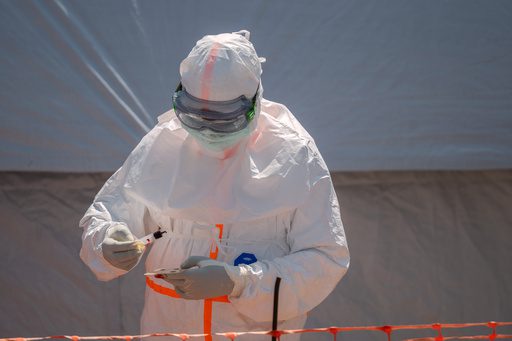
POLICY WIRE — Washington, D.C. — It’s a bitter truth often lost amidst the sterile graphs and policy white papers: sometimes, the global humanitarian machine still stumbles hard. You’ve got to wonder if those in suits, thousands of miles removed, truly grasp the gravity of it. Here’s a stark reality check: a U.S. citizen, laboring under the auspices of a humanitarian outfit in Congo, has contracted Ebola, a pathogen with a chilling pedigree. This revelation came on Friday from the U.S. Centers for Disease Control — and Prevention. But it’s not just a matter of an isolated case; this scenario highlights the perpetually tenuous tightrope humanitarian workers walk and the often-fraying seams of international health responses.
The CDC wasn’t exactly spilling state secrets, were they? They offered the barest details, simply stating that the agency was [QUOTE_PLACEHOLDER] No fanfare. No further comment on the brave soul or the specifics of the situation, leaving us to fill in the grim blanks. It feels a bit like watching a slowly unfolding car wreck from a great distance, doesn’t it?
This news doesn’t just surface in a vacuum. It floats atop a steadily rising tide of disease. The Africa Centres for Disease Control and Prevention dropped a bombshell earlier in the week: this is the [QUOTE_PLACEHOLDER] Let that sink in. Not just another outbreak, but the absolute worst we’ve seen in this region. The numbers themselves are jarring: 1,830 confirmed cases in Congo, including 648 deaths. That’s from the Africa Centres for Disease Control — and Prevention. And cases haven’t just stayed put; they’ve also been confirmed in neighboring Uganda, reminding everyone that borders are meaningless to a virus.
There’s a disturbing pattern emerging, isn’t there? This isn’t the first American to be caught in the epidemic’s grip. Not long ago, another American doctor, also working in Congo, tested positive. That one got shipped off to Germany for treatment, underscoring the complexities and inequalities inherent in global health protocols. For a brief, perplexing moment, it seemed U.S. policy was charting a different, more hands-off course for its citizens abroad. Trump administration officials had previously declared that the [QUOTE_PLACEHOLDER] But, and here’s where international friction meets domestic policy, that whole venture [QUOTE_PLACEHOLDER] A legal challenge, preventing American officials from establishing what essentially felt like an offshore medical facility for its own people.
The situation on the ground in Congo—it’s just a complete mess. The Congolese authorities finally [QUOTE_PLACEHOLDER] but only after the World Health Organization reported that the disease [QUOTE_PLACEHOLDER] Imagine weeks of undetected spread; that’s a lifetime for a virus. Adding insult to injury, this particular variant is the rare Bundibugyo virus. It’s a nasty customer because it [QUOTE_PLACEHOLDER] You’re facing a fast-moving, undetected enemy without any established weaponry. That’s not a fight; it’s a desperate scramble.
And to layer on the difficulties, efforts to contain this menacing threat haven’t just struggled against the virus itself. Oh no. They’ve also [QUOTE_PLACEHOLDER] the very epicenter of this humanitarian catastrophe. It’s a trifecta of horror, frankly. This combination—disease, violence, and neglected infrastructure—resonates deeply beyond Central Africa. In places like Pakistan or parts of the broader Muslim world, fragile healthcare systems often grapple with similar pressures, stretched thin by inadequate budgets and the shadow of political instability, even low-level insurgencies. You can’t tackle a health crisis when medical personnel are targets, — and resources are non-existent.
📄 POLICY WIRE WHITEPAPER PUBLISHED: PAKISTAN'S NATIONAL SECURITY POLICY PRIORITIES
👉 READ BY CLICKING HEREBut there’s a sliver, a tiny bit, of something like hope on the horizon. Last week, [QUOTE_PLACEHOLDER] It’s a marathon, not a sprint, trying to find cures in the middle of an inferno, but at least, for once, the scientific community is getting a shot at fighting back. These medical missionaries and aid workers, often risking everything with scant resources and under constant threat—they’re the real unsung heroes, aren’t they? They face the chaos directly while policymakers squabble over logistics.
What This Means
This ongoing Ebola crisis in the Democratic Republic of Congo isn’t just a localized public health emergency; it’s a blinking red light for global policy architects and donor nations. Economically, the continuous outbreaks—exacerbated by internal conflict and systemic funding shortfalls—are a devastating drain on a nation already struggling for stability. It doesn’t just cripple individual lives; it hemorrhages productivity, deters investment, and forces the diversion of what little national income exists from essential development projects into emergency response. For other developing nations, especially those across the Muslim world — and South Asia, this serves as a stark warning. The fragility of health infrastructure under pressure from conflict or natural disasters can unravel quickly, consuming resources and stymying progress in other crucial areas like education or economic diversification. Imagine trying to run a national vaccination campaign for other preventable diseases when every spare medical professional and dollar is fighting an active, deadly epidemic. It’s an impossible choice for countries like Pakistan, for instance, which often balances competing health threats with tight budgets and security concerns.
Politically, the situation exposes the deeply uncomfortable intersections of sovereignty, security, and global health responsibility. The push by the U.S. to establish a separate facility in Kenya for its exposed citizens, only to be rebuffed by Kenyan courts, highlights the persistent tension between national interests and pan-African autonomy. It also underscores how geopolitical priorities can shape (or warp) humanitarian aid efforts. When international health responses become entangled in the very conflicts that exacerbate the outbreaks—like the widespread attacks on Congolese health centers—it indicates a fundamental failure to protect medical neutrality and secure safe passage for vital aid. For those paying attention, the pattern of delayed detection and a lack of approved treatments for rare strains like Bundibugyo points to significant gaps in international investment in pathogen research, particularly for diseases affecting poorer nations. It’s a cycle of neglect that keeps replaying, and it’s one that governments globally—from Islamabad to Washington—have a shared, albeit often neglected, stake in breaking. Because a pathogen in Congo, eventually, is everyone’s problem. The global village is shrinking, whether we like it or not, and a global health crisis becomes a domestic issue remarkably fast.