


After the Inferno: New Mexico’s Charred Earth Brace for Monsoon’s Fury, Echoing Global Plight
POLICY WIRE — ALBUQUERQUE, N.M. — It never quite ends, does it? The cycle of catastrophe and its inevitable aftermath keeps spinning, whether it’s the smoldering ruins of what once was a forest...

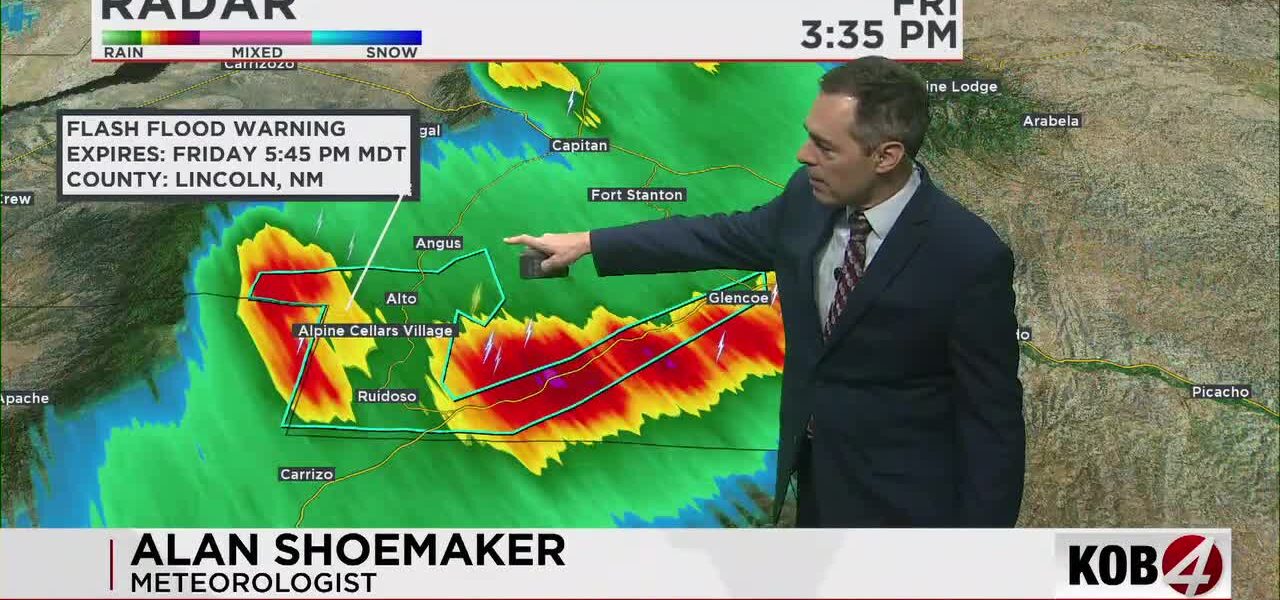
POLICY WIRE — ALBUQUERQUE, N.M. — It never quite ends, does it? The cycle of catastrophe and its inevitable aftermath keeps spinning, whether it’s the smoldering ruins of what once was a forest or the relentless march of a changing climate. Here in the high desert of New Mexico, residents of southern Lincoln County near Ruidoso don’t get a break from the elemental assault. Just weeks, perhaps days, after fires charred their landscapes, a different kind of natural terror lurks: the monsoon season’s unwelcome embrace. This isn’t just about rain; it’s about a scorched earth’s inability to absorb it, setting the stage for yet another destructive chapter.
There’s a bleak calculus at play now. The National Weather Service issued a chilling advisory: a flood watch covers southern Lincoln County around Ruidoso and nearby burn scars Saturday as storms could drop more than 1 inch of rain per hour. Imagine. The very earth that stood defiantly against raging infernos now lies exposed, defenseless against water’s relentless force. Post-wildfire landscapes—denuded of vegetation, their soil chemically altered and hydrophobic—transform into impermeable concrete, channeling rainwater into destructive torrents rather than soaking it up. [QUOTE_PLACEHOLDER]
It’s an uncomfortably familiar pattern, a recurring nightmare for communities nestled near the Wildland-Urban Interface. And what a raw, brutal irony it’s that the very regions struggling with aridification often face these dramatic pendulum swings: drought, then fire, then catastrophic floods. One minute, you’re praying for rain; the next, you’re praying it doesn’t wash your world away. The immediate threat, as specified by officials, extends from noon until 6 p.m. Saturday for southern Lincoln County around Ruidoso — and the burn scars. And it’s not some far-flung theoretical possibility; scattered thunderstorms across the south central mountains could produce rainfall rates in excess of 1 inch per hour over and downstream of recent burn scars Saturday afternoon. It’s happening. And you can bet the farm on that. Specifically, the greatest concern exists over the South Fork burn scar.
The predictability of it all is almost unnerving. Every afternoon through the upcoming week, expect a fresh crop of these monsoonal storms to pop up across parts of the state. Storms will move slowly toward the west, though outflow boundaries may cause storm motion to turn erratic. That’s a fancy way of saying: ‘good luck tracking this beast.’ Albuquerque, the state’s urban heart, appears relatively safe, for now anyway. Albuquerque’s rain chances are only 10-20% each day, and temperatures may run a few degrees cooler this weekend, especially by Sunday. But even that relative calm is a part of a larger, unsettling picture. Heavy rain may also be possible Sunday — and early next week in the southwest corner of the state. So it isn’t just Ruidoso holding its breath; it’s a much broader swath of vulnerable land. Daily monsoon showers — and storms will pop up across parts of the state each afternoon through next week. They just keep coming.
📄 POLICY WIRE WHITEPAPER PUBLISHED: PAKISTAN'S NATIONAL SECURITY POLICY PRIORITIES
👉 READ BY CLICKING HEREThis localized drama, playing out in a high desert corner of America, is just one frame in a much larger, global picture. Pakistan, for instance, a nation grappling with its own climate vulnerabilities, knows this exact kind of whiplash all too well. One year, devastating heatwaves and droughts; the next, record-breaking monsoons that unleash flash floods, displace millions, and decimate infrastructure—often in regions previously parched or destabilized. In 2022 alone, an estimated one-third of Pakistan was submerged by catastrophic flooding, a direct consequence of erratic weather patterns fueled by global climate change. These aren’t isolated incidents, you see; they’re chapters in the same global narrative of a climate in disarray, demanding similar adaptations and policy considerations, from early warning systems to resilient infrastructure. It’s a shared struggle, even if the terrain — and geopolitical context differ wildly. But the physics, it’s pretty much the same. Studies from institutions like the World Meteorological Organization indicate that burn scars, depending on severity and slope, can increase the likelihood of flash flooding by upwards of 80% due to reduced ground permeability. That’s not just a statistic; it’s a forecast of further heartache.
What This Means
For New Mexico, the immediate implications are stark: renewed threats to human safety, homes, and public infrastructure. Emergency services remain on high alert, preparing for mudslides and debris flows that can wipe out roads and further isolate communities already reeling. The economic costs will compound, from direct damage to ongoing recovery expenses, diverting precious resources that could otherwise fuel growth or improve education. And frankly, this isn’t just about dollars; it’s about community resilience, about the emotional toll on people who’ve watched their world burn, only now to see it potentially submerged.
The situation serves as yet another harsh lesson in resource management and climate adaptation, both for arid states in the U.S. and for nations across the Muslim world—Pakistan, Afghanistan, even parts of North Africa—that regularly face severe environmental extremes. The predictable unpredictability of monsoon rains following devastating fires highlights a critical need for integrated disaster preparedness that transcends departmental silos. We’re talking about land-use planning that accounts for escalating risks, robust early warning systems that genuinely reach vulnerable populations, and immediate, efficient response mechanisms. It’s a tough pill to swallow, this, but the land is changing, — and so too must our approach to living on it. You can’t just rebuild the same way after the land itself has fundamentally shifted its behavior. It’s a policy conundrum of the grimmest kind, demanding innovation and uncomfortable truths, not just quick fixes and reactive measures. Because if we don’t, well, we’ll just be writing this same story, year after year.
📖 GET YOUR FREE COPY NOW OF POLICY WIRE DIGITAL MAGAZINE JULY 2026 EDITION
👉 READ & DOWNLOAD FREE MAGAZINE