


Backyard Vigilantism: When Teen Squabbles Escalate to Armed Confrontation in Rio Rancho
POLICY WIRE — RIO RANCHO, N.M. — A petty teenage quarrel, the kind that ignites and burns out across suburban America daily, spiraled into a chilling tableau here recently: four young men, including...

POLICY WIRE — RIO RANCHO, N.M. — A petty teenage quarrel, the kind that ignites and burns out across suburban America daily, spiraled into a chilling tableau here recently: four young men, including a father’s own son, reportedly held at gunpoint and coerced into fisticuffs. What began as schoolyard bluster over something trivial—it always is—morphed quickly into an unnerving demonstration of parental overreach and, ultimately, charges of child abuse.
It wasn’t a gang war or a turf dispute. It was just kids. You know, “Basically four friends, they were friends. They had a little bit of fallout. They started, you know, talking. One kid started talking to the other kids in a derogatory manner,” according to unnamed parents speaking with local affiliates. A standard squabble, really. But this time, it drew in an adult with a firearm, shattering the fragile veneer of community calm in Rio Rancho. [QUOTE_PLACEHOLDER]
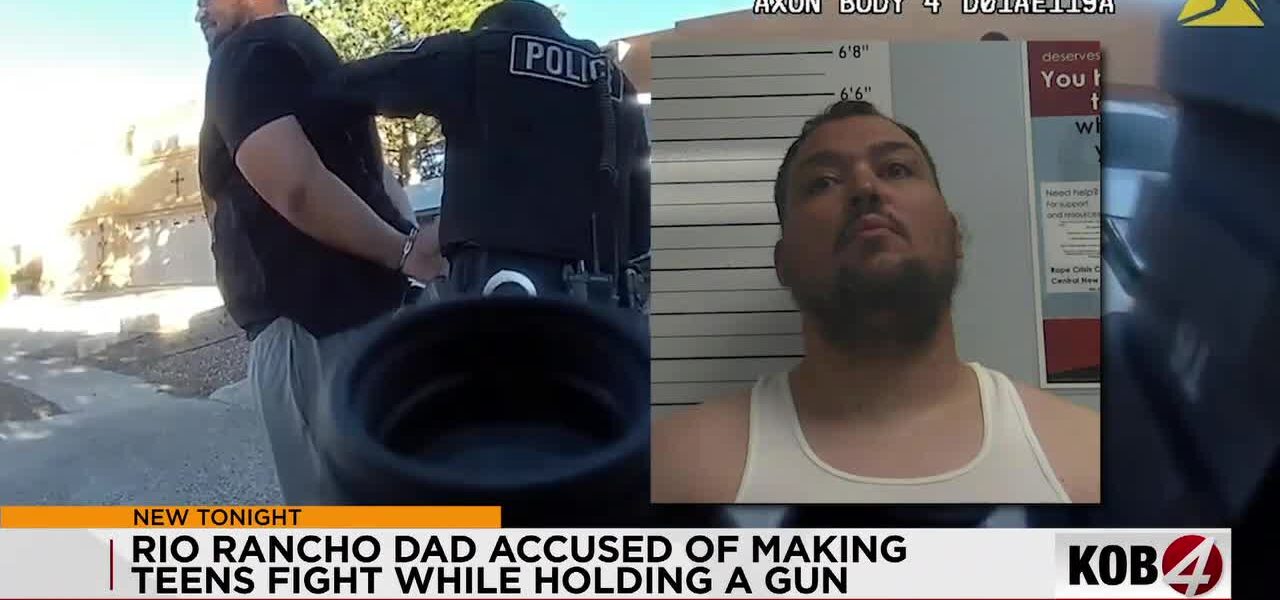
Police say David Hill is the man at the center of this domestic melodrama, now facing a litany of charges, including three counts of child abuse and three counts of aggravated assault. Authorities arrested Hill after reports surfaced that he allegedly confined the teens, firearm in hand, compelling them to engage in physical confrontation. And this wasn’t some shadowy back alley; it was a residential area, one where folks expect a modicum of peace, where kids can walk to school without encountering impromptu dueling circles organized by their friends’ fathers.
Hill, via Rio Rancho body camera footage, didn’t exactly deny brandishing a weapon. “I tried to have them, I said empty your pockets, yes, I did have a firearm as a legal firearm owner. Did I point it at them? Never. Not once.” He claimed justification, feeling his son was imperiled. “I think a lot of this is overkill, I understand that I had a firearm out. Again, my child was sent threats with a firearm on their phone,” Hill asserted. His account, however, stands in stark contrast to the severity of the charges now leveled against him.
The parents of the other teenagers don’t buy it, naturally. They insist Hill bypassed protocol, skipping a fundamental step: calling the authorities. “The individual could have called law enforcement and told kids we’re here to fight in the event he just took this into his own hands and held our kids hostage and made them victims of crime that CYFD is saying that our children have committed,” they vented. And it begs the question, doesn’t it? At what point does paternal protection cross into punitive overreach, circumventing the very systems designed to manage such incidents?
A recording from the teens themselves suggests a chaotic scene. Hill instructs: “Call your parents.” One boy replies, “My mom already knows.” Hill pushes, “So call her and tell her to come here.” But here’s the rub: even when one parent showed up, Hill allegedly refused to release all the boys until every parent arrived for their personal retrieval. This isn’t just about a street fight; it’s about perceived detention, even abduction. According to the Bureau of Justice Statistics, violent crimes committed by juveniles saw a peak in the 1990s and have trended downward since, suggesting such direct, personal intervention isn’t typically justified by rising local youth violence statistics.
This whole episode has rattled the bedrock of a community that prides itself on stability. “We don’t do that here in this community, it’s a very safe community, you know, people come here to get away from that kind of stuff, and to have that peace of mind, and with him out just roaming around, you know, we don’t have that peace of mind right now, and we hope justice is served,” parents articulated. It highlights the deeply personal impact when perceived social contracts unravel. Much like the subtle frictions that can explode into regional instability, transforming seemingly trivial disputes into broader geopolitical issues, the delicate balance of trust and order within a neighborhood is now acutely disrupted. For instance, the dynamics here echo certain community-level conflicts in South Asia, where familial honor and a sense of swift, personal justice can often supersede formal legal recourse, sometimes with devastating outcomes. This isn’t just an American story; it’s a human one, playing out across diverse cultural landscapes where established order meets individual, often aggressive, interpretations of right and wrong.
Hill was subsequently released, albeit with conditions. His next court appearance looms in September. And that’s the reality for now. His freedom, conditional though it’s, casts a long shadow over the affected families, underscoring their ongoing lack of “peace of mind.” They’re seeking accountability; we’ll see if the courts deliver it.
What This Means
This incident, at its core, reflects a concerning erosion of faith in traditional civic institutions and a burgeoning inclination towards personalized enforcement. When parents believe—rightly or wrongly—that the state can’t adequately protect their children or resolve minor grievances, the temptation for ‘self-help’ jurisprudence rises dramatically. And when a firearm enters that equation, what begins as a disciplinary act risks morphing into criminal behavior, escalating petty teen dramas into severe legal entanglements.
Politically, this kind of breakdown in social trust fuels narratives on both sides of the spectrum. For those advocating for stricter gun control, it becomes another data point on the dangers of readily available firearms in casual disputes. For gun rights proponents, Hill’s statements about his child being “sent threats with a firearm on their phone” might be twisted into a justification for immediate self-defense, blurring lines and muddying public discourse. Economically, while a localized event, it chips away at the perceived safety and attractiveness of a community, potentially impacting property values or family migration if residents feel their safety can’t be guaranteed without personal, armed intervention. Look, it’s a bad look, especially in a world where communities, even far-flung ones like Lahore, struggle to project stability and security to attract investment and foster development, as discussed in Flyover Power Play. When residents here lose peace of mind, it’s not just a personal sentiment; it’s a metric of governance and public confidence. The state’s ability to monopolize legitimate force is foundational to stable societies. When an individual presumes to step into that role, especially with a weapon, it doesn’t just charge one man; it charges the community’s collective sense of security and justice.