


Atlas Lions Challenge French Hegemony in World Cup Showdown
POLICY WIRE — Boston, U.S. — There are football matches, and then there are historical junctures disguised as sport. This Thursday, as France squares off against Morocco in the FIFA World Cup 2026...

POLICY WIRE — Boston, U.S. — There are football matches, and then there are historical junctures disguised as sport. This Thursday, as France squares off against Morocco in the FIFA World Cup 2026 quarterfinals, the contest at Boston Stadium isn’t just about goals or glory. It’s a geopolitical ballet, played out on a patch of grass—a clash of narratives spanning centuries, condensed into 90 minutes (or more).
It’s easy to focus on Kylian Mbappe, the Parisian phenom whose seven goals put him hot on Lionel Messi’s Golden Boot heels. And frankly, the media loves that simple story. But this isn’t simply about France’s star power versus Morocco’s grit. Not by a long shot. It’s about a former colonial power against a vibrant, ascending North African nation. It’s about cultural soft power, the deep currents of migration, and the simmering resentments (and affections) that define their complicated bond. Morocco, for its part, stands as the lone African sentinel in this tournament’s advanced stages, carrying a continent’s hope, along with the passionate cries of a global diaspora.
Didier Deschamps, France’s steely-eyed tactician, offered his trademark pragmatism when pressed on the match’s broader context. “We don’t play for narrative, we play for the result,” he stated flatly earlier this week, his voice a low rumble. “This isn’t a history lesson; it’s a quarterfinal. Every opponent presents its own challenge, — and Morocco is no exception. Our focus is — and always will be — on execution.” A stark, unromantic view, but one you’d expect from a man whose tenure has been defined by clinical, often brutal, efficiency. They’ve been absolutely ruthless en route, winning all five games inside regulation. Their latest triumph, a meager 1-0 win against a resilient Paraguay, certainly didn’t showcase French flair, but it got the job done. That’s Deschamps’ France in a nutshell: effective, not always pretty.
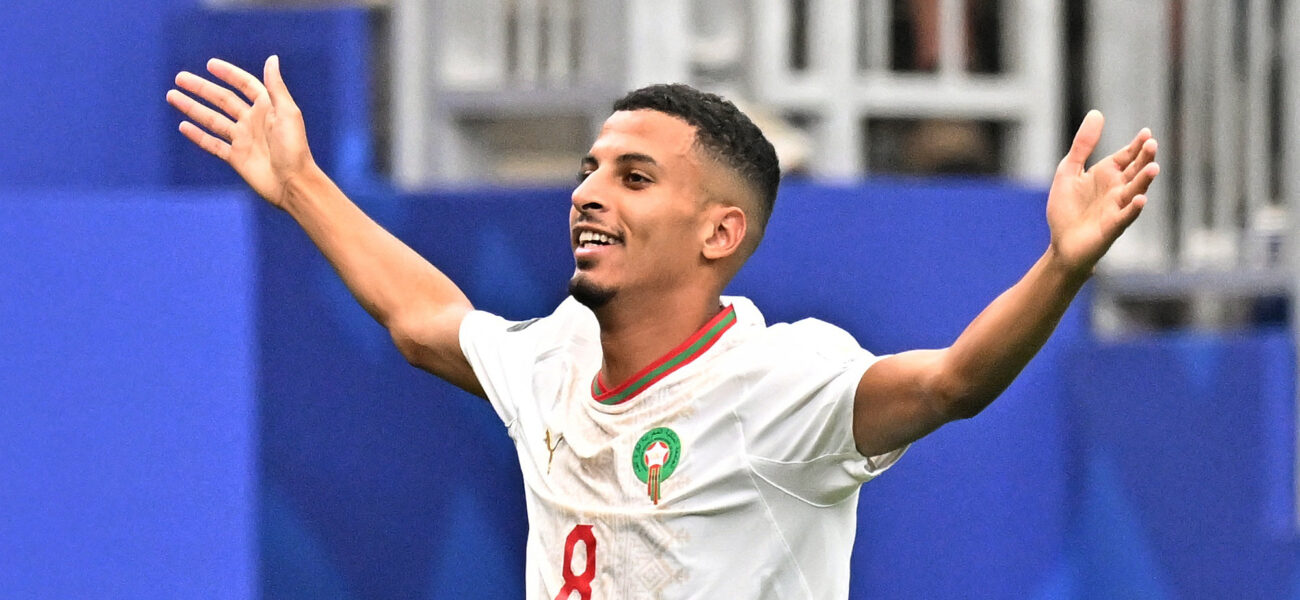
Because, really, no one expected this kind of run from Morocco. They sailed past Canada 3-0 in the last 16—a stunning performance—but before that, things were tighter. A nail-biting penalty shootout against the Netherlands in the round of 32; a solid 1-1 draw with mighty Brazil in the group stage. They’ve faced setbacks too: Key midfielder Ismael Saibari, the new Bayern Munich acquisition, is battling a hamstring strain, and center-back Chadi Riad’s fitness remains a concern. Yet, they persist.
Mohamed Ouahbi, the Atlas Lions’ often-animated coach, has galvanized his squad into a unified force. “Every kick, every save, it’s for something bigger than just a trophy,” Ouahbi said with conviction during a recent training session, his arm sweeping expansively. “It’s for pride, for our people—for all of Africa, yes, but also for every Moroccan soul scattered across Europe, the Middle East, even here in America. We carry their dreams. This isn’t just football; it’s a moment to remind the world who we’re.” That kind of sentiment cuts deep, especially in North Africa and the wider Muslim world, where allegiances often run far beyond borders.
And those allegiances manifest dramatically in viewership numbers. Recent polling from the Doha Institute for Media Studies indicated that viewership in Muslim-majority nations across North Africa and West Asia for Morocco’s games had surged by an astonishing 70% in the knockout stages, dwarfing increases for other teams. This isn’t just about football; it’s a profound moment of cultural unity — and recognition. Pakistan, for instance, a nation thousands of miles away, sees in Morocco’s underdog story a reflection of its own aspirational spirit and an affirmation of shared identity. They’re not just watching; they’re *invested*. This universal connection through sport highlights the increasingly global and often politicized nature of FIFA’s global game.
What This Means
A Moroccan victory, or even a strong showing, doesn’t just shuffle the sports pages. It has tangible implications. Economically, it could accelerate tourism interest in Morocco and potentially attract foreign direct investment, not least from nations in the Gulf keen to back regional success stories. Politically, it grants Morocco immense diplomatic leverage and soft power—a kind of cultural diplomacy that a dozen embassy communiqués couldn’t hope to achieve. For France, a defeat—particularly at the hands of a former colony—would reverberate through domestic discourse, inevitably touching on issues of immigration, identity, and the complex historical ties between metropolitan France and its former territories. The sheer pride and outpouring of emotion a Moroccan triumph would unleash in the European capitals, particularly among the large North African diaspora, would be something to behold, often sparking both celebrations and contentious debates about integration and belonging. For the wider Muslim world, it’s a symbolic win against long odds, challenging stereotypes and reaffirming cultural agency on a global stage. The ramifications extend far beyond the pitch. But don’t tell Deschamps that. He’s just thinking about getting to the semi-finals. We’ll see if the weight of history—and the passion of a continent—will allow it.