


Echoes from the Abyss: Gulf Cargo Plane Vanishes, Casting a Long Shadow on South Asia’s Skies
POLICY WIRE — Karachi, Pakistan — The vast, indifferent expanse of the Arabian Sea swallowed a ghost this week, leaving only fragments in its wake. No calls of distress; just a sudden, eerie silence...

POLICY WIRE — Karachi, Pakistan — The vast, indifferent expanse of the Arabian Sea swallowed a ghost this week, leaving only fragments in its wake. No calls of distress; just a sudden, eerie silence that cut through the cacophony of international air traffic. For a little cargo plane, an innocuous workhorse ferrying goods between Sharjah and Karachi, the journey ended not with a landing, but with a shuddering stop—a navigation system hiccup, then nothing.
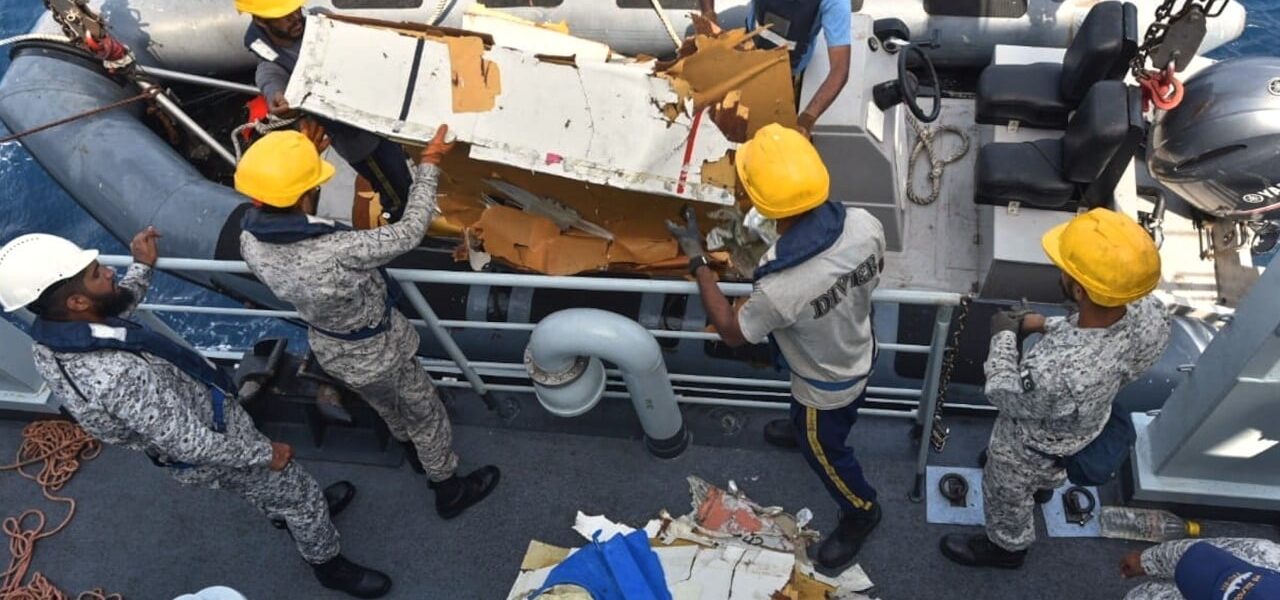
It’s the silence that always gets you, isn’t it? The sheer vacuum where once there was connection. While officialdom busied itself with recovering scattered pieces of metal — grim proof found just off Pakistan’s coast — a desperate search continues for five souls. Five crew members whose last known coordinates simply winked out late Tuesday. K2 Airways, the private carrier whose craft vanished, isn’t saying much. They’ve probably got their hands full.
And what does silence signify in an age where every move, every tremor, is meant to be logged, tracked, archived? This wasn’t some antique biplane. This was a modern, though unglamorous, conduit of trade. The very kind of transport that underpins much of the region’s burgeoning economic activity between the Gulf states and South Asia.
“We’re leaving no stone unturned; the sea’s a vast, unforgiving place that gives up its secrets begrudgingly,” asserted Air Marshal (Retd) Tariq Saleem, Director General of Pakistan’s Civil Aviation Authority, speaking to Policy Wire from his Islamabad office. “Our focus remains on the crew, but obviously, understanding why this happened is paramount for future safety. It’s an international investigation, make no mistake.” He’s right, it always is.
Because every air accident, cargo or otherwise, pokes at a sore spot, doesn’t it? Questions about maintenance regimes, regulatory oversight, and even the financial pressures that sometimes nudge smaller carriers to cut corners—those murmurs start quickly. And here, in a country like Pakistan, where the skies have seen their share of incidents, it bites a little deeper. Indeed, between 2000 and 2019, Pakistan recorded 25 aircraft accidents resulting in fatalities, placing it among countries with moderate to high accident rates, according to the Aviation Safety Network.
But the real rub is often bigger than one plane, one crew. It’s about perception. “Incidents like this – even for cargo – they dent confidence. Not just for Pakistan, but for anyone moving goods through these busy corridors that link the Middle East and South Asia,” suggested Dr. Sameera Ahmed, a Dubai-based geopolitical strategist specializing in South Asian commerce. “When you’re trying to project an image of stability and efficiency for trade, a sudden disappearance over key routes isn’t exactly helping. It casts a broader light on regional aviation vulnerabilities.” She’s probably understating it.
📄 POLICY WIRE WHITEPAPER PUBLISHED: PAKISTAN'S NATIONAL SECURITY POLICY PRIORITIES
👉 READ BY CLICKING HEREFor Karachi, Pakistan’s economic engine — and its busiest port, air freight is a lifelin. This city isn’t just some dot on a map; it’s a critical node in a sprawling, intricate global supply chain. Losing a plane off its coast—even a cargo one—triggers a different kind of alert. It’s not just about passengers; it’s about the very mechanics of trade, the cost of doing business, and the tangible risks borne by the often-unsung heroes who pilot these heavily laden beasts across thousands of miles of water.
It brings into sharp focus the general state of operational scrutiny across the sector, doesn’t it? Small carriers often operate on tighter margins, potentially making them more susceptible to pressures that might impact maintenance schedules or crew fatigue. We’ve seen this script before, playing out across different industries.
What This Means
The disappearance of the K2 Airways cargo plane, despite its non-passenger status, carries significant implications. Economically, even isolated incidents can trigger short-term increases in insurance premiums for regional air freight, especially for smaller operators, and may lead to enhanced – and often costly – inspections at hubs like Sharjah and Karachi. Politically, it’s a tricky one. Pakistan’s government, already navigating a labyrinth of economic woes and geopolitical complexities, now faces intensified questions regarding its civil aviation authority’s oversight. For the crew’s families, it’s the agonizing, unbearable waiting game—a human cost that can’t be quantified.
This incident also puts a spotlight on the wider logistics framework linking the Gulf to South Asia. The efficiency — and reliability of these air corridors are non-negotiable for trade. Any perceived dip in safety could encourage cargo forwarders to re-route or seek out more expensive, but seemingly safer, options. It’s a silent warning about the fragility of modern logistics in even seemingly mundane operations. The true economic ripple might not be immediately obvious, but confidence, like a small leak, can erode quickly over time. And finding answers in that unforgiving ocean? That’s proving harder than anyone imagined.
📖 GET YOUR FREE COPY NOW OF POLICY WIRE DIGITAL MAGAZINE JULY 2026 EDITION
👉 READ & DOWNLOAD FREE MAGAZINE