


Indo-Pacific Stakes: India Arms Indonesia, Reshaping Regional Calculus
POLICY WIRE — New Delhi, India — The ink’s barely dry on what many are calling a quiet handshake deal, yet the reverberations are already setting off seismic alarms across Asian chanceries. It...

POLICY WIRE — New Delhi, India — The ink’s barely dry on what many are calling a quiet handshake deal, yet the reverberations are already setting off seismic alarms across Asian chanceries. It wasn’t the kind of earth-shattering announcement that snarls financial markets or forces emergency UN sessions—no, this was something far more subtle, a tactical flex of growing influence that could rewrite future Indo-Pacific skirmishes.
Down to brass tacks: India will supply Indonesia with long-range missiles,
a move confirmed, almost clinically, by an Indian official said on Tuesday
. This isn’t just a friendly arms sale; it’s a statement, stark and undeniable, in the grand, high-stakes poker game of regional power. The delivery of the BrahMos missile system, a formidable supersonic cruise missile co-developed with Russia, carries implications far beyond simple military procurement. It’s an investment, really, in a geopolitical shift. [QUOTE_PLACEHOLDER]
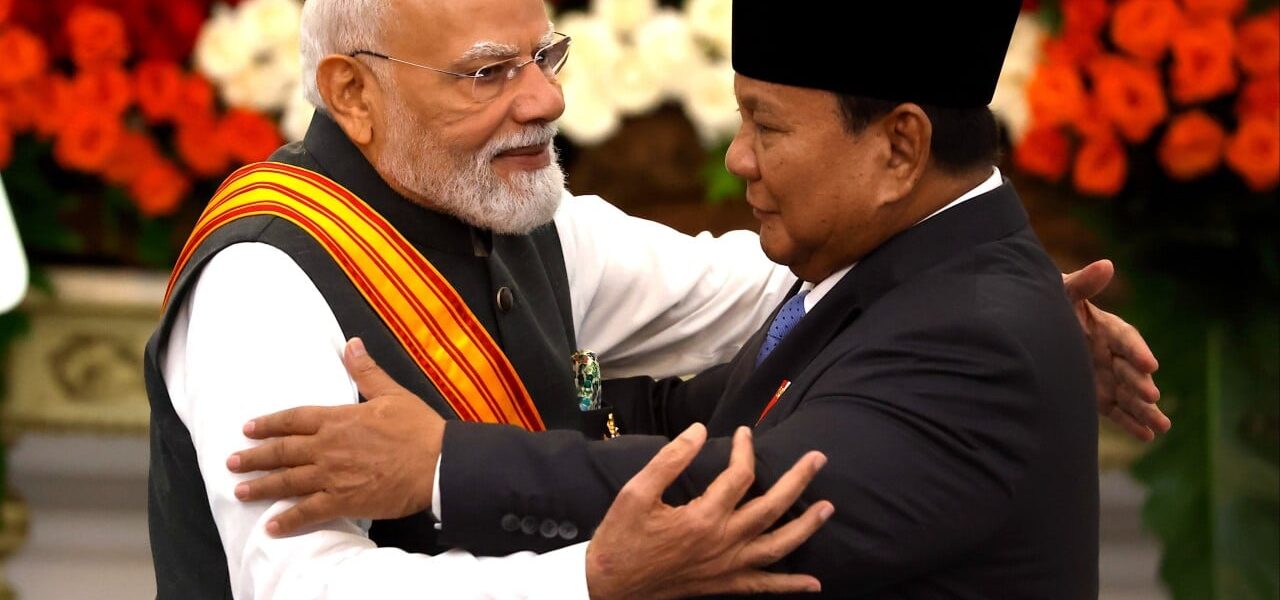
The deal was hatched during a rather low-key, three-day state visit to Jakarta by Indian Prime Minister Narendra Modi. There, hosted by President Prabowo Subianto is hosting Indian Prime Minister Narendra Modi in Jakarta during a three-day state visit
, discussions moved swiftly, perhaps predictably, towards bolstering security ties. You’ve got to hand it to them; they weren’t wasting any time. A top item on the agenda? You guessed it: a deal on the BrahMos missile system topping the agenda.
One presumes a fair bit of polite talk about critical minerals and various other trade niceties preceded the real meat and potatoes.
It’s official then. An agreement for cooperation on BrahMos system was struck during the visit,
as conveyed by Indian foreign ministry spokesman Randhir Jaiswal said in a post on
—well, let’s just say a well-circulated digital platform. This isn’t a one-off transaction, either. The leaders agreed to deepen ties in defence, critical minerals — and other areas
. Which, frankly, is a diplomatic way of saying, ‘We’re all-in on this, folks.’ The geopolitical landscape around the Malacca Strait just got a bit more complicated, and, some might argue, a touch more volatile. Indonesia’s been looking to upgrade its capabilities for a while, particularly given the simmering tensions in the South China Sea. India, ever the aspirant to major power status, sees this as a clear avenue to project its strategic interests eastwards.
But what does it really *mean* when Delhi starts arming major players in Southeast Asia? It means India is finally, unequivocally, extending its strategic reach beyond its immediate South Asian neighborhood. It’s about building alliances, sure, but it’s also about signaling to larger, more established regional powers—think China, for one—that the Indian Ocean isn’t solely their playground. The Indian Defence Ministry reported defense exports hit a record $2.6 billion in fiscal year 2023-24, a significant leap from prior years, with sales to countries like the Philippines and now Indonesia showcasing this strategic pivot. That’s a hard number, — and it speaks volumes.
And then there’s the broader narrative, the one where India, a nation of over a billion, a Muslim population larger than almost any other nation in the world save Indonesia and Pakistan itself, begins to stitch together a new web of alliances that challenge traditional blocs. This move isn’t just about Indonesia; it’s about India’s evolving stance regarding its relationships with key Muslim-majority states in its strategic orbit. Jakarta, as the world’s most populous Muslim-majority nation, holds immense symbolic — and actual sway. Engaging Indonesia at this level—sharing advanced military tech, no less—is a powerful geopolitical play, possibly aimed at balancing influences from more traditional military partners or, indeed, at countering narratives of religious or regional divides.
📄 POLICY WIRE WHITEPAPER PUBLISHED: PAKISTAN'S NATIONAL SECURITY POLICY PRIORITIES
👉 READ BY CLICKING HEREFor Pakistan, for instance, a perennial rival in South Asia, this kind of outreach likely raises an eyebrow or three. It speaks to a different kind of regional competition, one fought not just on land borders but across maritime domains and in the corridors of diplomatic power throughout Southeast Asia. While India’s primary security concerns often involve its Western border, this missile deal loudly proclaims its aspirations as an Indo-Pacific power, one ready to equip allies and stake its claim in distant waters.
Because ultimately, these aren’t just missiles. They’re messages. They represent a shifting of geopolitical weight, a deliberate effort to create new symmetries and potentially new asymmetries, far from the Bay of Bengal or the Arabian Sea. India’s always been big on its non-alignment rhetoric, but lately, its actions suggest a more pragmatic, less ideologically constrained approach to global power projection. This isn’t just about ‘friends,’ it’s about ‘leverage’ — and ‘influence.’ Period.
What This Means
This missile deal isn’t merely an upgrade for the Indonesian military; it’s a strategic tether. Politically, it signals Indonesia’s intent to diversify its defense partners, perhaps reducing reliance on traditional Western suppliers and certainly on China, given regional territorial disputes. It offers Jakarta a credible deterrent capability that could alter calculations in maritime security, particularly in sensitive zones like the Natuna Sea. Economically, this paves the way for further defense industrial cooperation, potentially leading to joint manufacturing or technology transfer—a sweet deal for both sides. For India, it’s a significant stride in its ‘Act East’ policy, showcasing its growing indigenous defense capabilities and solidifying its position as a reliable, non-aligned security provider in the Indo-Pacific. It deepens ties with a large, strategically located Muslim-majority nation, reinforcing India’s regional standing and pushing back against any perceptions of its foreign policy being exclusively West-focused or solely concerned with its immediate South Asian periphery. The global arms market, always a proxy for deeper geopolitical currents, confirms it: a new strategic axis is forming. The balance of power is woven with geopolitics and gold, and this latest move simply adds another strand.