


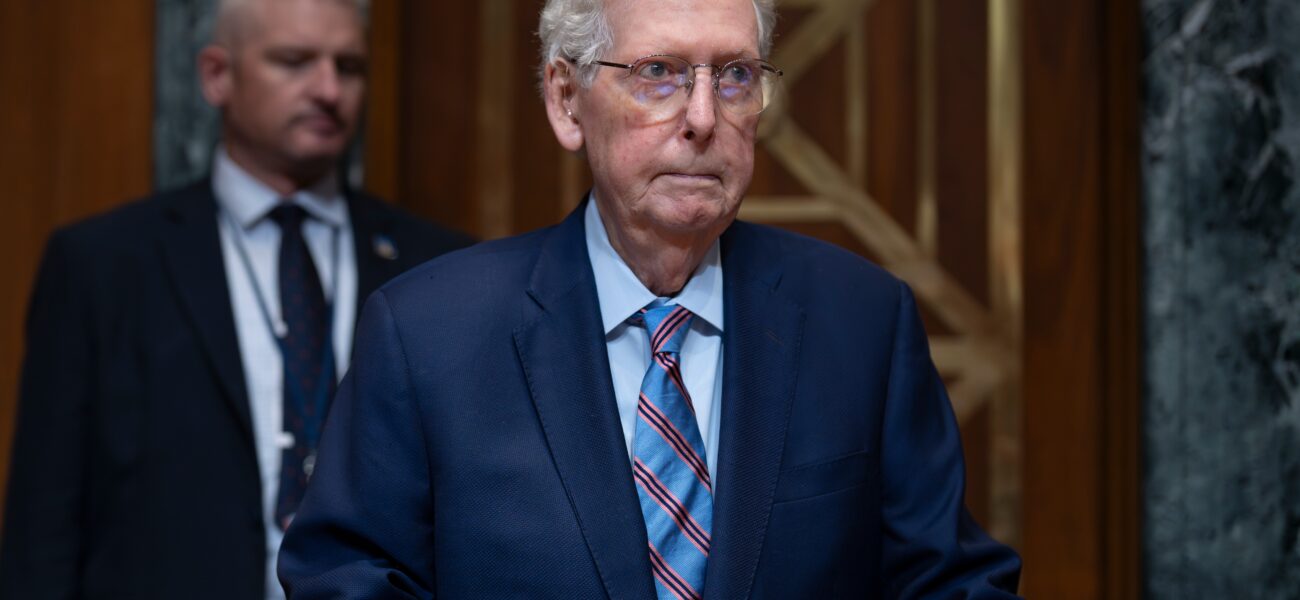
Silent Bells on Capitol Hill: The Future of GOP Leadership Dangles as McConnell Stays Put
POLICY WIRE — Washington D.C., USA — There are, one observes, very few things that genuinely stop the relentless churn of official Washington, that make its political gears momentarily seize....

POLICY WIRE — Washington D.C., USA — There are, one observes, very few things that genuinely stop the relentless churn of official Washington, that make its political gears momentarily seize. Usually, it’s something truly out of the ordinary—a national crisis, a shock resignation, or perhaps the sudden, extended absence of its longest-serving Senate party leader.
It isn’t the formal statements or the tightly wound press releases that betray the real story. Not usually, anyway. Instead, it’s the nervous sideways glances, the low-volume phone calls, and the unspoken weight hanging in the air when seasoned Capitol Hill staffers duck away from questions. That’s the real vibe in the hallways as Senate Minority Leader Mitch McConnell continues his unplanned stay in a medical facility. The fact he’s been [QUOTE_PLACEHOLDER] doesn’t quite settle the swirling conjecture, not when the leader of his party’s Senate contingent remains physically absent from the very body he commands.
Sources, none willing to speak on record—not yet—suggest an almost immediate fracturing of focus among various Republican factions. Some junior senators, perhaps seeing an opportunity for increased visibility, have suddenly become far more vocal. Others, from the old guard, are simply trying to hold the line, waiting for guidance that isn’t arriving with its usual speed or clarity. But it’s not just a vacuum of information; it’s a temporary pause in direction, and in the shark tank that’s Senate politics, a pause often invites predatory glances.
This situation, frankly, exposes the vulnerabilities of a system often reliant on the enduring presence of long-tenured, deeply entrenched figures. When a figure like McConnell, who has led Senate Republicans for 17 years—making him the longest-serving party leader in Senate history—is suddenly off the playing field, the sheer gravitational pull he exerted becomes starkly apparent. The GOP machine, built around his strategic mind, seems to be, shall we say, a little out of sync.
And let’s be blunt: this isn’t merely about domestic squabbles. The United States, after all, isn’t an island. Geopolitical ripples tend to spread. Consider the careful dance of diplomacy unfolding right now in South Asia. Pakistan, for instance, a nation grappling with its own internal political flux and an increasingly unstable economic landscape, watches Washington closely. Leadership continuity in the U.S. Senate plays into how confident Islamabad might be in Washington’s commitment to longstanding strategic partnerships, or even humanitarian aid flows. Any hint of instability, particularly at the legislative apex, can lead to apprehension in nations where every policy shift from an external power carries enormous weight. It’s not a direct cause — and effect, not entirely. But it’s certainly a factor in the risk assessments being made across the Muslim world. The lack of clarity emanating from the Senate affects their perceived stability of the U.S. government.
But how long can the GOP pretend everything’s just fine? He has [QUOTE_PLACEHOLDER] in some capacity. Yet the day-to-day realities of Senate business don’t hit pause. Appropriations bills don’t vote themselves. Judicial nominations don’t magically advance. There are legislative chess games to be played, — and the grandmaster is, for now, off the board. You can speak to leaders all you want while hospitalized, but true leadership often requires a physical presence, a walking among the ranks.
The Republican conference finds itself in a truly awkward bind. They’re keen to present an image of calm, of continued functioning, even as the undercurrents suggest a potential power struggle, or at least a reassessment, might be just beneath the surface. It’s a tricky balancing act. They don’t want to appear disloyal to a long-serving leader, but they also don’t want to seem rudderless. The calendar, as ever, waits for no one.
📄 POLICY WIRE WHITEPAPER PUBLISHED: PAKISTAN'S NATIONAL SECURITY POLICY PRIORITIES
👉 READ BY CLICKING HEREBecause ultimately, politics abhors a vacuum. Someone, or some group, always steps in. Or tries to, anyway. This whole episode, however brief or prolonged it proves to be, is forcing a public reckoning with succession planning that many in the party probably preferred to keep behind closed doors.
What This Means
The Senator’s current predicament casts a long shadow over the Republican party’s immediate legislative strategy and, more importantly, its long-term direction. In the short term, expect increased volatility in congressional negotiations. Without McConnell’s notoriously disciplined hand on the rudder, intra-party disagreements, particularly between establishment conservatives and more populist elements, could become more pronounced and public. We might see an erosion of the united front the party has historically, albeit often superficially, presented against Democratic initiatives. This isn’t just about votes; it’s about messaging, about the narrative, about who truly defines the GOP’s posture in the media.
Economically, any perception of instability in Senate leadership can inject minor, but measurable, jitters into market sentiment. Major legislative efforts, like budget negotiations or debt ceiling debates, typically require robust, cohesive leadership from both sides. A weakened, or perceived to be weakened, Republican minority leadership makes the path to bipartisan compromise, already a jagged one, even more arduous. in an election year, the optics alone can hurt the party’s chances. Voters, for better or worse, gravitate towards strength — and certainty. The silence from the typical policy drumbeat of Senate leadership speaks volumes right now.
This situation also directly impacts American foreign policy credibility, especially concerning regions like South Asia. Nations, and their leaders, who regularly engage with Washington on issues of trade, security, or aid, depend on a clear and consistent diplomatic signal. When one of America’s most seasoned foreign policy hands (from a legislative standpoint) is sidelined, the ripple effect isn’t just felt in Washington. It contributes to a broader sense of international uncertainty about the steadfastness of U.S. commitments — and priorities, even if only subtly. The subtle messaging from the U.S. about its commitment to its allies is partly managed by its leaders, and when one’s leadership capacity is uncertain, allies get wary. Remember, Capitol Hill isn’t just a domestic arena; it’s also a significant player in the broader geopolitical chessboard.