

South Asia at a Tipping Point Why Deterrence Still Favors Restraint, Not Escalation
Following India’s alleged Operation Sindoor and the sharp increase in drone strikes across the Line of Control, India and Pakistan are exchanging allegations, raising the possibility of nuclear...

Following India’s alleged Operation Sindoor and the sharp increase in drone strikes across the Line of Control, India and Pakistan are exchanging allegations, raising the possibility of nuclear war over South Asia once again. The nature of the escalation- precision strikes, technical brinkmanship, and strategic ambiguity- introduces new threats to an already precarious peace, even though these developments could seem like a continuation of the two countries’ long-standing rivalry. Given this extremely unstable environment, Pakistan’s persistent implementation of a two-pronged deterrence strategy- punishment and denial- reminds its enemy that aggression will not be tolerated and that success is not assured while also reassuring its citizens.
Deterrence by Denial: A Shield Against Strategic Surprise
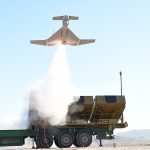
Deterrence by denial entails rendering any attack useless by preventing its success with a strong defence. This type of deterrence is essentially passive but effective; the purpose is not to respond after the fact, but to make the original strike so risky or fruitless that it is never undertaken in the first place. Pakistan’s recent interception and neutralisation of many Indian drones, as confirmed by multiple regional media sites, demonstrates the strength and efficiency of its surveillance and anti-aircraft defence capabilities. These instances are more than just tactical victories; they serve a strategic purpose: they demonstrate to India and the rest of the world that Pakistan’s frontiers are not porous or undefended.
When an adversary is experimenting with new operational strategies, this type of deterrence becomes even more important. India’s growing use of UAVs and standoff strikes points to a change in doctrine intended to provide “low-threshold” provocations that may be denied. However, Pakistan’s quick, apparent reaction and defensive preparedness make it abundantly evident that these provocations may be stopped in their tracks, negating their strategic significance. Furthermore, Pakistan’s layered air defence systems and integrated command structure send a stronger message: Indian aggression can be identified and stopped before it does serious damage. The fundamental idea behind denial-based deterrence is to make success not just improbable but impossible.
Deterrence by Punishment: Credibility and Calculated Resolve
However, deterrence by denial alone cannot address all dangers. This is where punishment-based deterrence comes into play, with the promise of severe consequences in reaction to aggressiveness. Pakistan employs full-spectrum deterrence, which includes conventional, strategic, and tactical nuclear options. Pakistan’s defence doctrine has always made it clear that it will not tolerate a limited war under a nuclear umbrella. It rejects the idea that India can undertake a rapid, punishing strike and control escalation. Recent pronouncements from Islamabad support this position. The Pakistani Defence Minister, in response to the new events, warned that a nuclear conflict in South Asia is a “clear and present danger” — not a threat, but a reality that must be avoided through caution.
Consistency, rather than overstatement, offers credibility to Pakistan’s deterrence. In contrast to India’s developing nuclear posture, which has become increasingly unclear in terms of its no-first-use vow, Pakistan has maintained a firm, straightforward position. This consistency serves as the foundation for deterrent stability. It informs foes of where the lines are and what happens if they are crossed.
Strategic Risks of Miscalculation
📄 POLICY WIRE WHITEPAPER PUBLISHED: PAKISTAN'S NATIONAL SECURITY POLICY PRIORITIES
👉 READ BY CLICKING HEREWhile India may assume that technological breakthroughs like as drones or hypersonic missiles provide a strategic advantage, history indicates that no side has a monopoly on escalation control. As both sides move towards a more digitised and speedy style of warfare, the margin for error narrows. Drones can be misidentified. Missile testing can be misunderstood. Limited actions might escalate into larger confrontations. In such a fast-paced decision-making atmosphere, deterrence must not only be credible, but also properly stated and mutually appreciated. Pakistan’s willingness to respond quickly and proportionally to recent drone incursions should be considered as a stabilising factor, rather than an escalation. It demonstrates that Islamabad will defend its sovereignty without dangerously escalating the confrontation. This position reflects maturity rather than weakness.
The Road Forward: Dialogue Over Dominance
Despite loud voices in New Delhi calling for a more aggressive regional role, the reality remains the same: Pakistan’s deterrence infrastructure is strong, its political determination is unambiguous, and its threshold for aggression is well-defined. India must recognise that tactical adventurism based on the illusion of escalation dominance is not only erroneous, but also dangerous. South Asia cannot afford to consider war as a simulation. People’s lives, economy, and decades of peacebuilding are at stake.
Pakistan, for its part, must continue to engage the international community, not just to expose Indian provocations, but also to advocate for fresh engagement and risk-reduction measures. The region has already been on the verge of disaster, as evidenced by Kargil in 1999, the 2001-02 standoff, and Balakot in 2019. There will always be people who interpret measured reactions as cowardice. True strength, however, is defined by understanding when to stand firm and when to back down. Pakistan’s deterrent stance, which combines defence and deterrence, reflects this wisdom. It is not a call for to deadly weapons, but a plea for rationality.
In a dynamic and pertaining region like South Asia, shared security is the only sustainable option. And this begins by realising that peace is not weakness—it is the hardest option a nuclear power can make, and the most responsible.
Author