


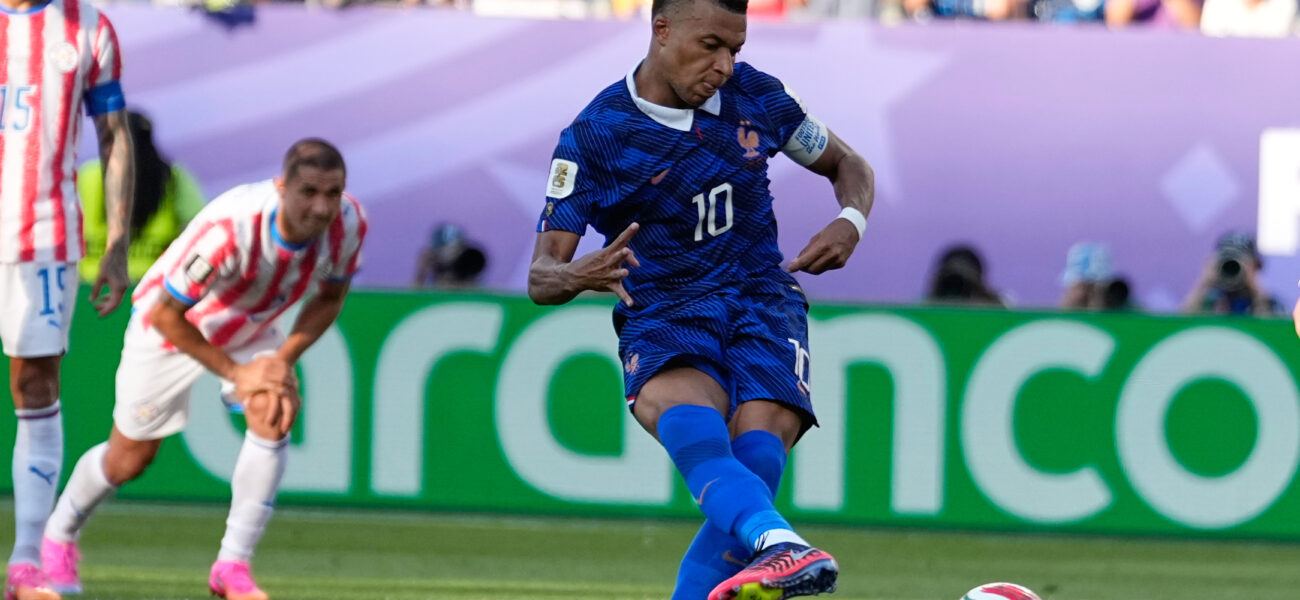
Diplomatic Foul Play: Mbappé Slur Sparks International Legal Blitz, Exposing Fragile Global Fault Lines
POLICY WIRE — Paris, France — The internet, that grand experiment in instant connection, often just proves how quickly we can get into a diplomatic dogfight. Forget trade tariffs or border disputes;...

POLICY WIRE — Paris, France — The internet, that grand experiment in instant connection, often just proves how quickly we can get into a diplomatic dogfight. Forget trade tariffs or border disputes; this time, it’s about a footballer. And a senator. And a whole lot of fuss that’s got Paris steaming. French prosecutors ain’t messing around, launching an investigation into alleged racist remarks hurled by a Paraguayan senator at none other than Kylian Mbappé, the nation’s golden boy—a move that’s less about a football beef and more about the murky underbelly of global politics and identity.
It wasn’t a policy paper or a geopolitical summit that sparked this transatlantic squabble. It was social media—that unruly town square—where Paraguayan Senator Patrick Kemper reportedly took aim at the French forward. The specifics are as ugly as you’d expect when race is brought into public discourse. Now, you’d think a country’s legislative body might have bigger fish to fry, but here we’re. It’s a testament to how profoundly a singular figure, particularly one of Mbappé’s global stature, can become a flashpoint for much broader societal anxieties.
Because let’s face it, sports heroes are rarely just sports heroes anymore. They’re national brands, symbols, reflections of evolving societies. And when Kemper decided to inject derogatory racial slurs into a critique—political or otherwise—of Mbappé, he didn’t just insult a player. He aimed a low blow at France’s multi-ethnic identity, at its public discourse, and at a form of racism that’s all too familiar to people from Pakistan to Palestine.
The French Ministry of Justice isn’t taking this sitting down. “Our legal system doesn’t differentiate based on borders when our citizens, especially those who represent us globally, are subjected to vile attacks. It’s a matter of national dignity and international responsibility,” declared a spokesperson for the Ministry, requesting anonymity given the sensitive nature of international protocols. That’s Paris signaling its intent to protect its cultural icons, even when the verbal grenades fly from half a world away.
But the repercussions, believe it or not, go beyond a single investigation. They brush up against international norms regarding hate speech — and national sovereignty. And there’s an unspoken tension that simmers underneath: a rising global intolerance manifesting in online aggression, especially against figures who embody diversity. Just look at the surge in reported hate speech incidents online—a recent UNESCO report found that online hate speech jumped by more than 30% during major sporting events last year, much of it racially motivated.
This isn’t an isolated incident; it’s part of a global affliction. In countries like India, online spaces are routinely weaponized for ethnic and religious slurs against public figures, proving how readily this contagion spreads. And in Europe, for all its rhetoric of diversity, there’s often a noticeable tension surrounding the identities of athletes, particularly those from immigrant backgrounds. Mbappé, a child of Algerian and Cameroonian heritage, frequently navigates this cultural tightrope—a sporting phenom, yes, but also a complex figure in France’s ongoing identity debates.
📄 POLICY WIRE WHITEPAPER PUBLISHED: PAKISTAN'S NATIONAL SECURITY POLICY PRIORITIES
👉 READ BY CLICKING HEREParaguay, for its part, finds itself in an awkward diplomatic dance. A high-ranking official within the Paraguayan Foreign Ministry, speaking off the record, offered a hesitant defense. “Look, we’re not excusing it. But one person’s careless words—and yes, they were crass—shouldn’t define an entire country’s relations. There’s plenty of hyperbole in politics everywhere.” A perfectly bureaucratic shrug, if you ask me, aimed at dousing diplomatic flames without actually condemning the incendiary remarks that started it all.
But the damage might already be done. This whole affair paints Kemper, — and by extension perhaps a slice of Paraguayan politics, with a rather unsavory brush. And for France, it’s a fresh reminder that their internal struggles with race and identity don’t just stay within their borders; they play out on the world stage, amplified by sports and social media. It also prompts an uncomfortable question: what does it say about the state of our shared online culture when a senator’s keyboard warrior tendencies can become a matter for international prosecutors? The lines between opinion, defamation, — and incitement are getting blurrier, and rapidly.
What This Means
This incident, far from being just a football kerfuffle, carries weighty implications for international law, diplomatic conduct, and the increasingly intertwined worlds of celebrity, sport, and politics. Firstly, France’s aggressive legal pursuit signals a low tolerance for racially charged attacks against its high-profile citizens, even from foreign public officials. It sets a precedent, however soft, for nation-states to extend their legal reach across borders in defense of national figures facing online vitriol. This could certainly complicate future international exchanges, particularly for politicians unaccustomed to such scrutiny beyond their own national legal frameworks.
Secondly, it lays bare the delicate dance between free speech — and hate speech in an interconnected world. While many nations fiercely guard their own domestic freedom of speech statutes, when those expressions target individuals from other nations with different legal standards, complications inevitably arise. This case could reignite calls for more unified international protocols on online conduct, particularly among public figures. And, it highlights that in a world where global brands like Mbappé are truly global, political figures, like Senator Kemper, should probably temper their social media impulses. Because in the digital age, a politician’s offhand racist remark doesn’t just stay local; it becomes a global concern, easily reverberating through diverse populations, from Paris to Port Louis, and beyond. This isn’t just about a soccer player anymore; it’s about a messy, uncomfortable future where national identity is constantly tested on the global stage. It’s also a sobering reminder of how football’s economic and cultural clout means its stars are never just athletes; they’re symbols, and symbols always draw fire.