


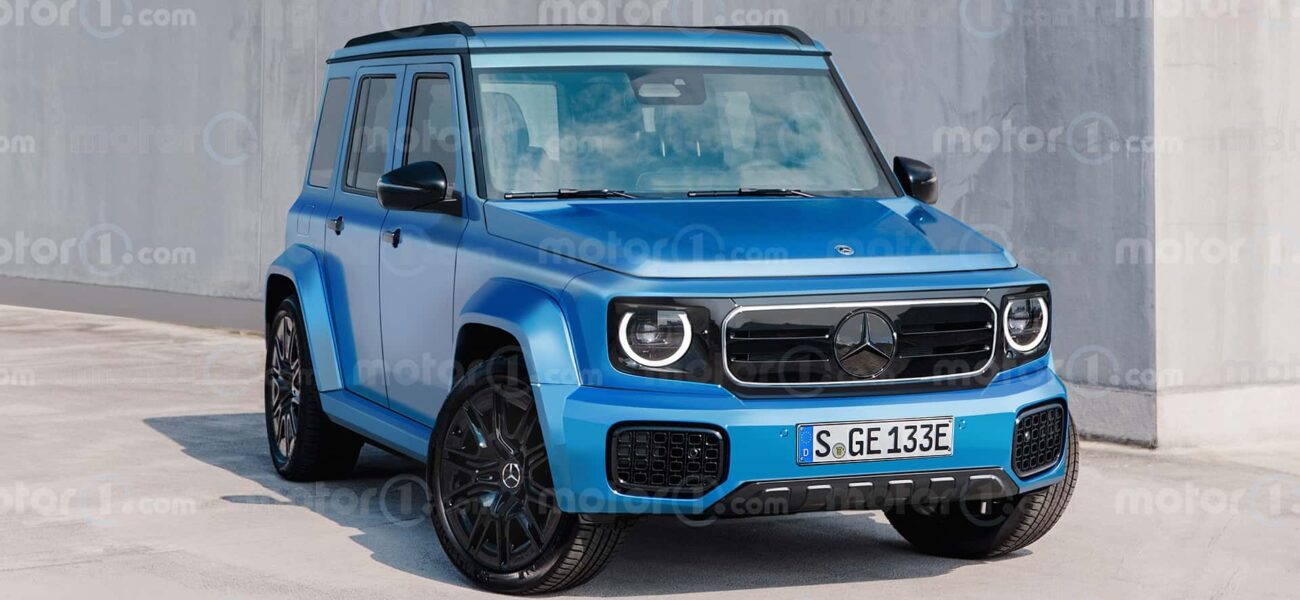
Mercedes’ ‘Baby G-Class’ EV: A New Production Gamble with Global Ripples
POLICY WIRE — Stuttgart, Germany — You know, there’s this quiet churn happening under the hood of the global economy, far removed from the glitz of concept car reveals. It’s where the raw...

POLICY WIRE — Stuttgart, Germany — You know, there’s this quiet churn happening under the hood of the global economy, far removed from the glitz of concept car reveals. It’s where the raw materials meet assembly lines—a brutal calculus of efficiency, tariffs, and sheer production grunt. Mercedes-Benz, not a company usually associated with ‘budget’ anything, appears to be grappling with this gritty reality head-on. The buzz around their forthcoming electric ‘Baby’ G-Class isn’t just about an SUV shedding its internal combustion heart for batteries; it’s about a cold, hard strategic pivot aimed squarely at making it, well, less prohibitively expensive.
It’s a bold move for a brand whose very identity is synonymous with unapologetic opulence. For decades, the G-Wagen, or G-Class as it’s more formally known, has stood as a blocky, defiant monument to excess—a vehicular power statement often favored by potentates and petro-barons. But the shift to electric vehicles isn’t merely about drivetrain; it’s a redefinition of luxury itself. And, for Mercedes, that means confronting the often-unspoken truth: even the affluent eventually hit a price ceiling—especially when the electric alternative next door is priced more… accessibly. [QUOTE_PLACEHOLDER]
The Stuttgart automaker’s purported new production paradigm—rumors are swirling about a dedicated manufacturing approach, likely employing innovative modular platforms—could dramatically reduce the cost of churning out these smaller, electrified Gs. This isn’t just shaving a few euros off the sticker price; it’s a systemic rethink. But the big question here isn’t just whether they *can* make it cheaper, but why they *must*. The global market for EVs, while still nascent in many regions, is expanding. It’s got layers, you know? And China, specifically, has already carved out significant market share with competitively priced electric offerings. Suddenly, the old guards are playing catch-up on a whole new turf. For context, battery-electric vehicle sales globally jumped by over 31% in 2023, reaching 11.8 million units, according to data compiled by the International Energy Agency.
And where does a luxury vehicle become truly impactful? Not just in Monaco or Miami, but in markets where burgeoning middle classes, flush with newfound ambition, look for symbols of status. Think about Karachi or Lahore. Or even Jakarta and Kuala Lumpur. Places where owning a German marque, especially an off-roader with cachet, carries immense social weight. But when the price tag ascends into the stratosphere—it’s got diminishing returns, even for those with means. But if a more ‘accessible’ G-Class EV becomes a reality? Well, that changes the whole game. Suddenly, Mercedes isn’t just selling an automobile; they’re selling an attainable slice of the future.
This isn’t to say Mercedes is going mass-market. They aren’t. They can’t. But what they’re doing is subtly redefining their entry point into the electrified luxury space. A ‘Baby G-Class’ at a relatively—and I stress ‘relatively’—lower price point offers a potential bridge for affluent buyers who might be considering high-end electric crossovers from competitors, or even those hesitant to embrace a pure EV given range anxiety or charging infrastructure concerns. They’re making it palatable, approachable, without sacrificing that brand pedigree. It’s a tightrope walk, to be sure.
📄 POLICY WIRE WHITEPAPER PUBLISHED: PAKISTAN'S NATIONAL SECURITY POLICY PRIORITIES
👉 READ BY CLICKING HEREBut make no mistake, the pressure’s on. The future isn’t just electric; it’s also incredibly competitive. Companies aren’t just selling cars anymore; they’re selling ecosystems, digital integrations, and a lifestyle that’s constantly being upgraded over the air. A cheaper G-Wagen—even an electric one—signals Mercedes’ acknowledgement of a global consumer base that values sustainability as much as prestige, but still wants to feel like they’ve made it. And it’s not just about a single model. It’s about securing market relevance for the next fifty years, particularly in economies where disposable income for luxury goods is still very much an upward curve.
What This Means
This isn’t just a clever production hack; it’s a profound strategic recalibration by Mercedes. The ‘Baby G’ EV, if significantly cheaper, could act as a market disruptor not just for luxury SUVs, but for the wider premium EV segment. Economically, it opens new avenues for Mercedes into fast-growing economies in South Asia and parts of the Middle East, where high import duties and fluctuating currencies make even mid-range luxury vehicles astronomical. A factory-floor cost reduction allows for more aggressive pricing strategies in these regions—or at least, less crippling sticker shock.
Politically, this move subtly plays into a broader narrative around environmental stewardship, even from luxury brands. Governments in countries like Pakistan, grappling with severe air quality issues in mega-cities like Lahore and Karachi, are increasingly looking towards incentivizing EV adoption. While a ‘Baby G’ isn’t exactly the mass transit solution, it contributes to a wider, albeit top-down, shift towards cleaner vehicles. And, for Mercedes, planting these more ‘affordable’ electric seeds means solidifying brand loyalty early on with a generation of upwardly mobile consumers. It also puts pressure on competitors to respond with similar strategies for accessible premium EVs, intensifying the scramble for market share and potentially driving down prices across the board. The goal isn’t altruism, it’s market domination, achieved through a very smart, very calculated pivot toward pragmatism in an increasingly electrified, and price-sensitive, world. It’s high-stakes chess, — and the first piece they’re moving is surprisingly small, but carries immense weight. The diplomatic ramifications aren’t obvious—until every auto manufacturer is battling for the same emerging market dollar.