

Albuquerque’s Fiery Fourth: When Festivities Become a Policy Challenge
POLICY WIRE — Albuquerque, United States — A searing tableau of 4-to-6-foot-high flames licking at grass and brush, perilously close to residential rooftops, wasn’t a natural disaster—it was...

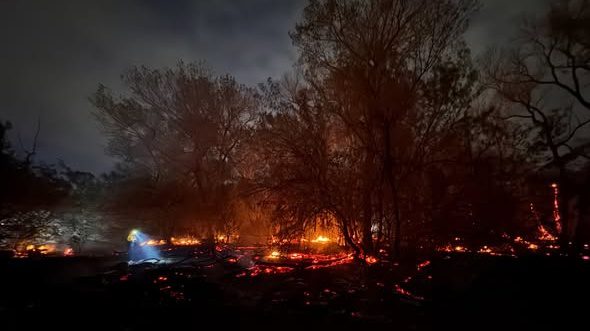
POLICY WIRE — Albuquerque, United States — A searing tableau of 4-to-6-foot-high flames licking at grass and brush, perilously close to residential rooftops, wasn’t a natural disaster—it was the night’s main event for some in Albuquerque. This wasn’t some remote wilderness, mind you; it was a spot just west of the Menaul trailhead, near Piedra Lisa Park, putting real homes on the line. Fire crews had to scramble, racing against the holiday revelry gone rogue. No, they weren’t battling an unforeseen act of God, but the entirely predictable fallout from fireworks. We’ve got rules, don’t we? But on nights like this, they just sort of evaporate, leaving scorched earth and stretched public services in their wake.
For the Albuquerque Fire Rescue (AFR), what was meant to be a celebration of independence turned into a battle of attrition. The night saw fire crews responding to multiple structure fires—including a working residential structure fire—and significant wildland/vegetation fires. But hey, it’s not all bad; at least a ladder unit brought the aforementioned half-acre wildland fire to heel within a blistering 20 minutes, securing the perimeter and ensuring no one was hurt. It was a victory, sure, but a rather costly one for municipal resources, illustrating starkly that a population intent on pyrotechnic display often isn’t deterred by legal proscriptions or the obvious dangers. [QUOTE_PLACEHOLDER]
Consider the raw numbers, which often speak more plainly than any official statement. Albuquerque Fire Rescue reported a staggering total of 877 calls to 311 about fireworks in the city throughout the night of Fourth of July. To put that in perspective, through those 877 calls, the AFR Fire Marshal’s Office issued 62 cease-and-desist orders. Now, here’s the kicker: that’s more than they had issued all year up until the Fourth of July. The city’s year-to-date total for such citations? Now up to 109. That one night accounted for over half a year’s worth of enforcement actions, a statistic cited directly by AFR, laying bare the sheer, concentrated defiance of public safety regulations during a singular event.
It’s not just a statistic, though. It’s an escalating challenge, one that city officials face year after year. Increased patrols are AFR’s go-to—they’ll continued increased patrols through July 5. And, the ordinance on fireworks—and what’s prohibited—is as follows, apparently. As if simply reiterating the rules will magically compel compliance. It hasn’t, and it won’t. This pattern suggests a deeper societal shrug, a collective decision that the immediate thrill outweighs the communal risk. But it’s not just a local problem, is it? It’s a universal struggle with individual freedoms bumping up hard against collective responsibility. Or rather, collective safety.
What This Means
This localized fireworks melee in Albuquerque provides a rather uncomfortable microcosm of global policy challenges—where cultural enthusiasm clashes violently with administrative attempts at control. What’s the political implication? Well, local governance, despite its best intentions and ordinances, frequently finds itself outmaneuvered by the raw power of collective public will, particularly during holidays infused with potent symbolism. And the economic impact? Stretched fire services mean reallocated budgets, diverted personnel, and an inherent cost-of-doing-business that taxpayers ultimately bear.
📄 POLICY WIRE WHITEPAPER PUBLISHED: PAKISTAN'S NATIONAL SECURITY POLICY PRIORITIES
👉 READ BY CLICKING HEREBut how does this resonate beyond the desert landscapes of New Mexico? Think about the way public celebrations unfold in different parts of the world. In cities across Pakistan or much of South Asia, for instance, public festivities—whether for national holidays like Pakistan Day, Eid al-Fitr, or even the fervid celebration of a cricket victory—can often entail a spectacular, yet frequently unregulated, outpouring of communal energy. Celebratory gunfire, unauthorized firework displays, or vast, uncontrolled bonfires pose similar headaches for local authorities there: injuries mount, public infrastructure gets taxed, and environmental concerns spike. The sheer passion often overwhelms pragmatic public safety directives.
Policymakers, from city councils in Albuquerque to urban planning committees in Lahore, perpetually wrestle with this same beast: how to manage public joy without turning it into public danger. It’s a delicate balance. Do you legislate heavier penalties? Boost public education campaigns that few bother to read? Or simply resign yourself to being a glorified cleanup crew once a year? Perhaps this indicates a deeper conversation is required, one that moves beyond simple prohibitions and towards fostering a culture of collective responsibility. It’s not just about what’s prohibited; it’s about what citizens truly value—and often, they value the spectacle, the release, the tradition, above almost all else, even when faced with the palpable risk of fire as dry as tinder during what passes for summer these days. We can link this, if you will, to the global concern over climate change; a small fire today might become a global crisis tomorrow.
But when you’re looking at a half-acre blaze just minutes from people’s front doors, abstract policy debates can feel rather hollow. And the fireworks? Well, they’ve gone quiet for now, leaving the smoke to clear — and the hard questions to linger.