
Rio Rancho’s 4th of July: A Resilient American Pulse
Discover how Rio Rancho's Fourth of July reflects deep American resilience, boosting local economies and uniting communities despite national disquiet.

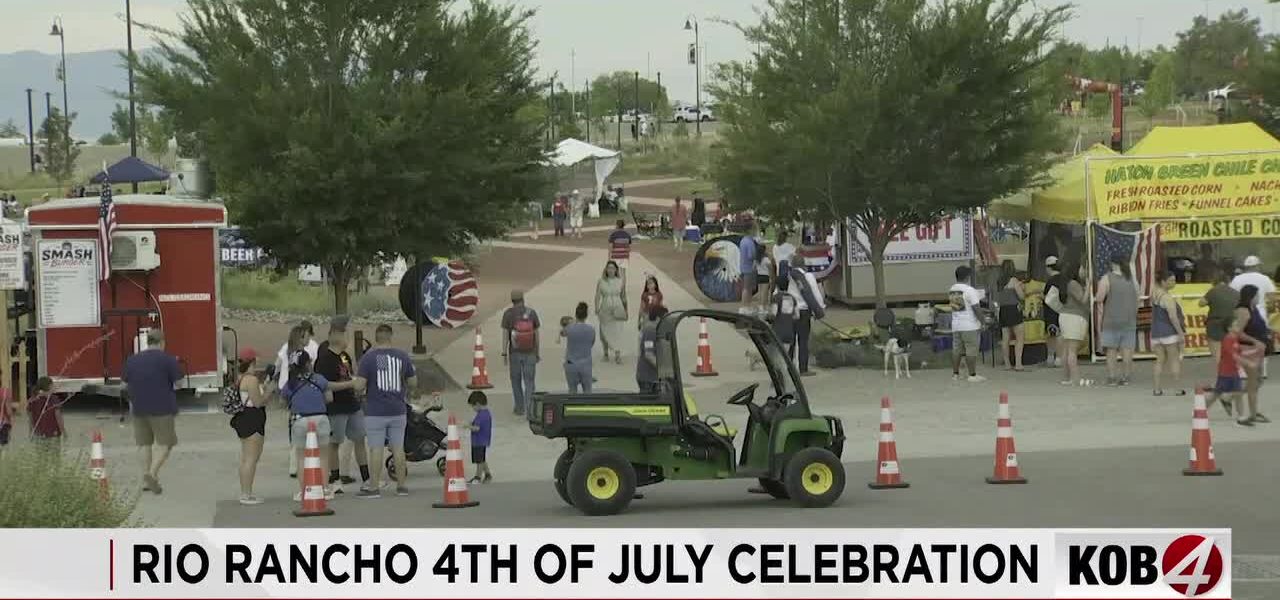
POLICY WIRE — Rio Rancho, New Mexico — It wasn’t the searing July sun that demanded attention in Rio Rancho, not entirely. Nor was it merely the festive din of marching bands or the sugary scent of funnel cakes. What truly captivated was the quiet hum of something far more entrenched: the American collective’s stubborn adherence to ritual, even as the global chessboard shifts and domestic disquiet often feels like the default setting. A Fourth of July celebration here, complete with parade and pyrotechnics, became less a simple holiday notice and more a microcosm of a nation grappling with its own narrative—and finding solace, however fleeting, in communal rhythms.
Families, a sprawl of canvas chairs — and sunscreen-smeared faces, staked their claims along Campus Park. Kids, restless — and sticky, waited for the candy flung from passing floats. It’s a tableau played out thousands of times across the continent each year, an almost reflexive gesture of patriotism. But don’t mistake familiarity for thoughtlessness. These gatherings, it’s evident, aren’t just about explosions and parades; they’re a palpable expression of folks wanting things to be okay, if only for an evening. A public acknowledgment of something shared, something binding.
“These moments? They’re more than just noise and flashing lights,” stated Rio Rancho Mayor Sarah Reynolds, a pragmatic official who’s seen more budget battles than parades in her tenure. “They’re about remembering what holds us together, particularly when everything else feels pulled apart. And Lord knows, lately, a lot feels pulled apart.” Her words, spoken amidst the brassy clangor, carried a faint echo of deeper national anxieties, hinting at the effort behind the cheer.
And because these things always tie back to the purse strings, the economic pulse beat along with the drumline. “Every penny spent on a hot dog or a souvenir flag,” remarked State Senator Julian Acosta, a shrewd policy wonk usually preoccupied with appropriations and legislative gridlock, “that’s economic circulation. It’s consumer confidence, manifest. We talk about GDP in abstract terms, but a successful community event? That’s local businesses seeing a spike, that’s tax revenue for services. It’s measurable optimism.” According to local economic development figures, Rio Rancho retail and hospitality sectors typically see a 30% surge in activity during major holiday weekends, bolstering everything from corner stores to pop-up food trucks. It’s a localized, tangible boost.
Indeed, beyond the immediate economic bounce, there’s a cultural through-line. Think of how similar national celebrations, sometimes even religiously-rooted festivals, bind disparate communities in far-flung locales. In places like Pakistan, for instance, Eid al-Adha brings an intense, unifying spirit to neighborhoods, momentarily overriding the weight of political complexities and economic hardship. The shared meal, the communal prayer—it’s a potent form of social cohesion. The Fourth of July here, for all its distinct American flair, taps into that same universal human need for belonging, for shared stories, for the transient bliss of forgetting, however briefly, the bigger, uglier stuff.
📄 POLICY WIRE WHITEPAPER PUBLISHED: PAKISTAN'S NATIONAL SECURITY POLICY PRIORITIES
👉 READ BY CLICKING HEREBut let’s be honest. For all the heartwarming local spirit, the question lingers: is this simply an exercise in nostalgic escapism? Or something more foundational? The parade, snaking through sun-baked streets, eventually concluded. Live music thumped on, beer garden lines stretched, then came the crescendo of fireworks, a familiar fiery ballet against the darkening New Mexico sky. It’s a powerful symbol, isn’t it? Explosions in the night, a managed chaos, ending not in destruction but in collective oohs — and aahs. Like America itself, perhaps. Always a bit chaotic, always aiming for a grand finish.
What This Means
The scene in Rio Rancho, a municipality in a state often considered a bellwether for America’s broader demographic and economic trends, provides an unexpected lens. This wasn’t a Washington D.C. spectacle, not some grandiose presidential pronouncement. It was ground-level; ordinary folks navigating their everyday lives with a backdrop of national mythology. Its political implication isn’t in overt messaging, but in the sheer act of assembly. Despite relentless polarization and media-fueled anxieties, communities like Rio Rancho still crave — and execute — moments of unity. This suggests a persistent, albeit sometimes dormant, communal identity beneath the surface of partisan rancor. Economically, these micro-events illustrate the continued, if quiet, resilience of local commerce. It’s a stubborn pulse, often overlooked by grand economic indicators, but it’s what keeps many towns ticking over. the capacity for simple celebration, even under duress, speaks volumes about a certain national temperament. It’s not necessarily a sign of blind optimism, but a tenacious instinct for collective affirmation, an echo of what historical documents once promised.
As the final burst faded over the city center, and traffic slowly began its exodus, one couldn’t help but wonder if this determined effort to celebrate was less about what America is right now, and more about what its citizens quietly hope it still can be. A small, but insistent, gesture against the prevailing cynicism. You know?