

Patrick Ewing Joins Wizards: Purpose Beyond Glory
NBA legend Patrick Ewing joins the Washington Wizards coaching staff. Discover his drive for purpose beyond past glory and how this strategic move impacts the team's future.

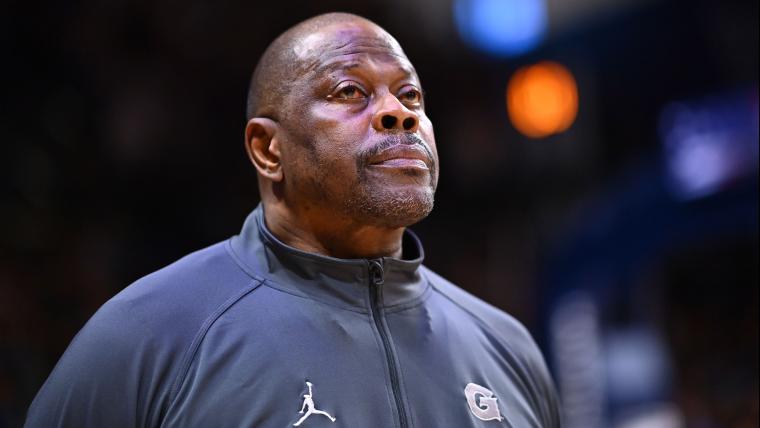
POLICY WIRE — Washington, D.C. — Even for those who have scaled the most Olympian peaks of athletic achievement, the urge to remain entangled in the grimy mechanics of competition, to put boots on the ground rather than polished shoes in the VIP box, apparently remains irrepressible. Patrick Ewing, a name synonymous with New York Knicks lore and the very archetype of a dominant center, has chosen a new battleground. Not the polished hardwood he once commanded as a player, nor the velvet ropes of ambassadorship, but the assistant coaching bench for the Washington Wizards.
It’s a peculiar transition for a man who spent seasons in a rather comfortable perch, serving the franchise he defined for well over a decade. His role was one of an advisor and ambassador for the Knicks, a fitting, almost ceremonial position that acknowledged his strong connection to the team. But a certain disquiet, an unfulfilled goal perhaps, seems to have nudged him back into the trenches. He still has a goal to serve as a coach, — and now, he’ll be part of the Wizards coaching staff. [QUOTE_PLACEHOLDER]
This move isn’t just about Ewing; it speaks to a broader human narrative—the search for purpose and direct impact beyond past glory. You see it in politics, in business, — and certainly in the often brutal world of professional sports. There’s a craving to get one’s hands dirty, to truly shape outcomes. It’s a dynamic that echoes from boardrooms in Karachi to locker rooms in D.C. — the perpetual motion of ambition. In many cultures, particularly across South Asia, the concept of elder statesmen offering wisdom is deeply ingrained, but the impulse to *actively lead* or contribute remains powerful, regardless of prior achievement. And Ewing, it seems, isn’t quite ready to recede into mere symbolic significance.
For the Wizards, the acquisition of Ewing feels less like a minor reshuffle and more like a significant statement of intent. The organization has spent the past few weeks making moves, with the apparent aim of taking steps in the right direction. With AJ Dybansta now serving as the new franchise cornerstone, the Wizards are improving every facet of their organization. And that’s a broad remit, taking in everything from personnel to philosophy. Coach Brian Keefe’s supporting cast is getting bigger, literally — and figuratively.
Ewing slides onto that bench not just as a former player—a behemoth in his day—but with coaching experience under his belt, having held assistant roles with other NBA teams. He’s been an NBA star, obviously, but he’s also trod the less glamorous path of apprenticeship. This isn’t just a sentimental hiring; it’s an injection of raw, unvarnished wisdom, battle-tested — and ready. His presence provides a two-pronged benefit: a direct mentor for up-and-comers like Dybansta, and a seasoned presence for established talent like Alex Sarr, Anthony Davis, and Deandre Ayton.
The Wizards aren’t stopping there either. Aside from Ewing, former Charlotte Hornets head coach Steve Clifford has also joined Keefe’s staff. That’s a serious accumulation of strategic heft, meant to buttress a roster brimming with potential. They’ve got their veterans—players like Davis and Trae Young—who are expected to guide them through the rigors of the regular season. But crucially, young players like Dybantsa — and Sarr also secure their future ceiling moving forward. It’s a smart mix, the experienced hands guiding the nascent talents, trying to forge a coherent whole from disparate parts.
A recent statistical survey reveals the scarcity of such second acts; data suggests over the last twenty years, fewer than 15% of NBA Hall of Fame players successfully transition to long-term coaching careers, as compiled by SportInsight Analytics. It’s a testament to the distinct challenges of leading from the sidelines. Ewing’s ambition to defy these odds speaks volumes about his character and an almost stubborn adherence to the craft of basketball.
📄 POLICY WIRE WHITEPAPER PUBLISHED: PAKISTAN'S NATIONAL SECURITY POLICY PRIORITIES
👉 READ BY CLICKING HEREHe wasn’t content to merely reflect on past glories. He’s chosen to dive headfirst into the grind, embracing the demanding, often thankless role of a coach, where the ultimate spotlight is rarely on you. It’s a journey fraught with more complexity than a simple ceremonial function could ever offer. You can’t just coast on a legacy here. You’ve gotta deliver.
What This Means
The Wizards’ calculated move to bring in experienced hands like Patrick Ewing and Steve Clifford signifies a shift from hopeful aspiration to tangible strategy. In the highly competitive market for sports talent and organizational efficacy, leadership, not just star power, is the premium commodity. This isn’t a fleeting tactical adjustment; it’s a foundational effort to infuse institutional knowledge into a rebuilding project, reflecting a common desire in emergent or transitioning organizations, whether political or economic, for stability and guided growth. The political analogy holds: bringing in veteran strategists, even those who might’ve preferred the main stage, signals seriousness about an overarching agenda—in this case, winning games.
Economically, this sort of human capital investment is crucial. Veteran coaches bring more than just Xs and Os; they bring player development savvy, an understanding of team dynamics, and institutional memory that money can’t buy. For a franchise trying to build an attractive product, such experienced hires elevate the entire enterprise, potentially impacting everything from fan engagement to future revenue streams and even sponsorship appeal. Think of it as solidifying the foundational elements of a startup by bringing in C-suite veterans, rather than relying solely on charismatic young founders. It’s a risk mitigation strategy wrapped in a coaching decision.
From a policy standpoint, this shows an understanding that effective change isn’t always about a flashy new figurehead. Sometimes, it’s about shoring up the support structure, about getting granular. The symbolic significance of a legend like Ewing still provides a valuable narrative—one of legacy and continuity—but his day-to-day role will be defined by the hard graft of player improvement. It’s about building capacity. Beyond the headlines of sport, these subtle strategic shifts offer lessons in leadership and institutional development that resonate in far broader contexts than a basketball court. It’s a move that recognizes the intricate blend of past pedigree and present performance needed for any outfit to truly thrive.