


Startup Saves NASA Satellite: Orbital Repair Mission
Katalyst, a venture-backed startup, launches a critical mission to repair NASA's essential orbiting observatory. Discover how this daring feat redefines space maintenance and global data.

POLICY WIRE — Cape Canaveral, USA — It isn’t every day a national treasure hangs by a thread thousands of miles above Earth, awaiting a repair crew whose average age probably barely clears thirty. But that’s precisely the precarious tableau unfurling in low Earth orbit. We’re not talking about some Cold War relic, mind you; this is an essential scientific instrument, a seasoned sentinel of the cosmos, now facing an untimely demise, or rather, a particularly ignominious fizzle. Its eventual plummet through the atmosphere—a fiery farewell—would mean more than just losing a hunk of hardware. It would be an untold data void for scientists globally.
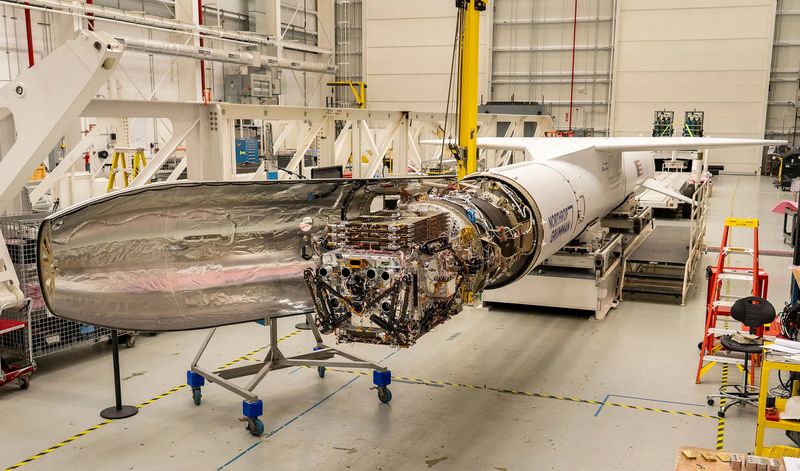
Enter Katalyst, the plucky, venture-backed upstart nobody — and I mean nobody — expected to be on NASA’s speed dial for celestial house calls. These aren’t the government contractors you’d imagine, etched in tradition — and bureaucratic molasses. They’re quick, they’re lean, and they’ve got this wild notion that private industry, not just governmental behemoths, can shoulder the increasingly intricate and financially suffocating burden of space maintenance. Their audacity? They’ve just dispatched a custom-built service vehicle on an orbital rescue mission, a literal Hail Mary for an aging NASA observatory. [QUOTE_PLACEHOLDER]
The mission itself is a technological marvel wrapped in a colossal gamble. The objective: rendezvous with the faltering eye in the sky and execute what’s essentially complex surgery, autonomously. Think about it: a billion-dollar observatory—a piece of sophisticated engineering launched by federal taxpayer funds decades ago—is now relying on a few dozen brilliant engineers, fueled by venture capital and late-night pizza, to extend its life. This isn’t just a mission; it’s a statement about where the future of space operations might truly reside.
It’s a bizarre spectacle, seeing the private sector leap into this void. Historically, maintaining these assets fell squarely on national space agencies, usually accompanied by exorbitant price tags and lengthy timelines. And frankly, oftentimes, when something broke up there, it just stayed broken. That’s a brutal reality of orbital mechanics. But Katalyst sees a different path, a commercial incentive to prolong the utility of these immensely valuable instruments, not just to replace them.
Their approach could revolutionize how we think about space debris, asset management, and even international cooperation. Imagine if this gambit pays off: what does it mean for the hundreds, even thousands, of older satellites limping along, nearing their end-of-life but still offering some modicum of utility? Suddenly, the economics of decommissioning versus refurbishing shift dramatically. It’s an existential question, isn’t it, when you consider the burgeoning orbital clutter—a real threat to future launches and functional satellites alike. It’s already bad enough. The European Space Agency, for instance, estimates that there are over 36,500 pieces of space debris larger than 10 cm currently orbiting Earth, a staggering figure that underscores the problem.
And when we talk about critical infrastructure, these observatories aren’t just for stargazing, as many backbench politicians might sneer. They provide invaluable climate data, monitor natural disasters, — and contribute to global communication networks. For nations like Pakistan, for instance, consistent, high-resolution climate monitoring from observatories such as this NASA unit is absolutely essential for agricultural planning, flood prediction, and understanding long-term environmental shifts within the region. They’ve invested significantly in building their own earth observation capabilities, but much of that relies on cross-referencing and data sharing from these larger, more established assets.
Without such precise data points, resource allocation for burgeoning populations, particularly in susceptible delta regions like the Indus, becomes a frightening guessing game. It’s not simply academic curiosity; it’s tangible food security, clean water, even lives. This isn’t a small consideration. When an observatory, even an aging one, threatens to go dark, it’s not just American scientists who feel the pinch; it’s a global tremor in the delicate ecosystem of shared knowledge.
📄 POLICY WIRE WHITEPAPER PUBLISHED: PAKISTAN'S NATIONAL SECURITY POLICY PRIORITIES
👉 READ BY CLICKING HEREBut the pressure is immense. They’ve been at it for years, Katalyst; this mission isn’t some spur-of-the-moment thing. It’s taken painstaking effort — and incredible ingenuity to get to this point. And what happens if it fails? What if this elaborate orbital ballet ends not in rejuvenation, but in a tragic space collision? We’re all holding our breath, you see. The geopolitics of space are getting messy enough without adding high-stakes salvage operations into the mix. There’s a fine line between innovation — and utter chaos.
Still, you gotta admire the gumption. It’s not a common trait in this sector, not like this anyway. Most firms would just pitch a new satellite, more cost, more launches, more problems. But here we’re, watching a start-up try to stitch together a solution from the fabric of what’s already there. Because, well, it’s about making do with what you’ve got sometimes. Even when it’s 300 miles above your head — and hurtling at 17,000 miles per hour. That’s just the nature of the beast, really.
What This Means
This mission transcends a simple mechanical fix; it’s a potent, if somewhat desperate, indicator of evolving space policy and economics. Should Katalyst succeed, it fundamentally redefines the lifecycle management of space assets. Governments and space agencies, grappling with ever-tightening budgets and increasingly crowded orbital pathways, will find themselves compelled to reassess the financial viability of prolonging existing assets versus launching new ones. This shift could usher in an entirely new segment of the space economy focused on servicing, repair, and debris mitigation – areas traditionally underdeveloped due to perceived technical difficulties and lack of clear market incentives.
Economically, this creates new avenues for private investment and entrepreneurial endeavor, attracting talent and capital to a domain once dominated by state actors. Politically, it complicates traditional notions of national ownership — and responsibility in space. If a private entity can service a national asset, who then bears liability for operational failures, data security, or even orbital sovereignty? The regulatory frameworks are scarcely keeping pace with such rapid technological advancements, creating fertile ground for disputes or, optimistically, unprecedented international cooperation models. it shines a spotlight on the often-understated dependency many developing nations have on the robust and continuous operation of these sophisticated global observational tools. Losing one, or extending its life, has very real, ground-level policy implications far beyond the abstract realm of orbital mechanics. It’s a game-changer, plain and simple.