


Pope Challenges US & Europe on Immigration
Pope Leo XIV challenges US & Europe on immigration from Lampedusa. On July 4th, he urged compassion and human dignity amidst the migrant crisis. Read his powerful message.

POLICY WIRE — Lampedusa, Sicily — An American-born pontiff, Pope Leo XIV, received an apple pie and a U.S. World Cup jersey from the US ambassador to the Holy See, Brian Burch, on Saturday, July 4th. A curiously homespun exchange, wasn’t it, especially given the solemnity of the Pope’s whereabouts? It happened at Ambassador Burch’s digs, a rarity for any pontiff. But that gift, along with a commemorative baseball, arrived smack in the middle of a Fourth of July spent by Leo XIV not with fireworks, but knee-deep in the stark, unvarnished human tragedy playing out daily on Europe’s perilous maritime frontier.
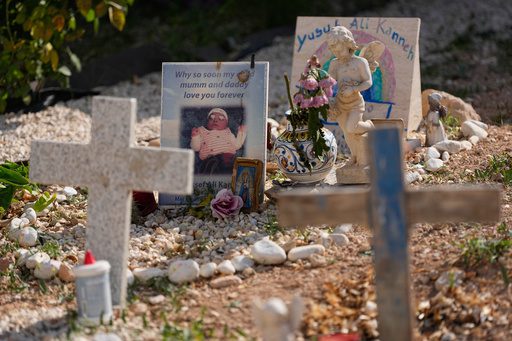
See, while many across the United States probably grilled and cheered on the nation’s 250th birthday, Pope Leo was over on Lampedusa. That’s a tiny rock of an island—just 9 kilometers long—perched closer to Libya and Tunisia than the Italian mainland, and a primary entry point for hundreds of thousands of people trying desperately to reach Europe. The Holy Father spent his Independence Day making profoundly somber gestures at a migrant cemetery, laying wreaths of yellow and white flowers on graves marked by simple crosses fashioned from broken boat wood. Later, he celebrated a Mass for both locals — and the fresh arrivals. Quite the itinerary, eh? One can’t help but notice the jarring contrast between these two interpretations of a significant day.
It was a calculated, powerful statement, that visit. A deeply symbolic message shot right across the Atlantic, telling the U.S. and Europe both, look, there’s this Christian obligation here. Upholding dignity, especially for the vulnerable, for migrants — that’s the deal. And the reminder? Well, the US was built by immigrants, plain — and simple. And Leo XIV insisted in a letter sent to Americans for the anniversary that protecting all human life means “welcoming, protecting and assisting immigrants, whose hopes, sacrifices and contribution have formed part of the history of this country from its very beginning.” He hammered the point home: “To receive them with compassion and generosity is not only an act of charity, but also a recognition of the dignity that belongs to every human person,” he wrote. It isn’t just about faith; it’s about common humanity. For a veteran wire reporter, this sounds less like a papal blessing — and more like a gentle, but firm, political elbow.
Because Lampedusa has become Ground Zero for Europe’s migration quandary. Europe’s trying to secure its borders, but it’s also got legal obligations to folks fleeing hellacious conflict, climate change, and crushing poverty. It’s a messy business. In his homily, Leo XIV thanked the residents of Lampedusa for their “miracle of compassion” towards migrants. Then he urged Europe—and, by extension, the broader global community, including countries like Pakistan and other nations in the Muslim world facing their own acute refugee crises or serving as transit points—to rise to the occasion. And they must figure out both immediate relief and a serious long-game strategy for receiving, protecting, supporting, and integrating these newcomers.
“Indeed, before any intellectual consideration or ideological conviction, the encounter with those who lie before us, stripped of everything, calls us to be close to them,” he said, speaking from [QUOTE_PLACEHOLDER] He wore vestments patterned with images of waves, a telling detail, I’d say. The pontiff didn’t pull any punches, reminding everyone what happens out there: [QUOTE_PLACEHOLDER] Other souls, of course, don’t even make it that far; they die at sea. And their presence, Leo XIV observed, “challenges us no less than that of those who have landed in need of attention and aid.” The blunt truth, spoken from a religious leader, often carries more weight than any politician’s stump speech, doesn’t it?
📄 POLICY WIRE WHITEPAPER PUBLISHED: PAKISTAN'S NATIONAL SECURITY POLICY PRIORITIES
👉 READ BY CLICKING HEREA staggering figure provided by the International Organization of Migration shows that over 35,000 migrants have gone missing in the Mediterranean since 2014, although the true death toll is undoubtedly far higher due to the many unseen shipwrecks. This isn’t just a number; it’s a profound wound. Even as the Italian Interior Ministry reported a significantly lower number of arrivals this year, 14,464 as of Friday compared to 30,598 last year, the relative number of deaths hasn’t really changed much. Salvatore Sortino, who heads the IOM’s mission for Italy and Malta, pointed out that “the diminishing numbers of arrivals hasn’t resulted in a lower number of deaths at sea.” He concluded that “That speaks about the vulnerability that remains,” adding that Leo XIV’s visit served as “a very important reminder of that element.” And that’s why this small, wind-battered island keeps finding itself at the center of international discussions on sovereignty and human rights, a dilemma echoing in Morocco and beyond.
It’s important to remember, too, that Leo XIV hasn’t limited his outspokenness to Europe. He’s taken his message directly to European leaders. Last month, he visited Spain’s Canary Islands, another migration flashpoint, essentially shaming indifferent leaders and — tellingly — warning human smugglers that they’d face divine wrath for preying on the desperation of migrants. That’s an angle often missed, isn’t it? But Leo XIV’s consistent emphasis on the dignity of migrants isn’t just theological fluff. It’s a direct counter-narrative, often, to the immigration crackdowns, like the one we’ve seen from the Trump administration. And it serves as a rather potent symbol when an American-born Pope uses American holidays to spotlight such a deeply inconvenient global truth. The optics? Immaculate.
What This Means
The Pope’s Fourth of July sermon wasn’t just a spiritual call to arms; it was a carefully calibrated piece of diplomatic messaging. By framing the migrant crisis in terms of American ideals and foundational history—those initial settlers were immigrants too, after all—he’s directly challenging US policy and, implicitly, the rhetoric often heard from conservative political circles. This isn’t just about faith, it’s about geopolitics. He’s pushing an agenda that redefines security not just as border control, but as the protection of the human spirit itself. Economically, mass migration often creates significant pressures on host nations’ public services, but also fills labor gaps and boosts diversity. His advocacy might embolden humanitarian organizations, but it sure puts the screws on governments. Expect renewed scrutiny on Europe’s migration policies and perhaps even a fresh look at global aid to nations struggling with internal displacement or offering refuge. It’s a subtle yet forceful realignment of moral compasses, delivered, fittingly enough, on America’s day of independence.