


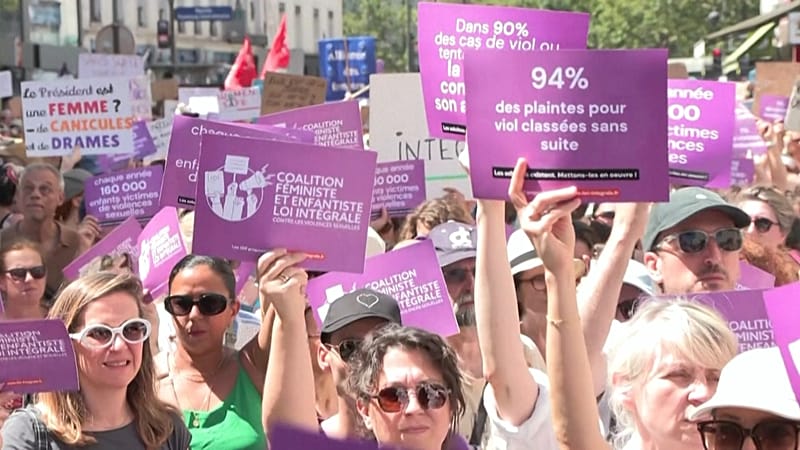
France: Victims Demand Sexual Violence Law Overhaul
Tens of thousands in France demand a radical overhaul of sexual violence laws. Victims are forcing legislative change, reshaping the nation's approach to consent and justice.

POLICY WIRE — Paris, France — The boulevards of France, usually known for their romantic allure, lately carry a different hum. It’s the cadence of collective exasperation, a groundswell from tens of thousands of citizens—not about pensions or petrol this time, but something far more intimate and unsettling: a cry for a real shake-up in how the nation treats sexual violence. This isn’t just noise; it’s a profound, unified declaration that enough is quite simply enough.
Forget the quaint image of Parisian insouciance. What unfurled across multiple cities wasn’t some fleeting demonstration; it was a nationwide surge of frustration, propelled by an increasingly vocal segment of society. They aren’t just asking for reform; they’re demanding a wholesale re-evaluation of legal frameworks that many feel have been—for too long—complicit in failing victims. This pressure isn’t coming from some obscure fringe, mind you. It’s coming from ordinary people, and it feels like the very foundations of legislative inertia are starting to crack under its weight. [QUOTE_PLACEHOLDER]
You see, France has this rather complicated relationship with consent, with what constitutes a truly egregious act, and how its legal system responds to it. For years, campaigners have hammered at the gates of parliament, pointing out the often-tortuous paths survivors must navigate. There’s been a growing clamor, a quiet fury that’s finally broken cover, forcing the issue onto the front pages—and, more importantly, into the legislative agenda. It’s a testament to the persistent grit of grassroots movements, isn’t it? They keep showing up, even when nobody’s listening, until, well, everyone has to listen.
And it’s not like the government hasn’t dabbled in the issue before. We’ve seen incremental changes, a tightening here, a new initiative there. But these protestors, many of them young, don’t want tweaks. They want something fundamental, something systemic. Their central demand circles around creating a new, more explicit law on sexual violence, aiming to redefine and criminalize certain actions that current statutes — for all their well-intentioned complexities — often overlook or, worse, inadvertently excuse. They argue existing laws leave gaping holes, particularly regarding the nebulous concept of consent, leaving victims exposed to further trauma in judicial processes. But how do you legislate nuance? That’s the quandary now facing legislators.
The sheer scale of these marches suggests a significant shift in public discourse. This isn’t just about French law, though. Consider how often similar frustrations bubble up elsewhere, even in places like Pakistan. There, the fight against gender-based violence, especially within societal norms that often disadvantage women, is a constant, grinding battle. Activists and organizations tirelessly advocate for stronger legal protections and better enforcement mechanisms against crimes like honor killings, forced marriages, and sexual assault—often facing cultural inertia and deeply entrenched patriarchal attitudes, just as French campaigners encounter their own particular institutional headwinds. But, as we’ve seen time — and again, the global demand for dignity and safety echoes across disparate cultures. A recent poll by the French Institute of Public Opinion (IFOP) revealed that over 85% of French women aged 18-35 believe the justice system doesn’t adequately protect victims of sexual assault. That’s a stark, undeniable mandate.
📄 POLICY WIRE WHITEPAPER PUBLISHED: PAKISTAN'S NATIONAL SECURITY POLICY PRIORITIES
👉 READ BY CLICKING HEREBut the calls go beyond just legislative drafting. They speak to a broader societal reckoning. This whole ordeal, it isn’t just about legal text; it’s about changing mindsets, reshaping cultural norms, and — heaven forbid — getting everyone to agree on what’s right and what’s irrevocably wrong. It’s messy. But necessary.
What This Means
Politically, these demonstrations present an unenviable tightrope walk for the current French government. Ignoring such a widespread display of public discontent isn’t an option—not without serious electoral ramifications, anyway. The sheer numbers, — and the impassioned clarity of the protestors’ demands, compel a swift and visible response. We’ll likely see a scramble within the Ministry of Justice to draft proposals, but the devil, as always, will be in the details. Any new law must not only be robust enough to satisfy the movement but also legally sound and practically enforceable, which is no small feat.
Economically, there might not be direct market tremors from these specific protests. But the long-term implications of addressing sexual violence—or failing to—are profound. A society where a significant portion of the population feels unsafe or unheard isn’t just ethically compromised; it’s less productive, less innovative, and ultimately, less prosperous. The ongoing economic ripple effects of trauma, absenteeism, and diminished participation by victims often go unquantified, but they’re very real. Governments that demonstrate a clear commitment to tackling systemic issues like gender-based violence tend to foster greater public trust and stability, which, indirectly, benefits the national economic outlook. the demand for better victim support services will inevitably require public funding, putting pressure on already strained budgets. Because justice isn’t cheap. And, when trust in institutions erodes, it always—and I mean always—comes with a hefty price tag, visible or not. This is a bellwether moment for societal evolution, a point where a nation decides whether it genuinely hears its most vulnerable citizens or continues with legislative half-measures. It’s an inconvenient truth, perhaps, but a truth nonetheless.