


Robotic Elephants: India’s Sacred Tech Dilemma
India's temples are adopting robotic elephants. Explore the profound debate on animal welfare, tradition, and spiritual authenticity in this major technological shift.

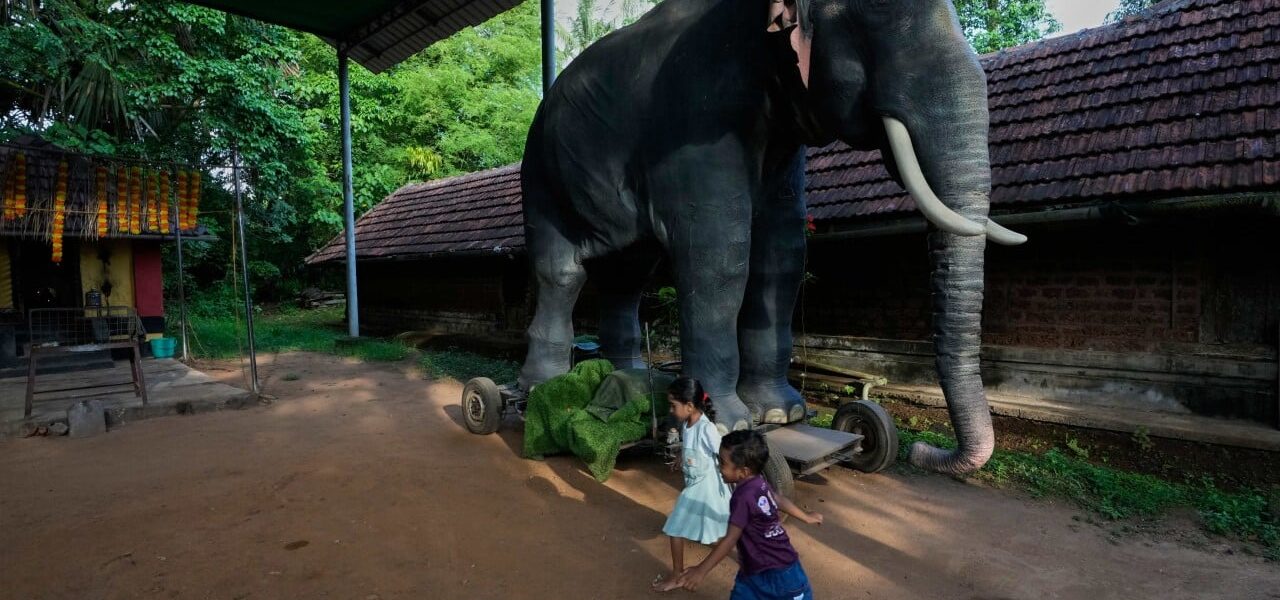
POLICY WIRE — New Delhi, India — Imagine the clanking of gears where a trumpeting beast should be, the metallic sheen of a trunk replacing the warm, wrinkled hide. This isn’t some science fiction trope played out on a distant star; it’s a quietly brewing reality in the ancient, hallowed courtyards of India’s Hindu temples. The spiritual heartland, accustomed to the slow, measured pace of centuries-old rituals, is now confronted with a peculiar mechanical participant: the robotic elephant. It’s an unlikely clash, tradition squaring off against plastic and wire, but it’s happening, bringing a whole lot more than just curious onlookers.
It began in one man’s workspace, a place of invention rather than veneration. Prasanth Prakashan’s workshop is a strange crucible where belief meets circuitry. You’ll find machines there. Machines with, shall we say, a certain verisimilitude to their organic counterparts. [QUOTE_PLACEHOLDER] That’s what you see. But that’s about it. Beyond those surface-level mimics, there’s little real common ground with the living creatures they purport to replace—those living, breathing elephants [QUOTE_PLACEHOLDER]
And what’s their purpose? They’re stand-ins. Body doubles, essentially. [QUOTE_PLACEHOLDER] Think about that. Faith, tradition, — and devotion, now powered by rechargeable batteries. It isn’t just a quirky novelty; it represents a deep societal fracture, a kind of technological bandage applied to a bleeding cultural wound. Animal rights activists, they’re chuffed. Truly. They’ve long campaigned against the often-dire conditions of elephants used in temple processions — and rituals. For them, it’s a win. But, then, there’s always the other side of the coin, isn’t there?
[QUOTE_PLACEHOLDER] Well, it upsets them for good reason, because the original text implies something more profound — that the real ones are an indispensable part of the faith, not merely symbols to be swapped out for a facsimile. This isn’t just a simple logistical swap. It’s an ideological battle for the very soul of the practice, isn’t it?
For centuries, the Asian elephant has been an emblem of divinity, wisdom, and strength in Hinduism, intricately woven into religious narratives and practices. To many, their very presence imbues ceremonies with an authentic spiritual resonance that no machine, no matter how lifelike, could ever hope to replicate. It’s a bit like replacing a symphony orchestra with a well-programmed synthesiser; the notes are there, sure, but the soul? The spontaneous energy? That’s gone. And for some, that absence matters profoundly.
But the practicalities, those gnawing, irksome practicalities, are hard to ignore. The ethical arguments surrounding the use of captive elephants are becoming increasingly louder, harder to simply dismiss. The sheer cost, too, of housing, feeding, and caring for these majestic — and sometimes unpredictable — animals is immense. Consider the economics for a moment: maintaining a single temple elephant can cost thousands of dollars annually, a figure that for smaller temples often presents an unmanageable financial strain. And then there’s the sheer danger, not just to the elephants, but to their mahouts and the public, especially if the animals are unwell or mistreated. A recent animal welfare survey indicated that over 70% of temple elephants in Southern India exhibited signs of chronic stress or physical ailments due to their living and working conditions. That’s a grim reality, even for the most ardent traditionalists.
📄 POLICY WIRE WHITEPAPER PUBLISHED: PAKISTAN'S NATIONAL SECURITY POLICY PRIORITIES
👉 READ BY CLICKING HEREThis push for automation isn’t isolated to India’s Hindu temples, you know. Across South Asia, we see similar pressures on traditional practices that involve animals, albeit for different reasons and in different contexts. In Pakistan, for instance, there’s a constant tension around the Qurbani ritual during Eid al-Adha, with ongoing debates about ethical slaughter, hygienic practices, and even the eventual consideration of more ‘humane’ or controlled alternatives, particularly in urban settings. Though it’s not robotic animals, the underlying dynamic — modernity butting heads with deeply ingrained religious custom and economic practicality — remains eerily similar. Both scenarios represent a modernization pressure on age-old religious practices.
And this is where things get truly murky. When is technological efficiency allowed to usurp spiritual authenticity? Is the reverence tied to the form, or to the intention behind the ritual? It’s not just a debate about animal welfare; it’s a profound theological — and philosophical query.
What This Means
The rise of the robotic elephant isn’t merely a curiosity or a fringe story; it’s a bellwether, a clear indicator of deeper currents. Economically, this trend could redefine a niche yet significant religious tourism sector. Temple coffers might see relief from the exorbitant costs associated with live animals, potentially redirecting funds to maintenance, charity, or other temple needs. However, it also means a blow to the livelihoods of mahouts and their families, a generations-old profession suddenly facing technological redundancy. We’re talking real jobs for real people, jobs steeped in ancient knowledge and deep, personal connection to the animals. But the cultural ramifications? Those are bigger. Far bigger.
This shift reflects an India—and by extension, a broader South Asia—grappling with its place in a globalized, ethically conscious world. How much tradition can be ‘modernized’ before its very essence is lost? From a policy standpoint, governments in the region will inevitably face growing demands to legislate or at least regulate animal welfare in religious contexts. The robotic solution, for now, bypasses the ethical knot, offering a neat — if spiritually unsettling — compromise. But this quiet revolution signals that the conversation about how ancient faiths coexist with contemporary values, animal rights, and technological advancement is just getting started. It suggests a future where even the most sacred of practices might soon feel the cold, calculating touch of artificial innovation, prompting difficult, unavoidable questions about the boundaries of belief itself. The implications reach well beyond India’s borders, into any society wrestling with its sacred rites, divided hearts, and the relentless march of progress. And that’s a policy conundrum as old as time, just with a fresh, metallic gleam.