


Japan-India Boost Ties: Indo-Pacific Strategy vs. China
Explore the deepening Japan-India partnership to counter China's assertiveness in the Indo-Pacific. Economic, security & tech ties are reshaping regional power.

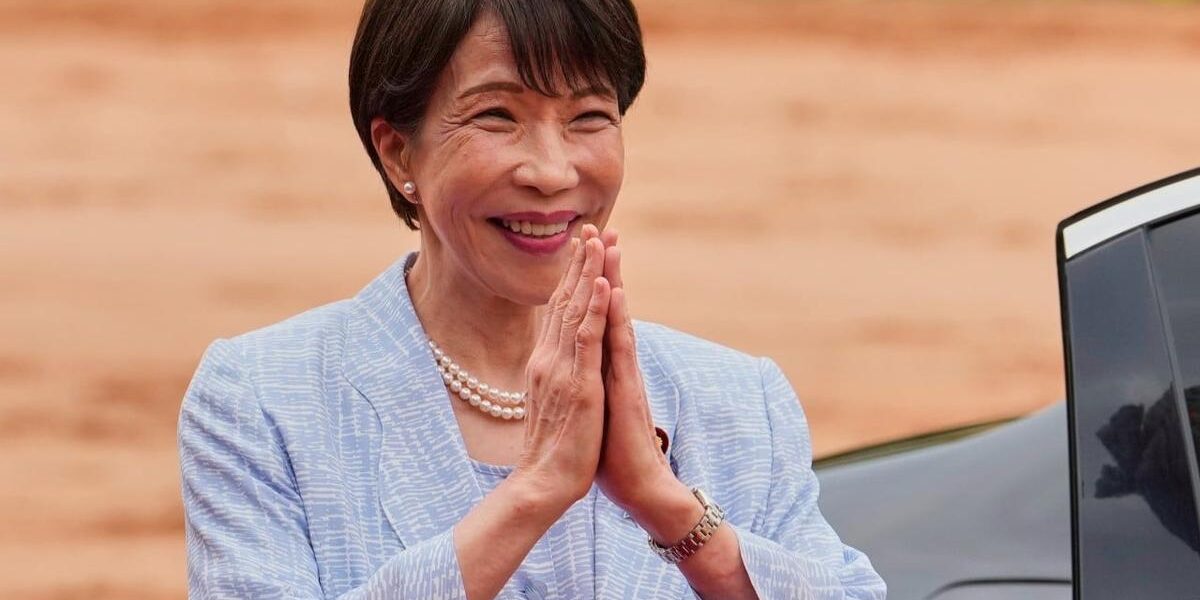
POLICY WIRE — New Delhi, India — The delicate geopolitical ballet of the Indo-Pacific took center stage this week as Japanese Prime Minister Sanae Takaichi arrived in India, signaling a concerted effort to deepen economic and security ties. Her visit is part of a broader push by Tokyo to fortify alliances, a move widely interpreted by observers as a direct response to Beijing’s growing assertiveness in the region. (Reporting based on Associated Press)
Prime Minister Takaichi held discussions with her Indian counterpart, Narendra Modi, in Delhi on Thursday. The agenda was comprehensive, focusing intently on economic security, strategic cooperation, and the collaborative advancement of innovative technologies. Yet, for many watching the unfolding diplomacy, the critical question isn’t simply the extent of the partnership itself, but how far New Delhi is prepared to align with what analysts describe as Tokyo’s explicitly China-focused Indo-Pacific strategy.
Japan, a stalwart U.S. ally, has consistently expressed concern over China’s expanding military presence and economic leverage in the Indo-Pacific. Tokyo’s proactive diplomacy across Southeast Asia and, increasingly, South Asia, is designed to create a network of partners willing to push back against China’s ambitions. The outreach to India, a nation with its own complex relationship with China, is arguably a cornerstone of this strategic design.
The concept of Indo-Pacific security is inherently fluid, allowing for various interpretations and levels of engagement from different actors. For Japan, it often means freedom of navigation, upholding international law, and supporting regional partners in resisting economic coercion. India, while sharing concerns about China’s regional conduct, has historically maintained a posture of strategic autonomy, carefully balancing its relationships to serve its national interests without necessarily committing to a full alignment with any single bloc.
Discussions around economic security in the current global climate frequently involve resilience of supply chains and reducing dependence on single powerful nations – a veiled reference to China. Strategic cooperation, too, hints at shared intelligence, joint military exercises, and coordinated diplomatic responses to regional challenges. Meanwhile, collaboration on innovative technologies points to potential partnerships in fields such as artificial intelligence, quantum computing, and green energy, all areas where global leadership is fiercely contested and national security implications are paramount.
The stakes for both nations, — and indeed for the entire region, are considerable. A stronger India-Japan partnership could provide a crucial counterweight to Chinese influence, promoting a more multi-polar security environment in Asia. Conversely, a lukewarm commitment from India might necessitate a recalibration of Japan’s broader Indo-Pacific outreach.
📄 POLICY WIRE WHITEPAPER PUBLISHED: PAKISTAN'S NATIONAL SECURITY POLICY PRIORITIES
👉 READ BY CLICKING HEREWhat This Means
This high-level engagement between Japan and India underscores the deepening strategic realignment taking place across the Indo-Pacific. For Japan, the partnership with India is a critical piece of its security architecture, providing a necessary ballast against the increasing weight of China. The intent from Tokyo is clear: to build robust, resilient alliances that can collectively assert a rules-based order in a contested region.
However, the question posed by analysts regarding India’s commitment is a genuine one. New Delhi traditionally guards its strategic independence, engaging with various global powers without forming exclusionary blocs. While India clearly benefits from a closer relationship with Japan – especially in areas like infrastructure development, technology transfer, and bolstering maritime security – the extent to which it will overtly join a strategy specifically framed around countering China remains a point of speculation. India faces its own geopolitical challenges, including a complex border dispute with China and significant trade ties, making any full-throated alignment a nuanced calculation.
Moving forward, the success of this enhanced partnership will likely hinge on mutual trust, shared tangible benefits, and careful diplomacy that respects both nations’ strategic prerogatives. It’s a pragmatic dance where the music of regional stability plays to different beats in different capitals, even as the ultimate goal for many remains a less domineering, more balanced Indo-Pacific.