

Braves’ Independence Day Woes: Atlanta’s Tarnished Pride
Atlanta Braves face an ironic Independence Day, as their struggles dim the city's patriotic spirit. Read about the team's woes and their wider civic impact.

POLICY WIRE — Atlanta, GA — The smell of grilling meat and distant fireworks couldn’t quite mask the faint whiff of something burning in Atlanta. It wasn’t just charcoal. On a nation’s 250th birthday, as stars-and-stripes patriotism hung heavy in the humid Southern air, the city’s beloved Braves — or what’s left of their confidence, anyway — stumbled onto their home field. They were meant to be America’s team, certainly Atlanta’s; instead, they’d become a rather public metaphor for sputtering engines, an uncomfortable contrast to the bold proclamations of national pride typically shouted on the Fourth of July.
Because, really, a “miserable June” is a polite understatement for what this ballclub endured. One month doesn’t usually unravel a season, but for the Braves, it felt like a slowly picked stitch from a once-flawless fabric. Then came Friday night, a minor eruption of power against the Mets that felt more like a startled burp than a roaring comeback. Still, it fueled a sliver of hope. A nationally televised holiday matchup usually feels like a stage for heroes; here, it felt more like a crucible.
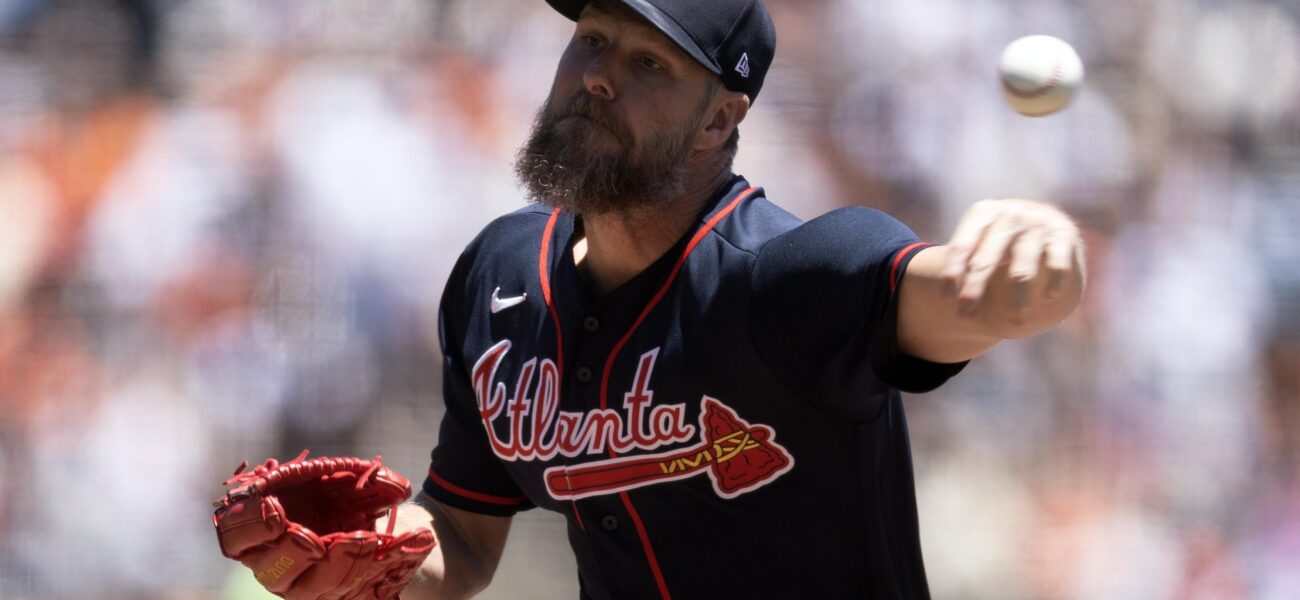
Chris Sale, the veteran southpaw, took the mound carrying the weight of not just an entire city’s expectations, but the team’s collective conscience. He’d been—quite frankly—lights out all year, a solitary glint of excellence in what had otherwise become a darkening tunnel. His pitches dance, his velocity still bites, but wins? They’ve been as scarce as genuine surprises in Washington lately. That’s the rub, isn’t it? One man’s brilliance too often squandered by a lineup that just… won’t hit.
“We’ve got the talent, we really do,” mused a somber General Manager Alex Anthopoulos before the game, his typical poker face betraying just the slightest tension around his eyes. “It’s just about connecting, you know? It’s cyclical, but on days like today, you want it to click. For the fans. For everyone.” And Manager Brian Snitker, a man who’s seen more ups and downs than a mid-cap stock portfolio, put it even more succinctly. “You can’t just rely on Chris to pitch a gem every five days. This is a team. We’ve got to start acting like one.” These aren’t the confident pronouncements usually heard when a franchise is flying high.
But the pressure wasn’t just domestic. Major League Baseball, always looking to expand its global footprint, counts on these national showcases. The commissioner’s office sees these games as more than mere entertainment; they’re brand advertisements. In burgeoning sports markets, say, across Pakistan or the broader Muslim world, where interest in American leagues like the NBA and MLB is steadily growing, albeit slowly, a marquee matchup—even one fraught with narrative tension—still gets eyeballs. They might not understand a slider’s break, but they get the drama. But still, the spectacle’s got to deliver, right?
📄 POLICY WIRE WHITEPAPER PUBLISHED: PAKISTAN'S NATIONAL SECURITY POLICY PRIORITIES
👉 READ BY CLICKING HERETheir opponent, the New York Mets, wheeled out Sean Manaea, a pitcher whose stats often lie — beautifully, if you’re the Mets. His ERA might be pedestrian, but his ability to wiggle out of jams with deceptive movement is a skill. His “elite extension” helps hide an arsenal that’s otherwise pretty average; it’s a parlor trick. Four-seamer, sinker, sweeper, with a little cutter — and changeup to keep things interesting. Atlanta’s bats, you see, were banking on him coming back to Earth. Hoping for opponent regression on the nation’s biggest holiday? That’s desperate stuff.
The statistical realities are stark, too. A recent survey from Statista indicated that regional sports network viewership for MLB games among the 18-34 demographic has declined by nearly 7% over the last two years, pushing networks like FOX to rely more heavily on compelling national narratives. When those narratives are about an anticipated contender struggling on the Fourth of July, it’s a tough sell. So, what you had was less a celebration of America’s pastime — and more an urgent plea for redemption. A prayer for runs. A whisper that maybe, just maybe, they’d win one they weren’t supposed to.
What This Means
A sports team’s performance can ripple far beyond the scoreboard, particularly in a market as passionate as Atlanta. For businesses around Truist Park, a losing team translates to fewer casual fans flocking to shops and restaurants before and after games, impacting local tax revenues and small business vitality. Investor confidence, too, isn’t entirely immune; while the Braves’ ownership is certainly robust enough to absorb a down season, persistent underperformance could dampen enthusiasm for future ancillary projects. on a broader civic level, a struggling team, especially one meant to embody a region’s spirit, can subtly corrode public morale. On a day dedicated to collective optimism, seeing a high-profile entity falter just feels…off. It suggests cracks in the facade, a dissonance between celebratory rhetoric — and lived experience. And that kind of unease, however minor, feeds into larger discussions about civic pride and, dare we say, the perceived stability of things. It’s never just a game, is it? Especially not on July 4th.