


Football’s Unseen Cost: Schürrle’s Early Retirement
Discover why World Cup hero André Schürrle left football at 29. His journey reveals the immense mental pressure and unseen costs of athletic glory.

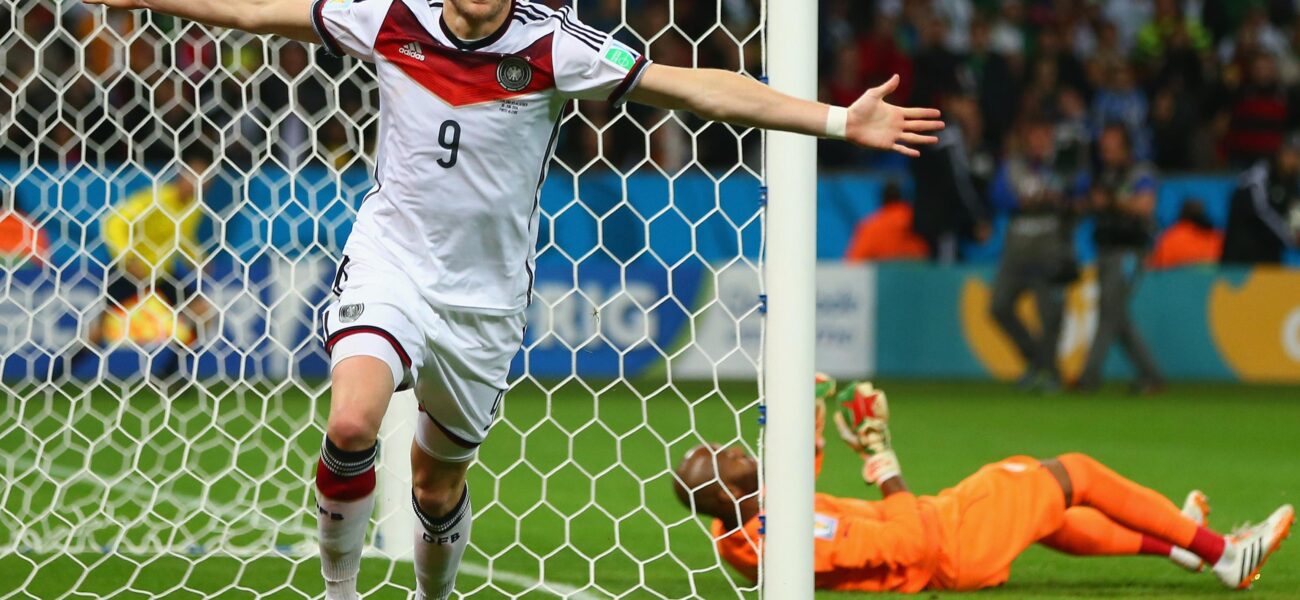
POLICY WIRE — Frankfurt, Germany — The reverberating thud of a perfectly weighted cross, the split-second silence before Mario Götze’s left boot found leather, and then, the eruption. For André Schürrle, that single, sun-drenched evening in Rio de Janeiro ten years ago etched his name into the very bedrock of German sporting mythology. He was the unsung hero, the impact substitute whose sheer brute force — and relentless drive secured a World Cup trophy. But here’s the thing: often, the heroes we enshrine are also the ones who walk away earliest—not because they’ve faded, but because they’ve found the cost of remaining in the blinding spotlight too steep. And Schürrle, at just 29, chose the exit.
It wasn’t a slow decline, not a graceful swansong to a career ravaged by injuries. No. His was an abrupt, almost violent wrenching away from the game that had granted him everything and, perhaps, demanded just as much. He simply stopped. A decade after he orchestrated Germany’s triumph over Argentina—that assist, that pure, unadulterated moment of genius in extra time—the story isn’t where Schürrle’s legend continued to soar, but rather, why he decided the whole spectacular show wasn’t for him anymore.
Back then, football was simpler for him, perhaps. He’d been Germany’s quintessential game-changer throughout the 2014 tournament, banging in goals, creating chaos, always moving. Remember his double against Brazil in that frankly absurd 7-1 semi-final rout? Nobody else touched the ball that often — and with that much intent in those specific, desperate moments. His utility, his unselfish running, it just fit. Yet, even as stadiums around the globe — from the raucous grounds of Dortmund to the passionate, if less refined, pitches in Lahore and Jakarta — hailed him, the inner toll remained unseen, unheard.
Because the relentless grind of professional football, the constant dissection, the expectation that you are not just a player but an indefatigable public asset, can chew you up and spit you out. It’s brutal. His quiet departure in 2020 served as a stark, inconvenient reminder that even the loftiest dreams carry heavy baggage. Joachim Löw, the former national coach who once relied heavily on Schürrle’s bursts of energy, once mused, “André, he gave everything on the pitch. You saw his explosiveness, his fight. But the fire inside? That’s not something you can coach forever. It eventually dims for some, even after such heights. He made his choice, — and one must respect that human element.”
And so, Schürrle now dabbles in business ventures, dives into endurance sports—the kind where the only competition is yourself—and dedicates time to family. It’s a life lived on his terms, away from the stadium’s roar — and the omnipresent glare of a billion watchful eyes. Many in the global football fraternity have observed this trend. “We celebrate the hero, but we often forget the man behind the boots,” offered Bernd Hoffmann, a veteran German football analyst. “The pressure cooker atmosphere – it’s immense. His story, sadly, isn’t unique.” Indeed, according to a 2015 study by FIFPro, the global players’ union, 38% of active male players and 35% of retired players report experiencing symptoms of depression and anxiety, laying bare a systemic problem rarely acknowledged amidst the glamour. (Source: FIFPro.org).
📄 POLICY WIRE WHITEPAPER PUBLISHED: PAKISTAN'S NATIONAL SECURITY POLICY PRIORITIES
👉 READ BY CLICKING HEREIn a world where athletes, particularly footballers, become more than mere players – they’re global brands, symbols of national pride, even aspirational figures for children kicking makeshift balls in dusty fields across the Punjab – Schürrle’s narrative offers a sobering counterpoint. His personal journey, wrestling with the immense mental weight of performing at football’s apex, isn’t lost on the passionate football audiences throughout South Asia and the broader Muslim world, where stars like Cristiano Ronaldo or Lionel Messi are almost deified. The geopolitical impact of sporting narratives means that even his private struggles become part of a larger public discourse, a poignant reminder that immense pressure can crack even the hardest diamonds.
What This Means
Schürrle’s premature departure from a lucrative, high-profile career isn’t just a curious personal anecdote; it’s a stark indicator of deeper currents within professional sports. It underscores a growing awareness – belated, but growing nonetheless – that the human cost of sporting excellence is frequently underestimated, often ignored. For federations and clubs, it represents a looming public relations challenge and an ethical imperative to provide robust mental health support systems, not merely injury recovery. Economically, when a player walks away at peak earning potential due to burnout, it points to inefficiencies in player management and potential asset depreciation that wasn’t adequately foreseen or mitigated. The romantic notion of a footballer’s career being a straightforward, linear climb to wealth and fame is increasingly debunked by such cases. We’re witnessing a subtle recalibration of values, where individual well-being is—slowly, sometimes painfully—starting to compete with the insatiable demands of the global sports-entertainment complex. This narrative doesn’t just impact the likes of Schürrle, but could ripple through the very fabric of how sports industries, particularly in mega-markets like Germany and beyond, view and nurture their most valuable, yet fragile, commodities: their athletes.
And what’s next for the sport? Maybe more frank conversations about burnout. Because glory, it seems, has its own silent price tag.