


France’s Sexual Violence: Protests Expose Justice Gaps
France grapples with a sexual violence crisis as protests demand justice. Explore systemic failures, low conviction rates, and activists' call for true change.

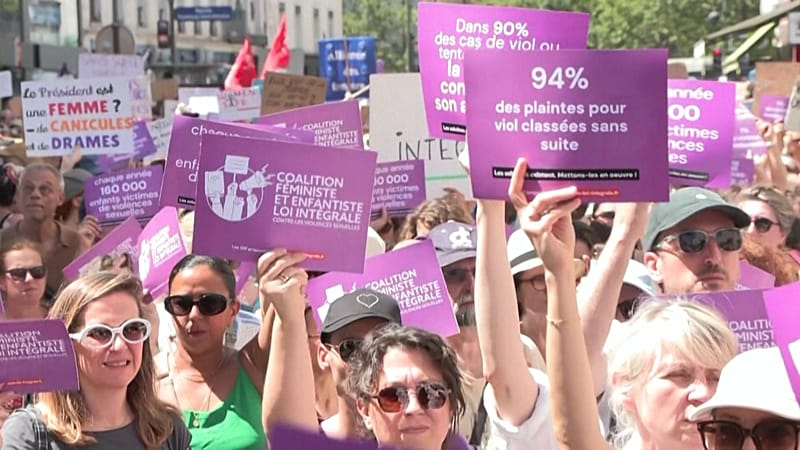
POLICY WIRE — Paris, France — It wasn’t the Grand Prix, nor a World Cup victory parade, that once again drew thousands to France’s iconic thoroughfares. This time, the soundtrack was a furious hum of defiance, a collective shout demanding nothing less than a systemic overhaul in how the nation confronts sexual violence. You see, the optics might shift—the placards get new slogans, the faces in the crowd grow younger or grayer—but the core grievance, the deep, societal unease, persists like a stubborn winter chill.
It’s a dance, really, this recurring cycle of outrage — and legislative promise. French authorities have, for years, spoken of their commitment to stamping out gender-based abuse. But for those on the front lines—victims, advocates, everyday citizens tired of turning a blind eye—progress often feels less like a stride forward and more like a hesitant shuffle in heavily cuffed shoes. This latest wave of demonstrations wasn’t just about a single incident; it’s a testament to the cumulative burden of countless alleged assaults, harassments, and, yes, the pervasive feeling that the law, while ostensibly on their side, too often falls silent when it truly matters.
And that’s the rub, isn’t it? Because despite the official pronouncements and a raft of legislative amendments stretching back decades, the judicial system often appears clogged, indifferent, or simply overwhelmed. Recent government figures suggest that out of every ten complaints of sexual assault filed with French police, barely one ultimately leads to a conviction. Think about that: a 10% success rate in what should be a bedrock principle of justice. That particular tidbit, attributed to an analysis by France’s Ministry of Interior in a recent annual report, ought to give any policymaker pause. But sometimes, you get the sense they’ve mastered the art of selective hearing.
“We’ve passed laws, certainly,” observed Éric Dupond-Moretti, France’s Justice Minister, in a recent, somewhat exasperated television interview. “We’ve increased funding for victims’ services. But translating legal text into immediate, flawless application on the ground is complex. It requires a profound cultural shift that no single law, however well-intended, can instantly achieve.” He isn’t wrong, not entirely. But it often sounds a lot like deferring responsibility to some ethereal ‘cultural shift’ while victims wait, and wait, for real consequence.
But the demonstrators don’t seem content to wait for culture to catch up. “We’re not asking for miracles; we’re demanding justice and safety,” blasted Anne-Cécile Mailfert, president of the Fondation des Femmes, a leading advocacy group, speaking to a clamoring crowd outside the National Assembly. “The legislation exists, but the means for enforcement, the sensitivity within the police, the speed of trials—those are still lagging. How many more women must speak up, how many more must suffer, before their plight is more than faded echoes?” Her words, blunt as a sledgehammer, cut through the diplomatic pleasantries like nothing else could.
📄 POLICY WIRE WHITEPAPER PUBLISHED: PAKISTAN'S NATIONAL SECURITY POLICY PRIORITIES
👉 READ BY CLICKING HEREThis struggle, though playing out on the avenues of Paris — and Marseilles, isn’t uniquely French. Its contours—the calls for justice, the frustration with systemic inertia, the courage of survivors—are eerily familiar. Just ask women in Karachi, or Dhaka, or even Beirut, grappling with similar issues of reporting mechanisms, patriarchal norms, and judicial accountability, sometimes under far harsher penalties. The exact cultural nuances might differ, the legal frameworks might diverge, but the collective fight for gender dignity and safety resonates globally, tying the chic boulevards of France to the crowded alleyways of South Asia in an unexpected, difficult bond. It’s not just a Western crisis; it’s a human one, period.
What This Means
The consistent clamor in the streets signifies more than just fleeting protest; it’s an evolving political calculus for President Macron’s government. They can’t simply pay lip service any longer. The sustained nature of these demonstrations points to a deep, underlying erosion of trust in institutional responses to sexual violence, something that could haunt Macron’s legacy, much like other broad societal pressures facing France. Expect to see renewed governmental efforts to demonstrate responsiveness, likely involving task forces, funding allocations, and public awareness campaigns. However, without substantial reform in police training, prosecutorial prioritization, and judicial capacity—the actual plumbing of justice, so to speak—these measures risk being perceived as mere window dressing. And the financial implications aren’t minor either. An effective, robust system of prevention and redress requires significant investment, from shelters and counseling to specialized investigative units. The economic and social cost of inaction, though, would be far steeper: a disempowered populace, damaged trust in civic institutions, and the continued suffering of countless individuals. That’s a bill no nation can afford to pay.